

Modern cities are full of glass and steel, but what people remember at night is the light. A hotel crown that behaves like a digital halo, a retail podium that streams content, a bridge handrail that turns into a flowing pixel ribbon – all of that is usually not a flat LED billboard, but a carefully engineered matrix of Fuentes de luz puntuales LED driving modern media facades.
For facade engineers, lighting designers and project owners, the question is no longer just “RGB or white” or “P50 or P100.” The real conversation is about optical distribution, RGB color mixing, brightness uniformity and outdoor reliability, and how the engineering behind each node adds up to a clean, stable digital skin. This is exactly where Shenzhen XinHe Lighting Optoelectronics Co., Ltd positions its LED point light and mesh systems for media facade applications.
LED Point Light Sources in the Context of Modern Media Facades
From decorative dots to addressable pixels
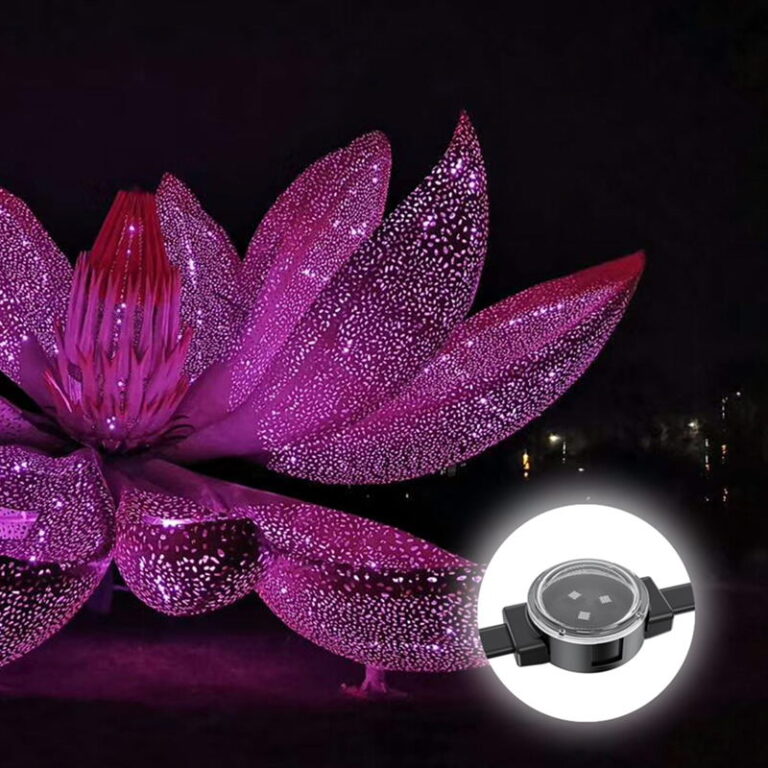
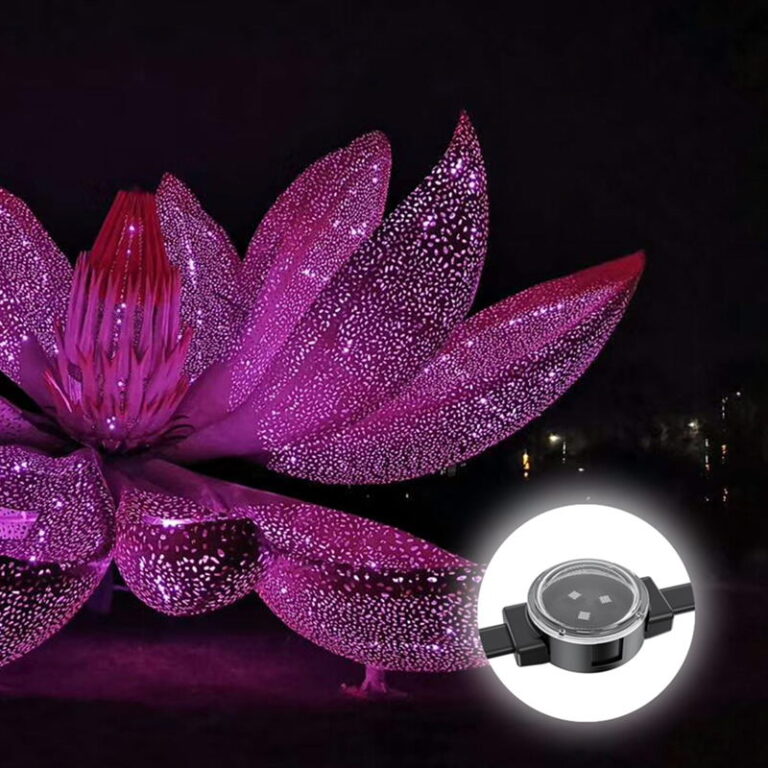
An LED point light source is, at its simplest, a small, individually controllable luminaire that emits light from a compact “point-like” surface. When you distribute thousands of these nodes across a facade and drive them with DMX or similar protocols, those dots stop being simple markers and start acting as a low-resolution, flexible display that follows the architecture instead of fighting it.
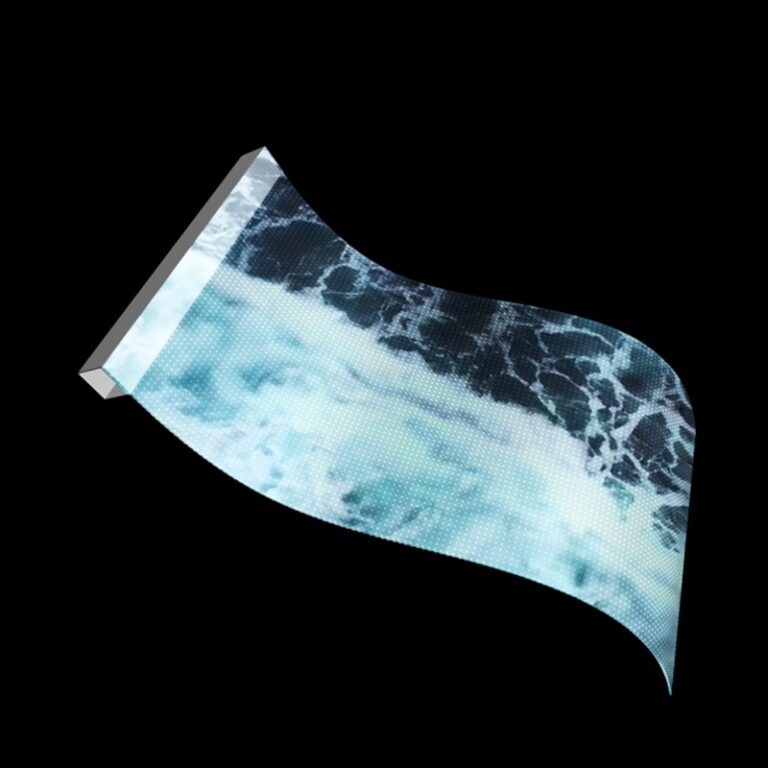
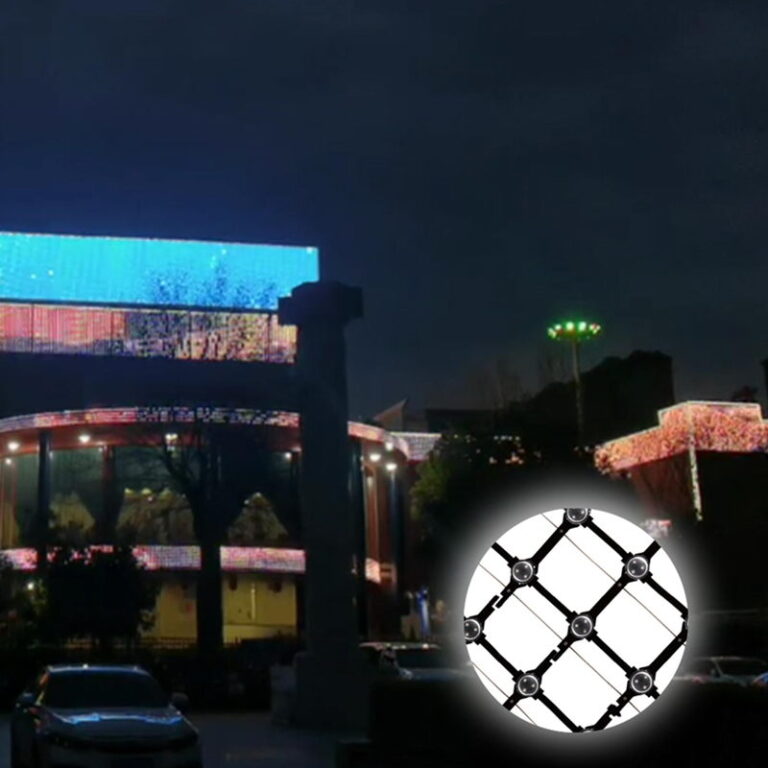
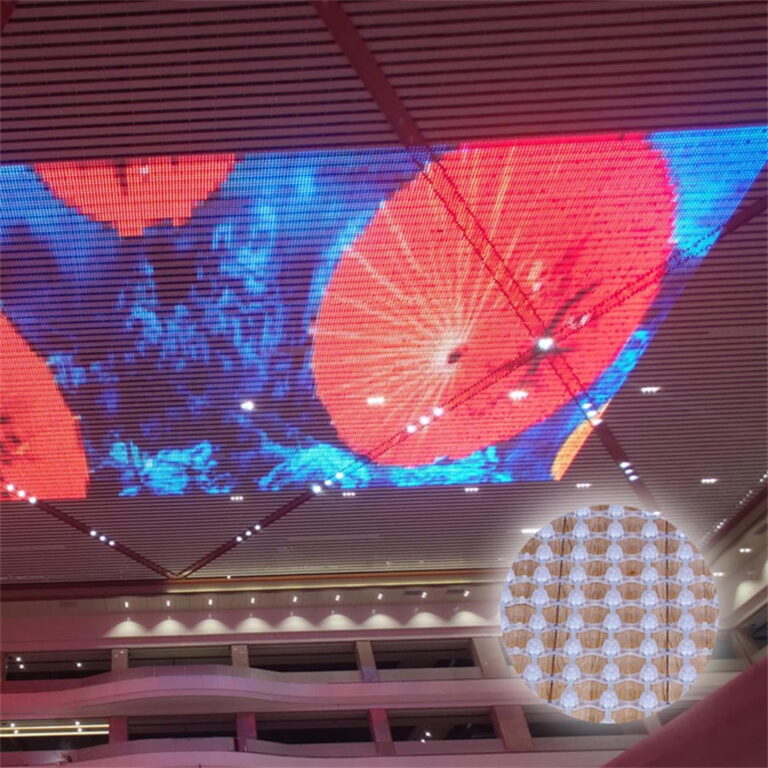
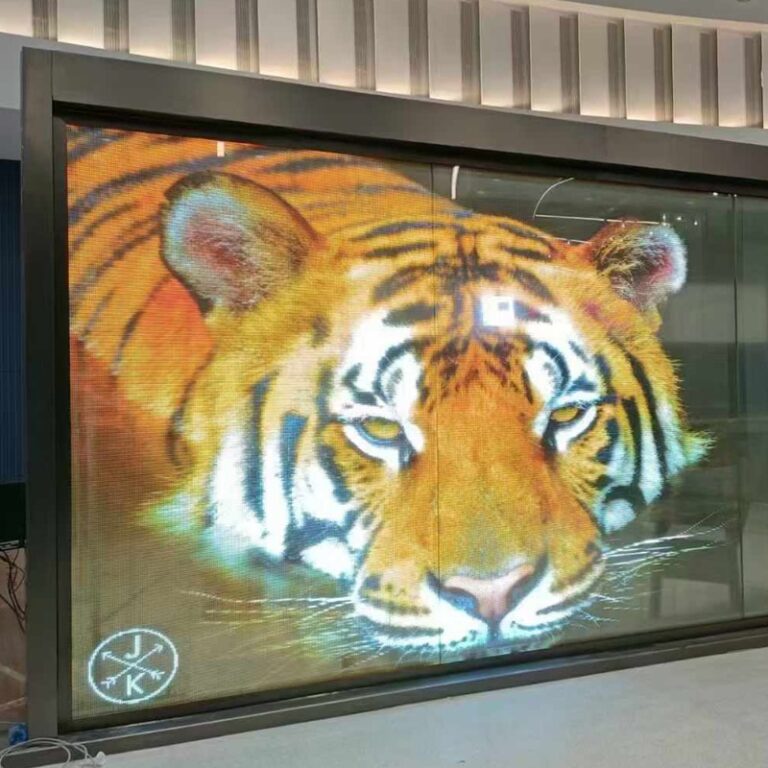
Unlike traditional cabinets, point lights and grid screens can wrap around curved curtain walls, step across setbacks and maintain daylight transparency, so the building still works as real estate while acting as a media surface at night. XinHe’s grid screens, for example, are built from chains of LED point light sources and PC bases, scaled for ultra-large facade on commercial centers, hotels and high-rise towers where lightness, thinness and permeability are non-negotiable.
Why media facades gravitate toward points
In practice, modern media facades using LED point light sources give designers three things: a scalable pixel matrix that matches real viewing distances, a way to respect the building’s transparency and structure, and a robust form factor that tolerates outdoor life better than fragile glass modules. When those nodes are engineered correctly – optically, electrically and mechanically – the facade behaves like a coherent display rather than a collection of blinking lamps.
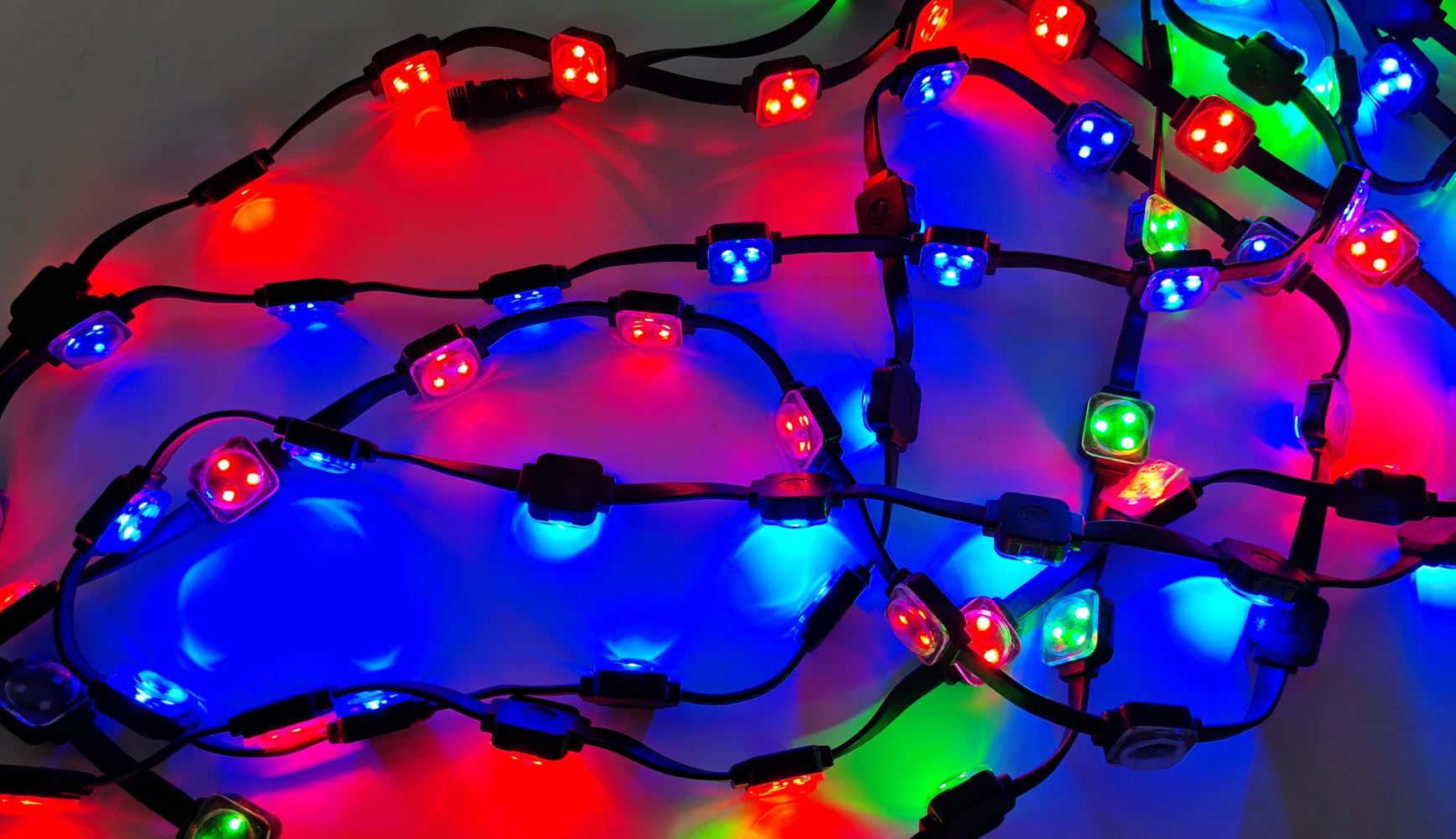
Optical Distribution: How Each Node Shapes the Canvas
Beam patterns and luminous distribution
Every LED point light is an optical system. Inside the shell, LED chips sit under encapsulant and micro-optics; outside, the geometry of the dome or lens defines how candela is distributed into space. The result is a beam pattern that might be wide and soft, narrow and punchy, or deliberately asymmetric.
For media facades, a wide horizontal spread with a controlled vertical profile is common. You want pedestrians across a plaza, drivers on a ring road and people in opposite buildings to read the content, but you do not want raw glare pushing into interior offices. XinHe’s point light sources are integrated into mesh configurations with typical beam angles around 120–160 degrees, which suits large-pitch media grids applied to glass curtain walls and open steel structures.
Because each point is physically separated, you also get a very particular visual texture. From far away, the beams blend into a continuous image; up close, viewers see a sparkling, three-dimensional pattern that many architects prefer to the “solid TV wall” look. Getting that balance right is part science, part experience: the IES curves tell you the distribution, but test installations reveal how the facade actually reads when people walk under it on a rainy night.
Matching optics to viewing distance and pixel pitch
Optical distribution cannot be separated from pixel pitch. A P125 mesh with a 160-degree beam behaves very differently from a tight-pitch grid designed for 25–30 mm spacing. For long-distance landmark viewing, XinHe’s high-brightness mesh products with pitches above 100 mm and wide beams deliver enough vertical reach and perceived uniformity for towers and super-wide facade, while keeping weight and wind load reasonable.
On more intimate facade – say a shopping street elevation where the closest viewing distance may be only 15–20 meters – designers tend to tighten both pixel spacing and beam control. A denser array of LED point light sources with carefully chosen optics can carry more detailed content without making individual nodes feel aggressive or “overexposed” at close range.
RGB Color Mixing and Brightness Uniformity
Additive RGB color mixing inside each point
Modern LED point light sources for media facade are typically full-color RGB nodes. Each one contains separate red, green and blue emitters that combine through additive color mixing. By modulating the drive current for each channel, the system can generate millions of colors; this same principle underpins everything from LED displays to architectural wall washers.
The engineering challenge is to make that mixing happen in a tiny volume so the observer perceives a single, homogeneous color rather than separate red, green and blue dots. XinHe’s point lights use mini-packaged LEDs and encapsulation structures that promote internal mixing, sometimes combined with surface micro-prism textures, so the color emerging from the dome is visually uniform even at relatively short distances.
Color consistency, MacAdam ellipses and SDCM
Getting vivid colors once is easy; getting the same colors across tens of thousands of pixels and over many years is hard. This is where color science enters the picture.
In LED engineering, color consistency is often described in terms of MacAdam ellipses and SDCM (Standard Deviation of Color Matching). A MacAdam ellipse on the CIE chromaticity diagram marks a region where color differences are not noticeable to an average observer. Smaller ellipses and lower SDCM values correspond to tighter binning, which directly improves the perceived uniformity of a lit surface.
For modern media facades, that means white content looks like the same white on every elevation, and corporate colors do not shift from “slightly greenish” on one wing to “slightly magenta” on another. XinHe highlights strict control over LED selection and process, positioning its point light sources and grid screens for high consistency in color and brightness, which is especially important for large-area video content.
Engineering brightness uniformity on the facade
Brightness uniformity is the other half of the story. Even if the chromaticity is perfectly matched, variations in luminous flux will create visible bands and blotches. Industry guidance for outdoor LED systems notes that thermal design, driver behavior and long-term lumen maintenance all affect how uniform the facade will look after thousands of on-off cycles and wide seasonal temperature swings.
XinHe’s grid screens and point light arrays address this through a mix of factors: stable high-output chips, low-voltage DC feed, and IP67-rated potting that protects solder joints and optical surfaces from moisture and dust. By keeping each node’s environment as stable as possible, the system reduces random brightness drift between pixels over time.
Outdoor Reliability: Built for Real Weather, Not Just Renderings
Environmental stresses on LED point light sources
On paper, any LED product looks tidy: fixed lumen output, rated lifetime, simple derating curves. In the field, outdoor media facades deal with something messier – daily thermal cycling, wind-driven rain, UV, airborne pollutants, vibration and occasionally lightning. Field studies and reliability reviews for high-power outdoor LEDs show that humidity, temperature swings and inadequate sealing are leading causes of early failure and rapid performance degradation.
For LED point light sources, the weakest points are often where optics, housing and cable meet. Microscopic water ingress corrodes PCBs, freezes in winter, and gradually breaks mechanical seals. Thermal expansion and contraction can open micro-cracks in potting or gaskets. Over time you get intermittent faults, color shift in compromised modules, and finally dark pixels scattered across the facade.
How XinHe designs for harsh outdoor conditions
XinHe’s grid screens built from point light sources are potted with two-component PU and rated to IP67, allowing installation on both curved and flat surfaces in exposed positions, while resisting impact, tensile forces and UV.
Nodes are designed to withstand significant tensile load per point, which matters when mesh curtains hang many stories above ground or when wind-induced movement stresses the wiring. The system architecture uses low-voltage DC, waterproof connectors and multi-spec pixel matrices such as 16×16 or 12×12 per square meter, so the facade can be tuned to specific viewing distances and brightness targets without compromising reliability.
In real-world terms, that means a developer can specify a media facade on a coastal high-rise or a northern climate and still expect stable RGB output and minimal maintenance for many seasons, rather than constantly chasing failures after the first winter storm.
Engineering Advantages of XinHe LED Point Light Sources for Media Facades
Grid-based architecture and optical control
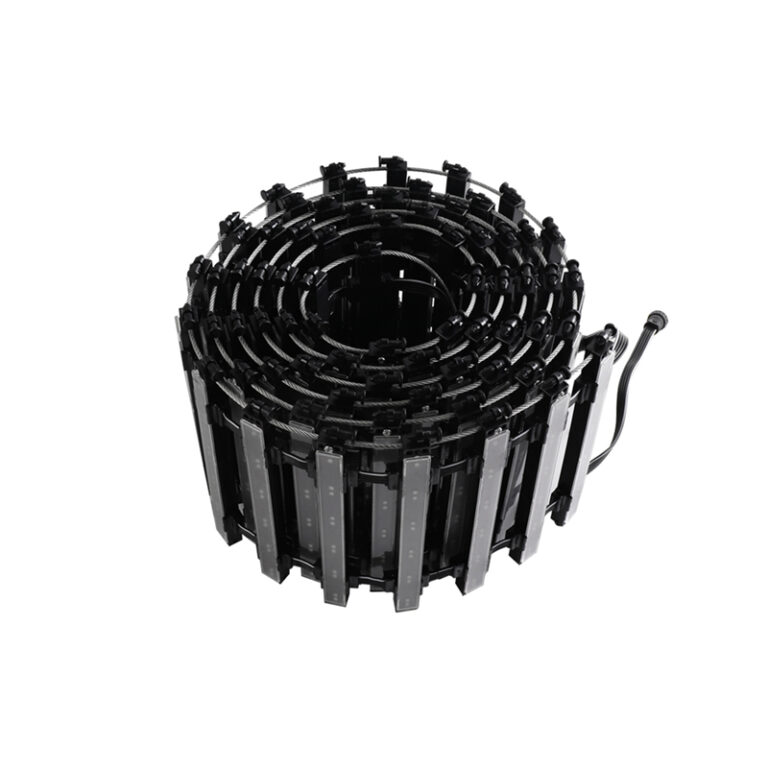
Media facades built with XinHe LED point light sources typically use a grid or mesh architecture: LED nodes, PC clip bases and steel wires combine into modular strings that can be rolled for shipping and quickly assembled on site. This construction keeps flatness high and spacing uniform, which is essential if you want to reproduce video content without geometrical distortion or moiré artifacts.
Because the point lights are discrete and addressable, designers can treat them as a low-resolution media surface or as a high-impact decorative layer, depending on content. Soft color waves, logo reveals, narrative scenes or simple chases are all possible with the same hardware platform; the difference lies mainly in pixel pitch, drive strategy and content design.
Control, diagnostics and life-cycle thinking
Behind the optical behavior is a control philosophy built for large facade. XinHe’s systems incorporate power-on self-check functions, continuous cross-point signal backup and both synchronous and asynchronous control modes, so a single fault does not kill a whole string and content can run even if the live source is temporarily disconnected.
This matters for long-term cost of ownership. When nodes are robust, electrically backed up and mechanically secure, facility teams spend less time on emergency access and more on planned maintenance. For media facades that are physically hard to reach, that difference can define whether the system remains a flagship feature or quietly fades into the background after a few years.
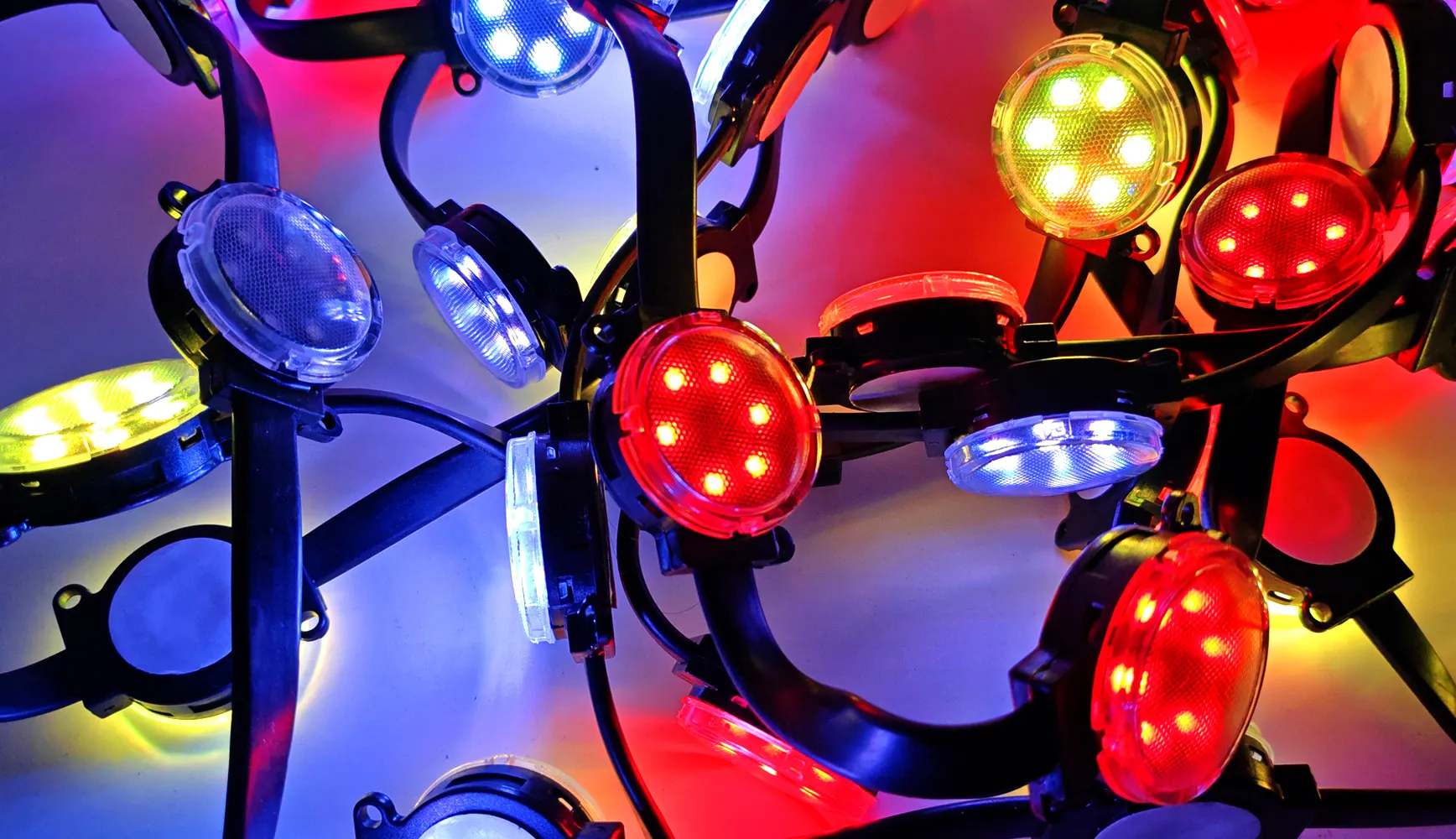
Shenzhen XinHe Lighting Optoelectronics Co., Ltd: Focused on Point Lights and Grid Screens
Shenzhen XinHe Lighting Optoelectronics Co., Ltd was founded in 2004 in Shenzhen and has spent two decades specializing in LED point light sources and grid screens with independent intellectual property. The company provides not only products but also scheme design, project budgeting, product supply and on-site guidance for large architectural landscape and advertising lighting projects.
XinHe operates a complete production system covering R&D, production and testing, has obtained multiple national high-tech and innovation honors, and holds international quality and environmental management certifications including ISO 9001 and ISO 14001. Its “Bean” series of exposed and point light products have accumulated more than eighty independent patents and have been used on landmark projects, including high-profile event installations and large-scale building facade in China and abroad.
For B2B customers looking at modern media facades, that background means XinHe is not experimenting on live projects. The company’s LED point light sources and mesh systems are part of a mature ecosystem that has already passed through multiple generations of optical, electrical and mechanical refinement in real installations.
Conclusión
When you put all the engineering pieces together, it becomes clear why LED point light sources sit at the heart of so many modern media facades. A single node combines optical distribution, RGB color mixing, brightness stability and environmental protection in a compact package. Multiply that by thousands, and the building either becomes a smooth, expressive media canvas or a patchy, maintenance-heavy liability.
Point light optical distribution decides how the facade reads from different streets and viewing angles. RGB color mixing and tight binning, explained by concepts like MacAdam ellipses and SDCM, control whether colors stay consistent across the entire canvas. Brightness uniformity and thermal design determine whether that canvas still looks good after years of operation. Outdoor reliability, from IP67 sealing to mechanical robustness, answers the simple question every owner eventually asks: “Will it keep working through real weather?”
Shenzhen XinHe Lighting Optoelectronics Co., Ltd builds its media facade product lines around those engineering principles. From grid-based LED point light meshes to crystal-style transparent screens, the company’s high-consistency Fuentes de luz puntuales LED translate theory into hardware that can live on real buildings, in real cities, with real audiences. For developers, designers and integrators, that combination of optical science and field-tested reliability is exactly what turns a facade concept into a stable, long-term asset.
FAQs
Why choose LED Point Light Sources instead of a traditional LED panel wall for a media facade?
LED point light sources give you a media surface that follows the building, rather than forcing the architecture to act like a flat TV. For modern media facades where transparency, natural daylight and lightweight structure matter, grid screens built from point lights can cover huge areas with far less steelwork and wind load. At the same time, carefully designed optics and RGB color mixing let each node behave as a stable pixel, so the overall visual result is closer to a digital skin than to decorative sparkle.
How do RGB color mixing and binning affect the look of a large facade over time?
RGB color mixing inside each point light uses additive color theory: red, green and blue channels blend to create the final hue. When the underlying LEDs are binned tightly for chromaticity and brightness, described by low-step MacAdam ellipses and SDCM values, the entire facade looks consistent even as you add or replace modules. If binning is loose, modern media facades may start clean but slowly develop visible bands of slightly different white or brand color. High-consistency LED Point Light Sources, like those used in XinHe’s mesh and grid products, are engineered to keep that drift small enough that observers never think about it.
What should I pay attention to in the optical design when specifying LED point lights?
For media facades, you should look at beam angle, luminous intensity distribution and pixel pitch together. A wide beam with the wrong spacing can create glare up close and a washed-out look from far away; a narrow beam on a very high tower may punch nicely at a distance but disappear when people walk directly underneath. The engineering principles are simple: match beam profile to typical viewing zones, match pixel pitch to minimum viewing distance, and choose LED Point Light Sources whose optics are stable across temperature so the facade does not develop hot and dark bands as seasons change.
How do outdoor reliability requirements change the way point lights are built?
Outdoor installations face rain, dust, UV, vibration and constant thermal cycling, so modern media facades need point lights with robust housings, deep potting and IP67-level protection. Reliability studies show that moisture ingress and high junction temperatures are key drivers of early LED failure, which is why XinHe’s grid and mesh systems use low-voltage DC supplies, waterproof connector systems and fully potted nodes to protect solder joints and optics. Over the life of the facade, that extra engineering tends to show up as fewer dark pixels, fewer site visits and a more stable visual impression.
Where does Shenzhen XinHe Lighting Optoelectronics Co., Ltd fit into the media facade market?
Shenzhen XinHe Lighting Optoelectronics Co., Ltd is a specialized manufacturer and project partner focused on LED Point Light Sources, LED mesh screens and related systems. With a history dating back to 2004, a complete production chain in Shenzhen, and decades of experience on large building facade and transparent screens, the company is positioned as a technology-driven supplier for modern media facades rather than a general lighting brand. For B-side customers who need a partner that understands both engineering principles and real-world installation constraints, XinHe offers point light and grid solutions that tie optical distribution, RGB color mixing, brightness uniformity and outdoor reliability into one coherent facade platform.



 Spanish
  English
  Arabic
  Russian
  French