
Introduction: Why Stadiums Are Turning to Giant Screen Grid Screens
Sports venues today are more than places to watch a game—they’re massive entertainment hubs, expected to deliver crisp visuals that fans can see from hundreds of feet away. However, traditional LED displays often fall short. They draw heavy power, create heat pockets, add unnecessary weight to existing structures, and struggle with curved or irregular surfaces.
This is why giant screen grid screens have quickly become the go-to solution for stadium operators looking to boost visibility while keeping power costs under control. Modern grid screens offer long-distance viewing, lightweight builds, and flexible installation—even on big curved facades.
Shenzhen XinHe Lighting Optoelectronics Co., Ltd, with its XH grid screen series, is one of the companies redefining large-format stadium displays. The brand’s products combine high transparency, low weight, and IP67 protection, making them ideal for year-round outdoor use. Much of the technical data below is taken directly from XinHe’s official product documentation.
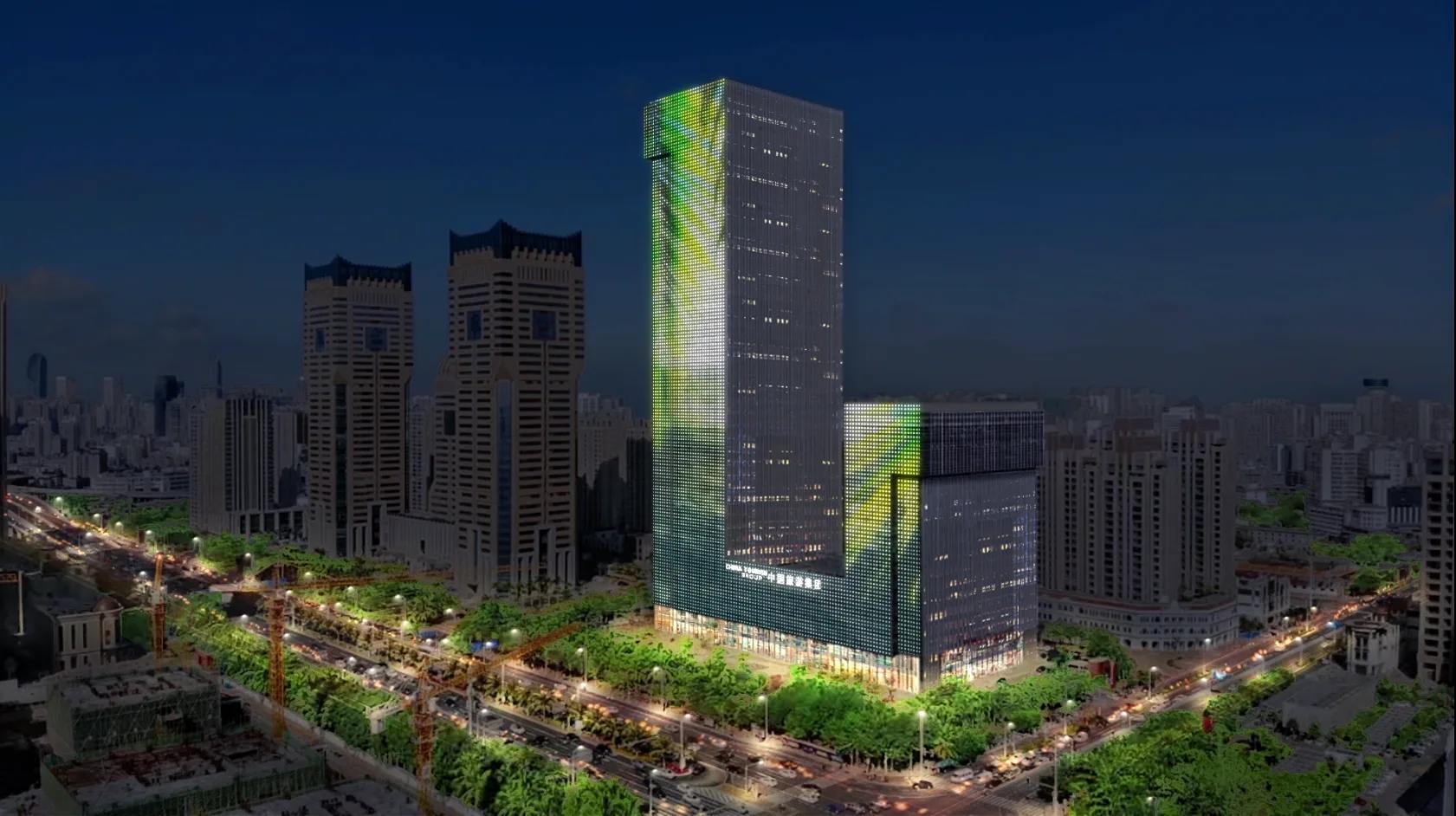
How Grid Screens Improve Stadium Visibility
High-Brightness LEDs Designed for Long-Distance Viewing
Fans sitting 150 meters away shouldn’t struggle to read the score. XinHe’s grid screens are engineered for large arenas and open plazas, with brightness levels reaching up to 7000 cd depending on the model.
Wide 160° viewing angles ensure spectators at both ends of the stands get the same clear picture—no color washout, no dead zones.
Real-World Stadium Scenario
During night games, operators often dim traditional LED screens to avoid glare. But grid screens maintain clarity even at lower brightness, thanks to uniform pixel spacing and optional densities (for example, 50mm, 62.5mm, 83.3mm, and 100mm spacing). Different spacing options let stadiums pick the right balance between visibility and energy efficiency.
Compatible With Curved and Irregular Architecture
Most stadiums aren’t designed with flat walls. Many feature curved exteriors, arch-shaped roofs, or sloped structures. Traditional panels usually require heavy framing to fit curved surfaces, driving up construction costs.
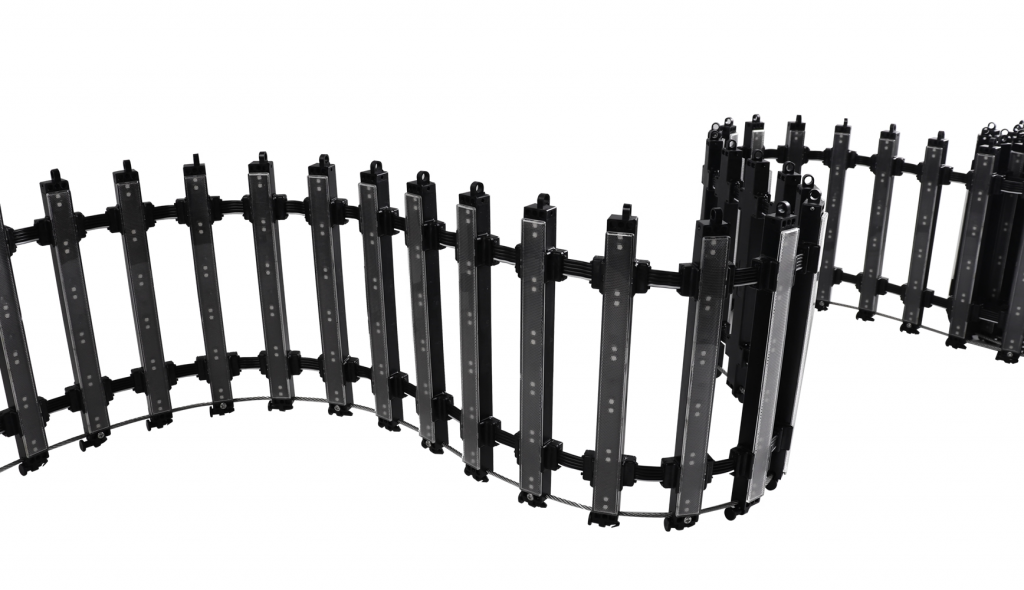
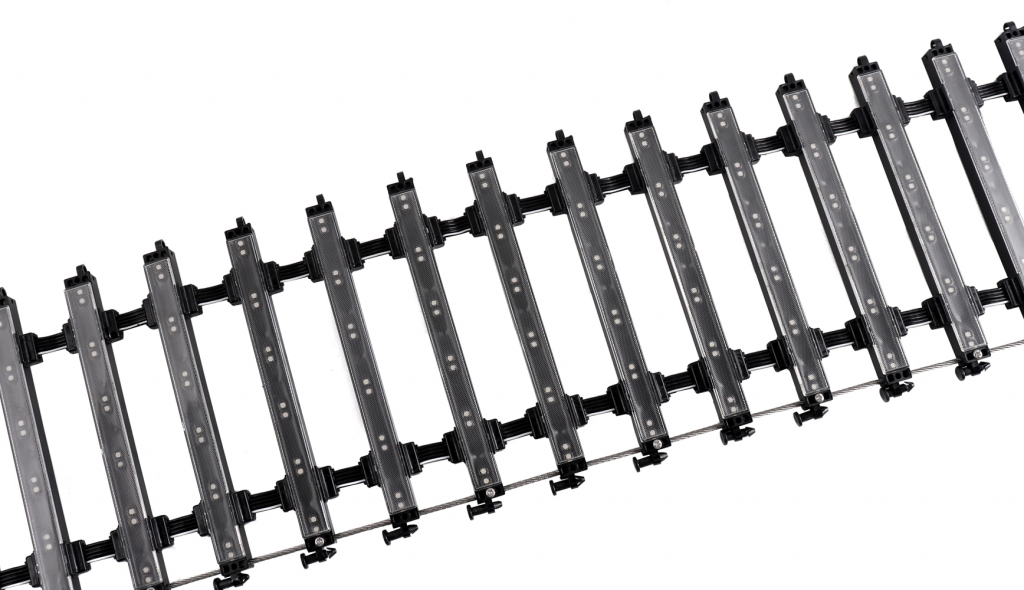
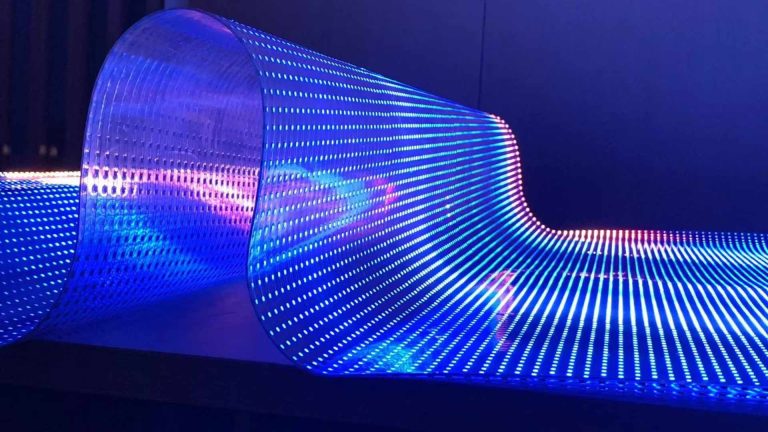
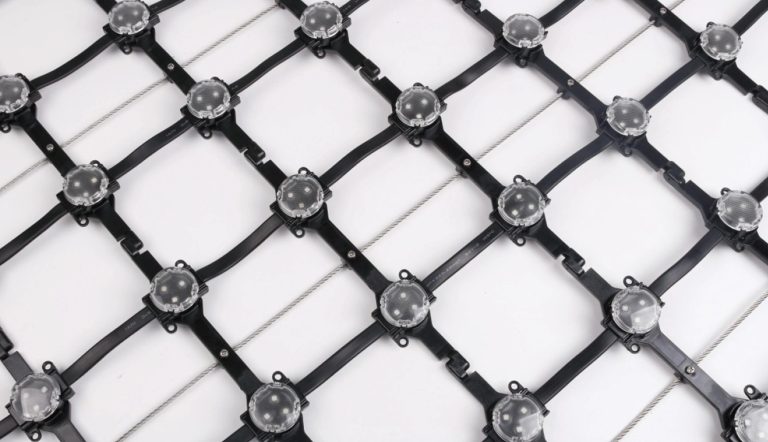
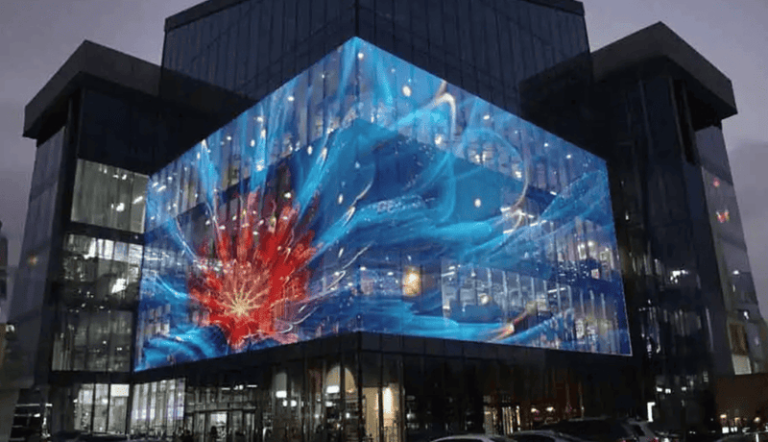
XinHe’s modular grid architecture solves this pain point. The thin, lightweight grid format allows installers to bend, wrap, or shape the screen according to stadium architecture. As noted in the official spec sheets, models like the G20, G30, H2501, and H30 series are frequently used on:
- glass curtain walls
- steel structures
- large curved facades
- complex building surfaces
This flexibility makes grid screens ideal for giant perimeter displays, stadium entrances, or fully wrapped 360° scoreboard walls.
Cutting Power Costs Without Sacrificing Impact
Low Power Consumption Design
Power draw is one of the biggest operational expenses for large stadium screens. Traditional panels often consume 300–800W per square meter, and cooling systems add even more cost.
Grid screens use significantly less power due to:
- lightweight PC housings
- transparent structures that reduce heat buildup
- open-air ventilation
- self-heat-dissipating design
For example, XinHe’s G20 series lists maximum power ratings between 60W and 120W, depending on density—far lower than solid LED panels of the same size.
What This Means for a Stadium
A stadium running a 500 m² LED facade could save thousands of dollars yearly simply through lower operating wattage and reduced cooling requirements.
Self-Heat Dissipation = No Extra Cooling Systems
Traditional LED walls trap heat. When screens overheat, pixels degrade, brightness drops, and expensive cooling systems become necessary.
XinHe’s grid screens feature a transparent self-heat-dissipation structure, allowing natural airflow to pass through. This decreases thermal stress and prolongs LED lifespan. With IP67 protection and flame-retardant materials, the screens remain stable in rain, sun, wind, or snow—critical for open-roof sports arenas.
Lightweight Construction: Easier Installation, Less Structural Load
Stadiums frequently retrofit displays onto older structures. Heavy solid panels can add several tons of extra weight, requiring costly reinforcement.
Grid screens avoid this. Many XinHe models weigh between 1.3 kg and 6.5 kg per panel depending on size, significantly reducing the load placed on stadium facades.
Thanks to the bolt splicing steel wire fixation system, installers can assemble the screens quickly—sometimes without heavy machinery. For stadiums preparing for seasonal tournaments or special events, fast installation means less downtime and lower labor costs.
Durability That Matches Stadium Demands
Stadium screens must withstand:
- year-round weather
- vibrations
- impact shock
- salt spray (common in coastal cities)
XinHe’s models are rated IK10 for impact resistance, carry V-0 flame-retardant ratings, and pass salt-spray resistance tests per the specification sheets.
With an average lifespan exceeding 30,000 hours, stadium operators can run multiple seasons without worrying about large-scale pixel failure.
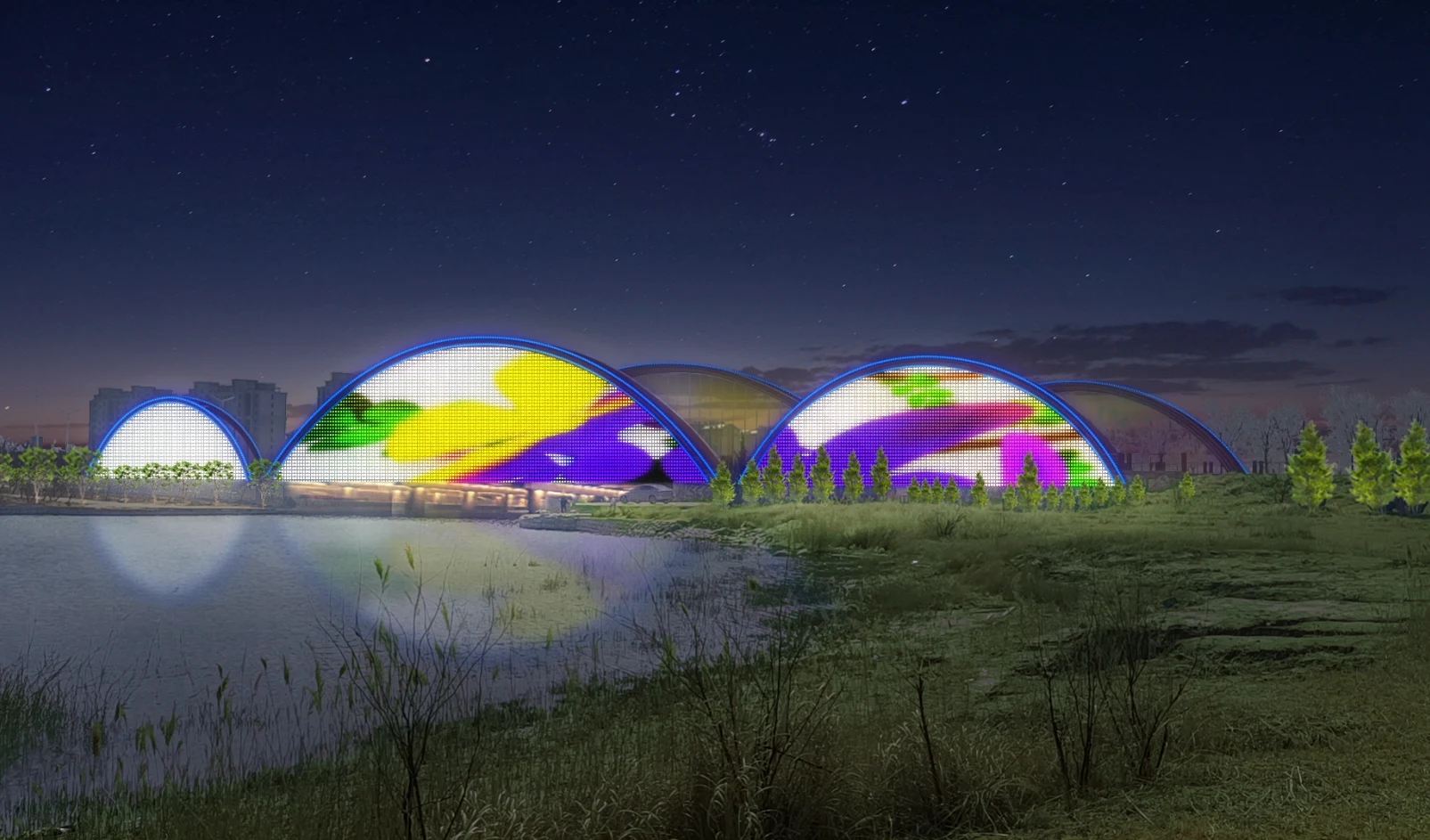
Application Scenarios in Modern Stadiums
Stadium Exterior Branding
Huge grid screens transform exterior walls into dynamic branding surfaces for sponsors, team logos, and event announcements.
360° Wraparound Scoreboards
Curved-compatible designs make them ideal for wraparound video rings or halo boards.
Entrance and Concourse Displays
Lightweight panels can hang safely above entrances or ticketing areas.
Live Game Visuals
High transparency ensures no airflow blockage—critical for areas near ventilation or emergency exits.
About Shenzhen XinHe Lighting Optoelectronics Co., Ltd
Shenzhen XinHe Lighting Optoelectronics Co., Ltd is a manufacturer known for engineering LED display solutions that combine practicality with cutting-edge structural design. Based in Shenzhen—a global hub for LED innovation—the company focuses on large-format giant screen grid screen systems used in stadiums, skyscrapers, cultural tourism landmarks, and commercial advertising displays.
Its grid screen series, including the G20, G30, L20006, H2501, H2502, H2503, and H30 lines, emphasize transparency, modularity, and durability. The company also holds exclusive patents covering structural design and density-optional LED modules. This mix of engineering strength and real-world usability has made its screens widely adopted across major architectural and entertainment projects.
Conclusión
Giant screen grid screens are rapidly becoming the standard for modern stadiums that need powerful visual impact without skyrocketing power bills. Their low-weight builds, long-distance visibility, and compatibility with curved structures make them far more practical than traditional LED walls.
Shenzhen XinHe Lighting Optoelectronics Co., Ltd stands out in this space with grid screen products engineered for durability, energy savings, and year-round outdoor performance. For stadium owners looking to upgrade their visual systems without major structural modifications or high energy costs, grid screens offer a smart, future-ready choice.
FAQs
How do giant screen grid screens reduce power costs in stadiums?
Grid screens use lower-wattage LEDs and transparent structures that naturally dissipate heat. This reduces the need for cooling systems and cuts overall power consumption—making them far more efficient than traditional solid LED panels.
Are grid screens bright enough for long-distance visibility?
Yes. Many models in XinHe’s portfolio reach between 4000–7000 cd, which is more than enough for large stadiums where spectators may sit over 100 meters away.
Can giant screen grid screens be installed on curved stadium walls?
Absolutely. Their flexible, modular design allows installers to shape them around curved, sloped, or irregular structures without adding heavy steel framing.
How durable are grid screens for outdoor stadium use?
Most XinHe grid screens offer IP67 waterproofing, IK10 impact resistance, and salt-spray protection, making them ideal for year-round outdoor environments.
What makes grid screens different from traditional stadium LED screens?
They’re lighter, more transparent, more power-efficient, and easier to install. They also work better with modern stadium architecture, especially when large or curved surfaces are involved.



 Spanish
  English
  Arabic
  Russian
  French