
Stadium modernization projects leading up to the 2026 FIFA World Cup continue to place 2026 FIFA World Cup stadium lighting at the center of sustainability discussions. With sixteen venues spread across three countries, operators face increasing pressure to reduce energy consumption while still delivering the light quality needed for broadcast, player safety, and spectator experience. The shift toward high-efficiency lighting solutions has become very noticeable in recent years, driven by FIFA sustainability requirements, rising electricity costs, and the simple reality that lighting systems run many hours during tournament periods and testing phases.
Work already completed at several host venues shows exactly what direction the industry is moving. Estadio BBVA in Monterrey installed a modern LED sports lighting system that achieved FIFA Standard A compliance. The upgrade allows full dimming control, delivers more than forty percent energy reduction compared with the previous installation, and incorporates color-changing capability that significantly improves atmosphere during matches and events. Similar replacement projects are taking place at other locations where older fixtures are being phased out in favor of current-generation LEDs. These changes are not isolated — they represent a clear industry-wide movement toward sustainable LED for sports venues that simultaneously addresses environmental goals and practical operational needs.
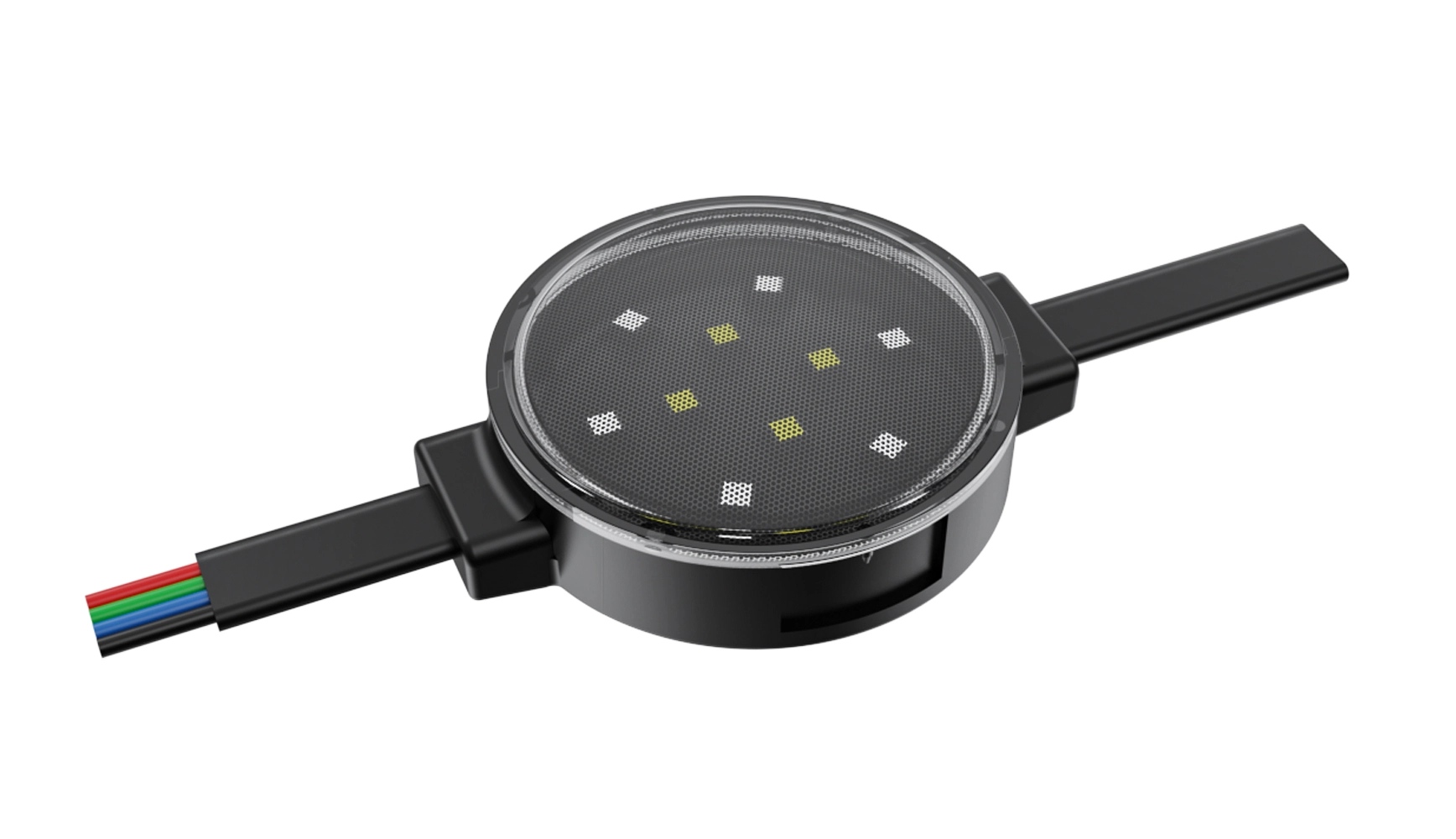
The pattern extends beyond the playing field. Host cities are upgrading surrounding areas, fan zones, and urban nightscapes to accommodate significantly increased visitor numbers. All of these spaces require lighting that runs for extended periods, often under demanding weather conditions. This creates strong demand for solutions that combine very good energy performance with the ability to deliver dynamic visual effects. Programmable LED architectural lighting has become particularly interesting in this context because it allows meaningful visual experiences while keeping power consumption substantially lower than older technologies.
Main Sustainability Directions in 2026 FIFA World Cup Stadium Lighting
Strong Focus on Measurable Energy Reduction
FIFA sustainability framework sets concrete expectations for lower energy use across all tournament-related operations. Stadium lighting typically ranks among the largest controllable electrical loads because it operates for long durations during events, training, maintenance, and media work. Modern LED systems that achieve forty percent and greater reduction in power consumption have proven very effective. The numbers are not theoretical — several documented venue upgrades already show these savings in real operating conditions. Operators pay close attention to these figures because the difference appears directly on electricity bills and carbon reporting.
Extended Service Life Becomes a Major Consideration
Long-term reliability carries significant weight when facilities expect heavy usage over many years. Fixtures that show very low light decay rates maintain close to original brightness after thousands of operating hours. This stability reduces replacement frequency, cuts waste generation, and keeps maintenance costs predictable. Venues that plan with a ten-year or longer performance horizon usually find it much easier to justify quality components that hold performance over time rather than require frequent intervention.
Dynamic Effects That Don’t Sacrifice Efficiency
Spectators and broadcasters now expect much more than simple even illumination. Contemporary systems need to provide responsive lighting — color changes, pattern sequences, celebration effects — without dramatically increasing power consumption. Programmable LED architectural lighting addresses this need effectively. Modern RGB sources can create very attractive dynamic sequences while still maintaining excellent overall efficiency because individual pixels or groups can be dimmed or turned off when not required. This selective control represents one of the most practical ways to balance visual impact with sustainability objectives.
Sustainability Requirements Extend to Fan Zones and City Spaces
The sustainability discussion does not stop at stadium boundaries. Fan zone dynamic lighting installations must also demonstrate responsible energy use while creating engaging environments that keep visitors in the area for extended periods. Many host cities are applying the same thinking to major landmarks, pedestrian areas, and transportation nodes that will see greatly increased nighttime activity during the tournament. Efficient lighting solutions help manage additional load on local power infrastructure while still delivering the atmosphere people expect from a World Cup host city.
All of these directions in 2026 FIFA World Cup stadium lighting create a very clear set of requirements: high efficiency, long service life, dynamic capability, and outdoor durability. Technologies that meet most or all of these criteria are receiving serious consideration for both venue and city-related projects.
How Energy-Efficient RGB Pixel Lights Match Current Requirements
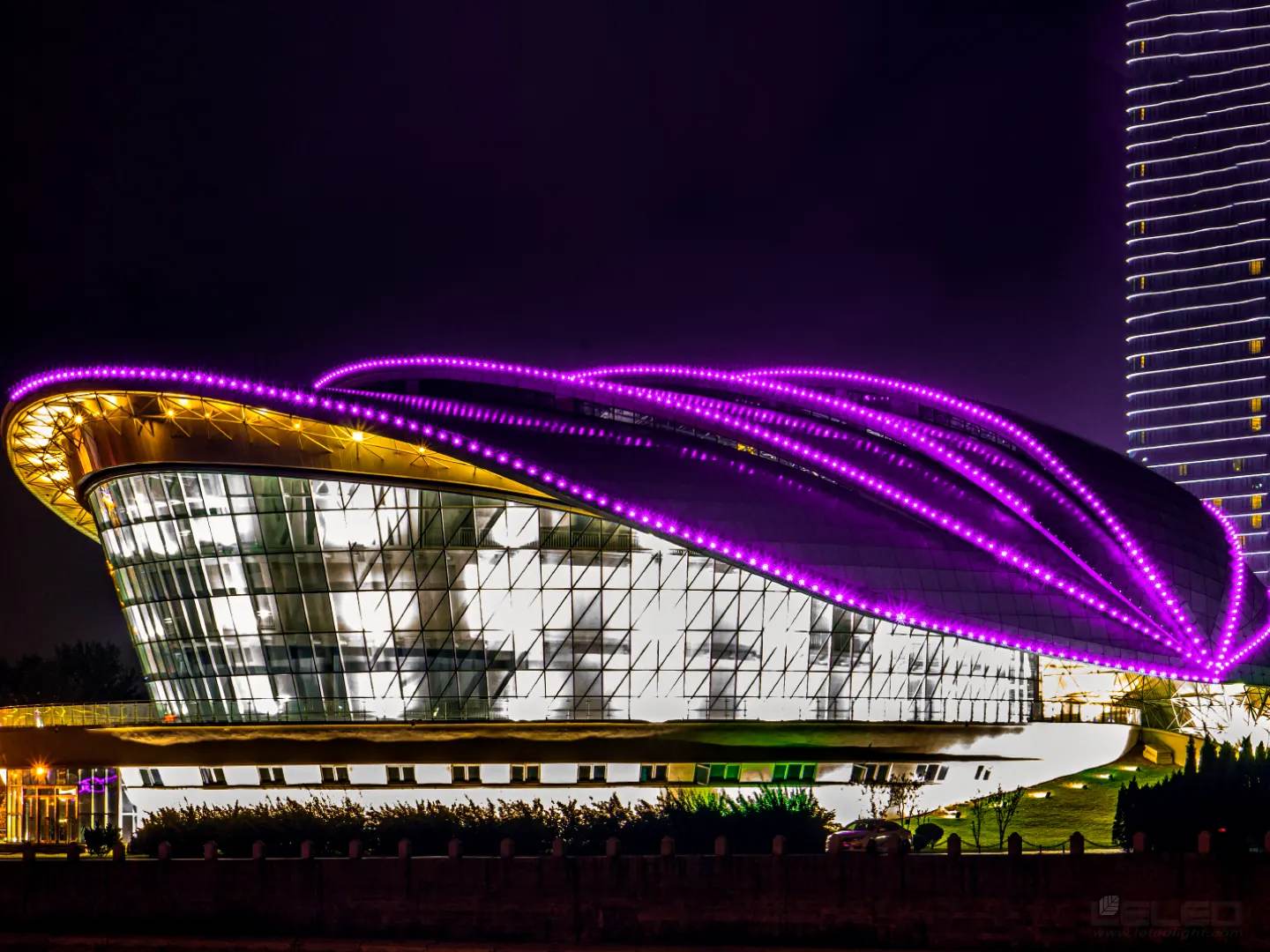
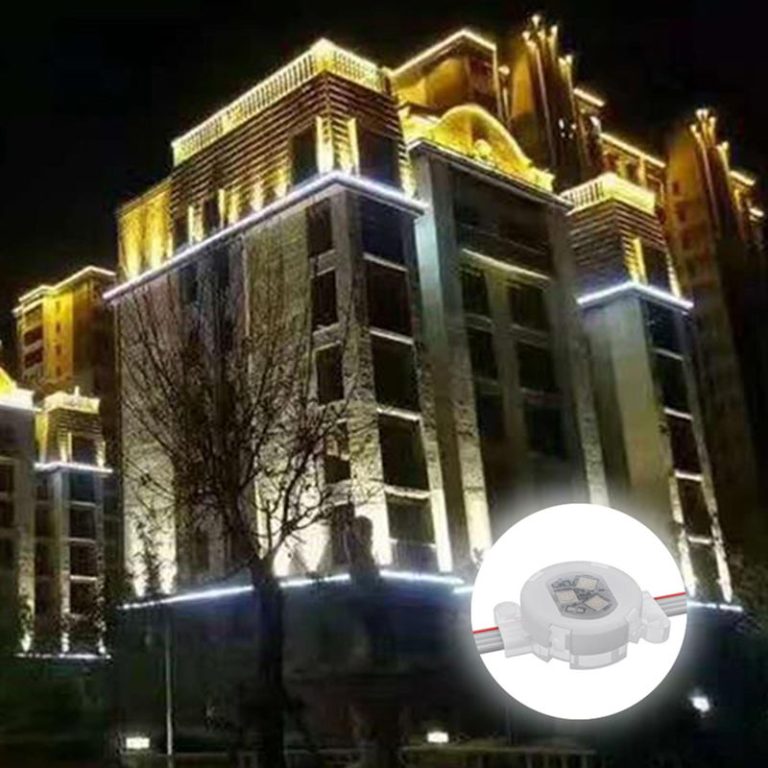
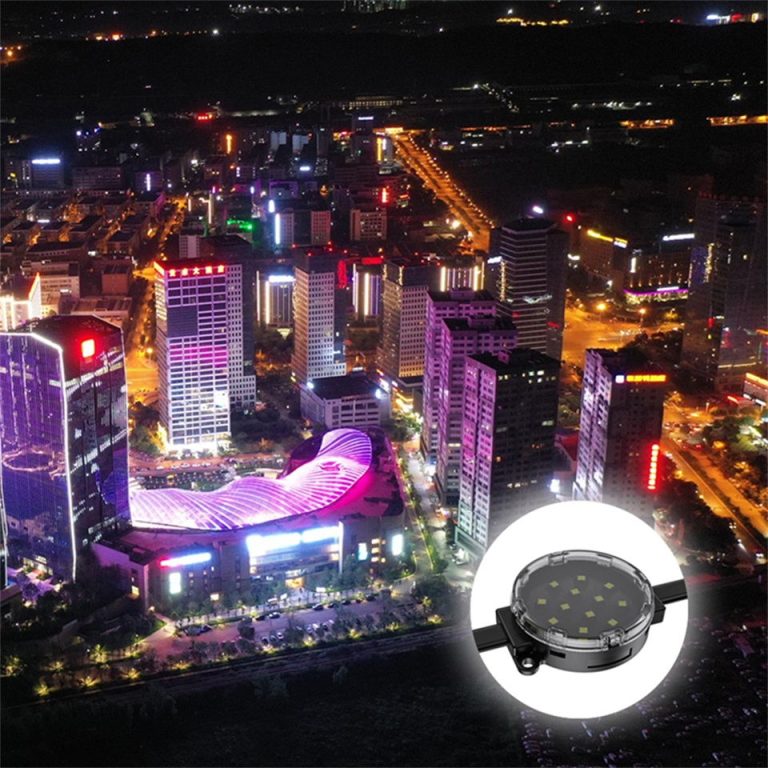
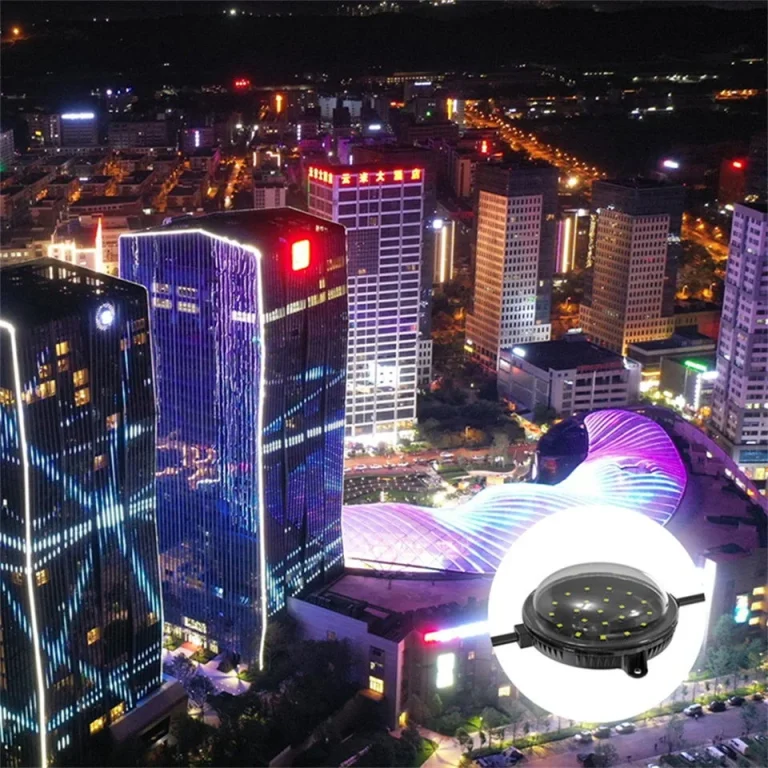
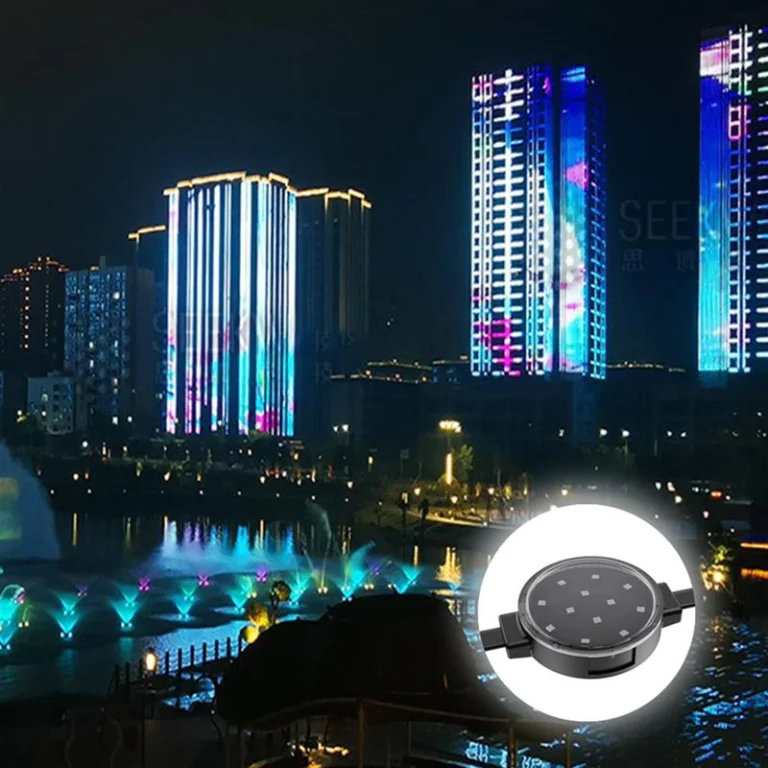
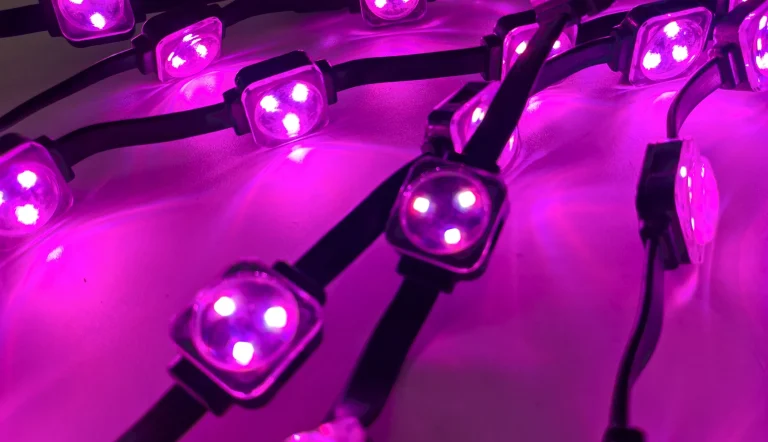
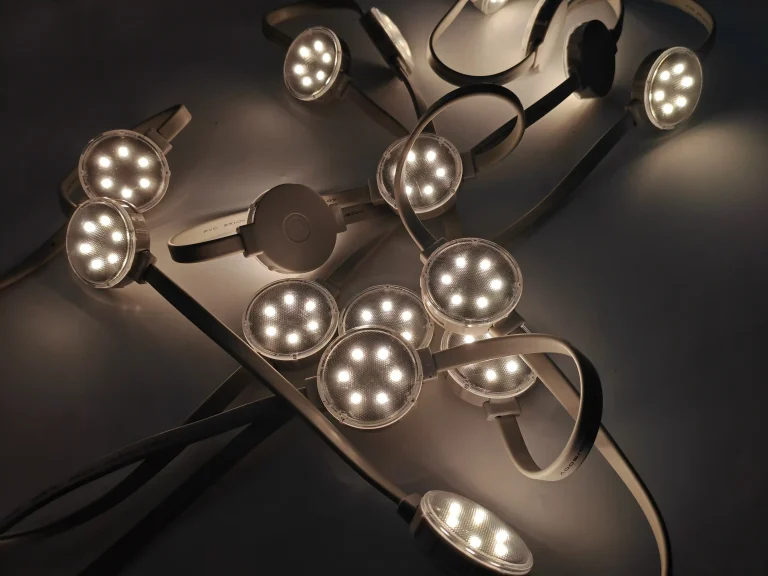
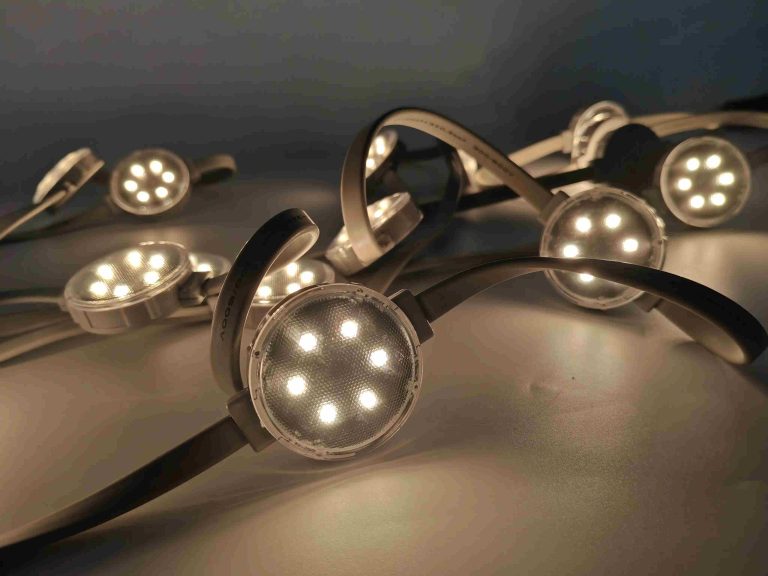
RGB pixel lights — most commonly realized as point source products — offer technical characteristics that correspond well with many of the demands coming from current venue upgrade projects. Their small physical size combined with individual pixel addressing makes them very suitable for detailed architectural treatments while keeping energy consumption in reasonable ranges.
Shenzhen XinHe Lighting Optoelectronics Co., Ltd manufactures RGB LED point lights that incorporate full DMX512 protocol support. This allows very accurate control over color, brightness, and timing — exactly what is needed when sequences must synchronize with match events, music, or broadcast cues. The high-brightness RGB performance produces strong, even colors that remain clearly visible from long distances, even when competing with surrounding ambient light or other light sources.
Energy performance stands out as particularly strong. The fixtures use high-efficacy LED sources that deliver substantial light output while drawing significantly less power than conventional alternatives. This efficiency directly supports the goals of sustainable LED for sports venues — lower electricity costs during operation and progress toward carbon reduction targets. At the same time, the products show very low light decay characteristics, meaning the installation maintains close to original performance level for much longer periods than many other options.
Outdoor durability is another important strength. Full IP67 protection provides reliable defense against dust ingress and temporary water submersion — conditions that are normal for most exposed facade mounting locations. This level of sealing substantially reduces the probability of weather-related failures and extends the practical service life under real-world environmental stress.
Installation flexibility increases the practical usefulness considerably. These point lights can be mounted using several different methods — aluminum profiles, directional steel wire systems, or direct screw-fixed bases. This range of options makes it much easier to follow curved, irregular, or architecturally complex surfaces that are common in contemporary stadium design.
In actual project situations, the technical profile performs well across different scales and applications. Pixel lights are routinely used to define clean building outlines, create gradual color transitions across large surfaces, and execute more complex responsive sequences. When connected to standard control systems, they integrate smoothly with other event elements — audio, video, timing triggers — creating cohesive experiences. In situations that draw inspiration from current venue development directions, the combination of very good control capability, strong light output, and solid environmental protection delivers dependable results in both permanent installations and shorter-term event applications.
Several additional practical aspects are worth noting. Many contemporary facade projects now use variable pixel pitch strategies — tighter spacing in lower viewing areas where detail matters most, wider spacing higher up where broad impact is more important. RGB point lights adapt very naturally to this kind of mixed-density design. Independent weathering chamber testing consistently shows excellent resistance to UV-induced degradation, which supports the longer warranty periods that commercial clients increasingly expect. The use of low-voltage DC power supply reduces electrical safety concerns in locations where moisture is possible, further reinforcing suitability for exterior architectural use.
Control system integration provides still another layer of value. DMX512 compatibility extends easily to more advanced protocols that allow centralized management together with other building functions. This becomes particularly useful in multi-purpose venues that regularly switch between event mode and normal daily operation. The modular nature of the system also means that individual failed pixels can be replaced without disturbing large sections of the installation — an important consideration when maintenance windows are short and public access must be maintained.
As sustainability expectations continue to rise across major international sporting events, energy-efficient RGB pixel lights represent one of the more balanced and practical approaches currently available for creating dynamic, visually interesting, and environmentally responsible facade lighting.
Shenzhen XinHe Lighting Optoelectronics Co., Ltd – Specialist in LED Facade Solutions
Shenzhen XinHe Lighting Optoelectronics Co., Ltd commenced operations in 2004 with a clear focus on point light sources and grid screens supported by independent intellectual property. The organization provides complete project services for large-scale architectural landscape and advertising lighting work, covering concept development, engineering budgets, product supply, and on-site technical supervision. The well-established “Bean” brand reflects more than twenty years of consistent development in this specialized field.
Important milestones include the 2006 development of one of the earliest LED cold light exposed sources, which later became the designated product for the 2008 Beijing Olympic emblems (“China Seal” and “Heaven and Earth Man”). Across the following years, XinHe solutions gradually replaced traditional neon in many applications, contributing to important refinements in point light manufacturing processes industry-wide. The company holds certifications including GB/T19001-2016/ISO9001:2015 quality management, GB/T24001-2016/ISO14001:2015 environmental management, and GB/T29490-2013 intellectual property management systems. The “Bean” product series includes more than eighty independent patents.
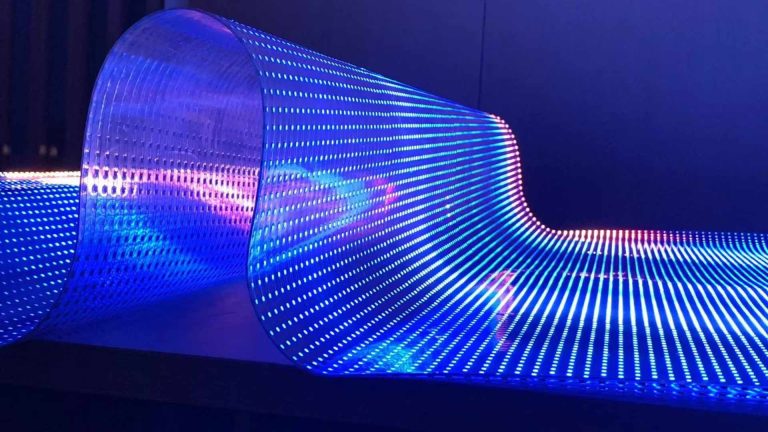
The 2024 market introduction of crystal truss screens followed three years of dedicated research and development. With modern production facilities and an experienced technical team, XinHe maintains very high standards in product longevity, color consistency, and energy efficiency across the complete product range.
Заключение
The clear direction of 2026 FIFA World Cup stadium lighting preparations shows growing emphasis on solutions that deliver excellent visual performance while making significant progress on sustainability targets. Energy-efficient RGB pixel lights, with their combination of precise control, strong output, and solid environmental protection, offer a practical path forward for facade lighting projects with similar requirements. Shenzhen XinHe Lighting Optoelectronics Co., Ltd brings deep specialized knowledge in this field, supplying reliable products and complete project support.
Teams working on event-related lighting, venue upgrades, or architectural facade projects are welcome to contact XinHe to discuss custom configurations that match specific technical and sustainability objectives.
FAQs
What is driving the push for energy efficiency in 2026 FIFA World Cup stadium lighting?
FIFA sustainability guidelines, combined with rising electricity costs and long operating hours, are pushing venues toward high-efficiency LEDs that achieve substantial power reduction while still meeting required illumination standards.
How do RGB LED point lights help achieve sustainable LED for sports venues?
These fixtures deliver high light output using significantly less power and show very low light decay over time, directly supporting lower operating costs and longer service intervals in sustainable LED for sports venues applications.
Why is DMX control important for programmable LED architectural lighting in stadium projects?
DMX protocol allows very accurate synchronization of color changes, intensity adjustments, and timing sequences, creating meaningful dynamic effects without unnecessary power consumption in programmable LED architectural lighting installations.
What benefits does IP67 protection provide for outdoor facade lighting?
The full IP67 rating gives strong protection against dust and temporary water exposure, which translates to much higher reliability and greatly reduced service requirements in exposed RGB LED point lights for facade locations.
Can energy-efficient RGB pixel lights be used effectively in fan zone dynamic lighting?
Yes — their combination of low power consumption and full programmability makes them very suitable for creating engaging, responsive atmospheres that keep crowds interested while maintaining responsible energy use in fan zone dynamic lighting applications.



 Russian
  English
  Arabic
  Spanish
  French