
High-rise buildings carry loads that most people never notice. While glass, concrete, and steel do the heavy lifting, anything added to the facade—especially large-format LED displays—changes how the building behaves under wind pressure. Anyone involved in facade engineering or landmark lighting knows this well.
As outdoor media facades continue to spread across cities worldwide, a key challenge keeps coming up: how do you add a massive digital screen to a skyscraper without overloading the structure or triggering wind safety concerns?
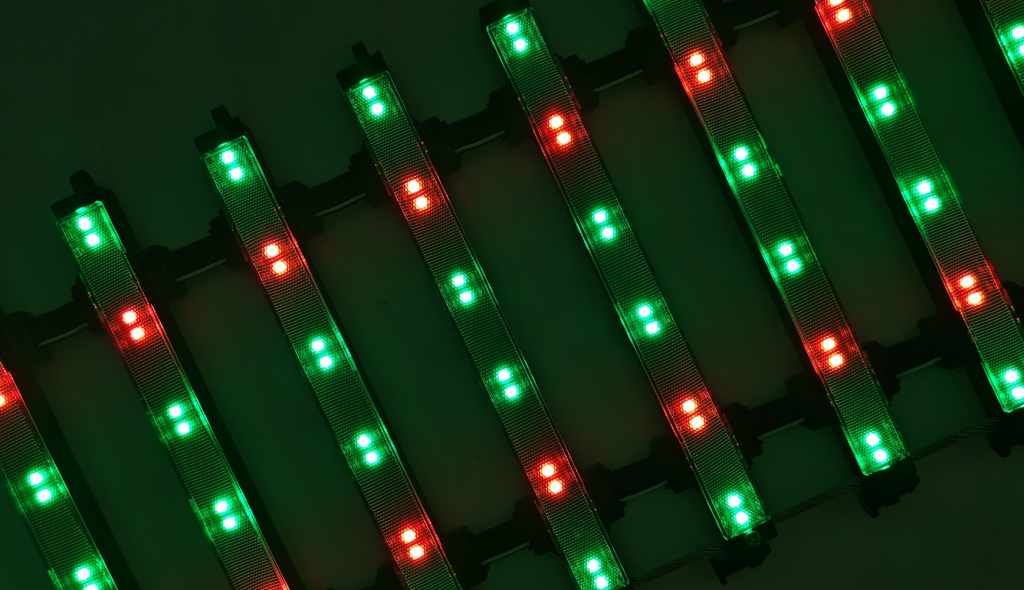
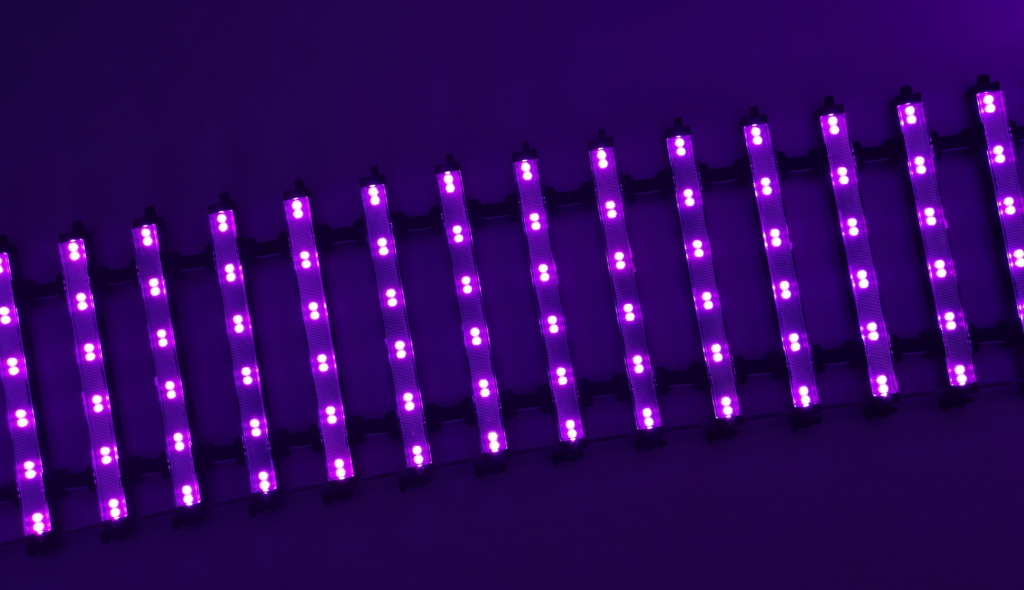
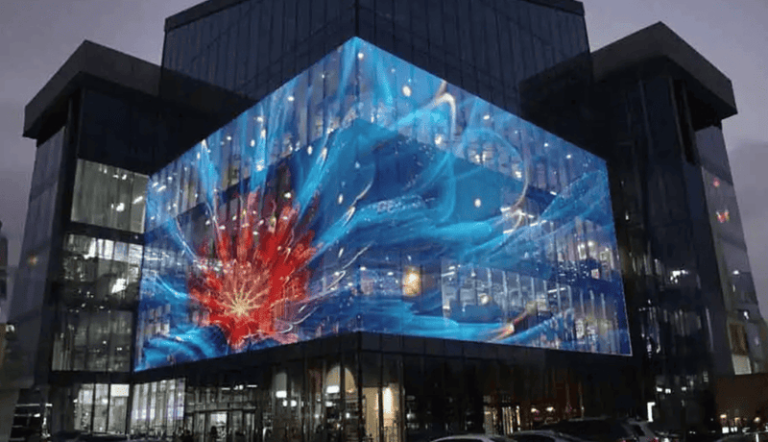
This is where giant grid screens (also called LED grille screens or high-transparency display systems) have emerged as a practical alternative to traditional LED cabinets. Instead of blocking wind like a giant “sail,” these screens allow airflow to pass through while still delivering large-scale visual impact.
For engineers, developers, and overseas contractors searching for safer facade display solutions, understanding how grid screens reduce wind load is essential.
Why Wind Load Matters for High-Rise facade Installations
Wind pressure increases dramatically with height. On a low-rise commercial building, a traditional LED screen may cause few structural concerns. But once you step into the 80-meter, 150-meter, or even 300-meter range, the story changes.
At those heights:
- Wind speed is higher
- Turbulence is stronger
- Lateral forces increase sharply
Traditional LED cabinets—with closed backs and dense metal housing—act like a solid wall. They catch wind, increase facade stress, and require heavy steel structures for reinforcement.
For building owners or commercial developers, this means:
- Higher installation costs
- Longer approval cycles
- More complex maintenance planning
- Increased safety risk during extreme weather
And for overseas markets like the Middle East and coastal Southeast Asia—regions prone to strong seasonal winds—this challenge becomes even more obvious.
Giant grid screens were designed to solve exactly this problem.
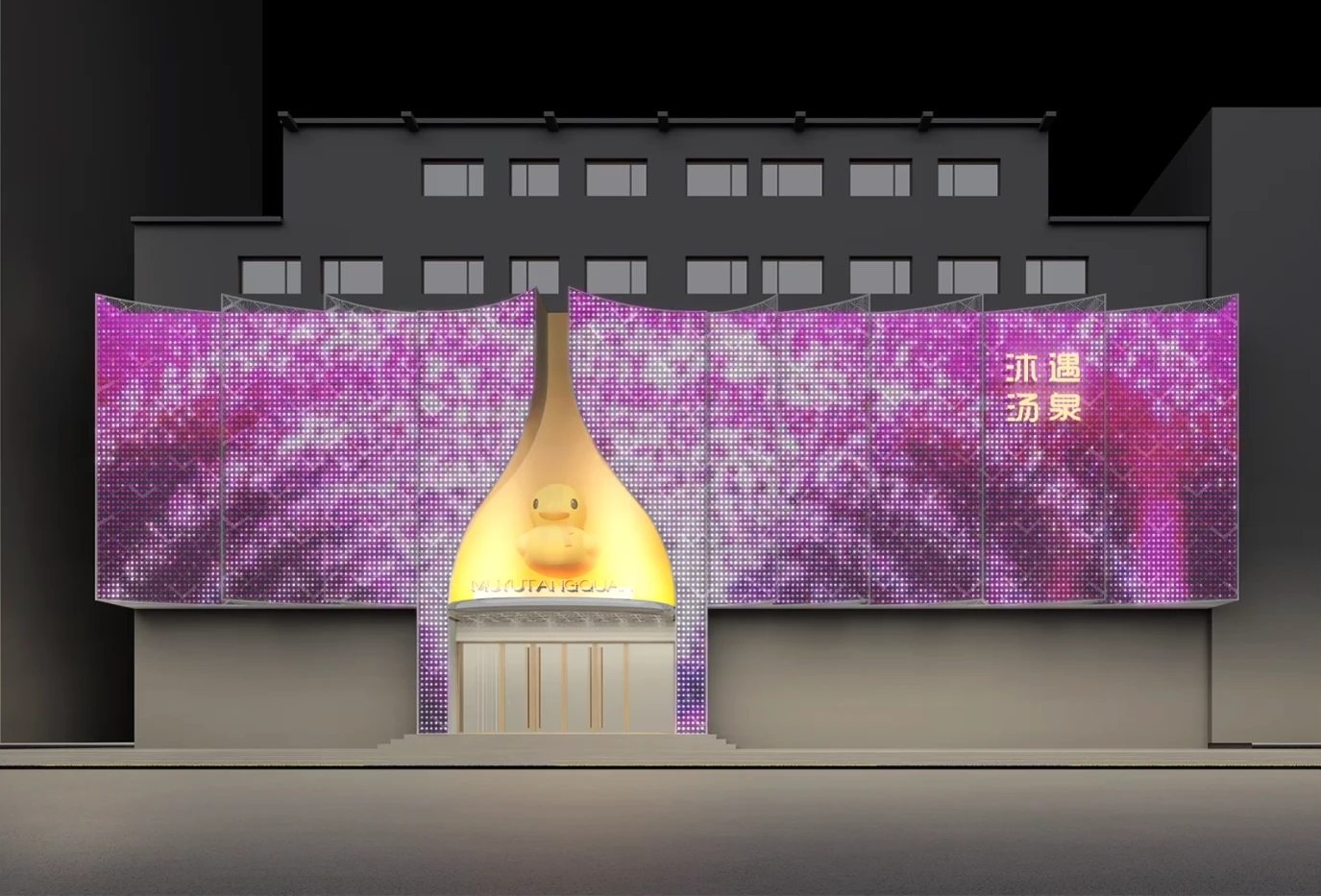
How Giant Grid Screens Reduce Wind Load
High Permeability Lets Wind Pass Through Instead of Pushing Against the Structure
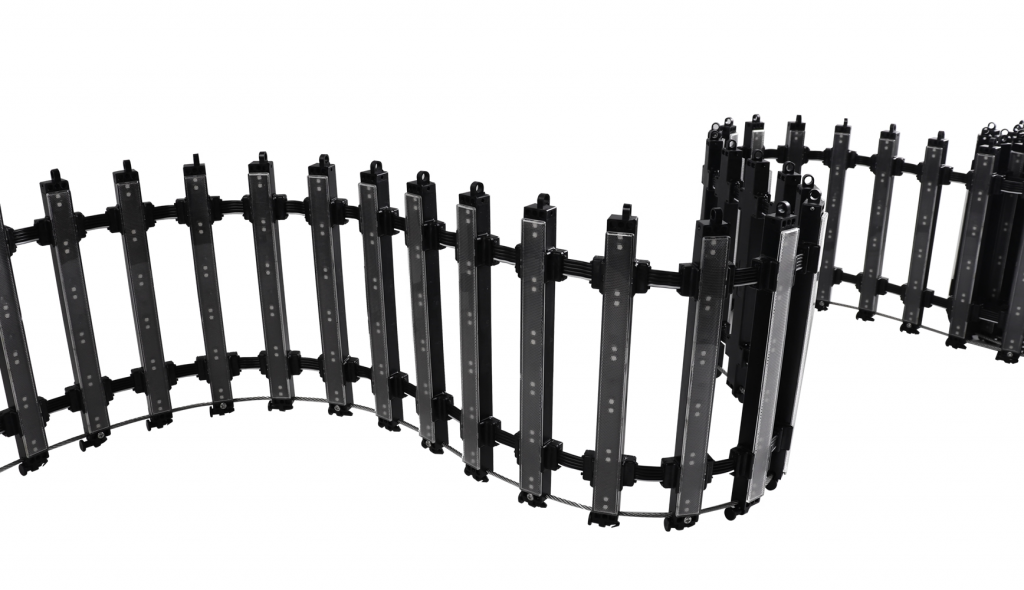
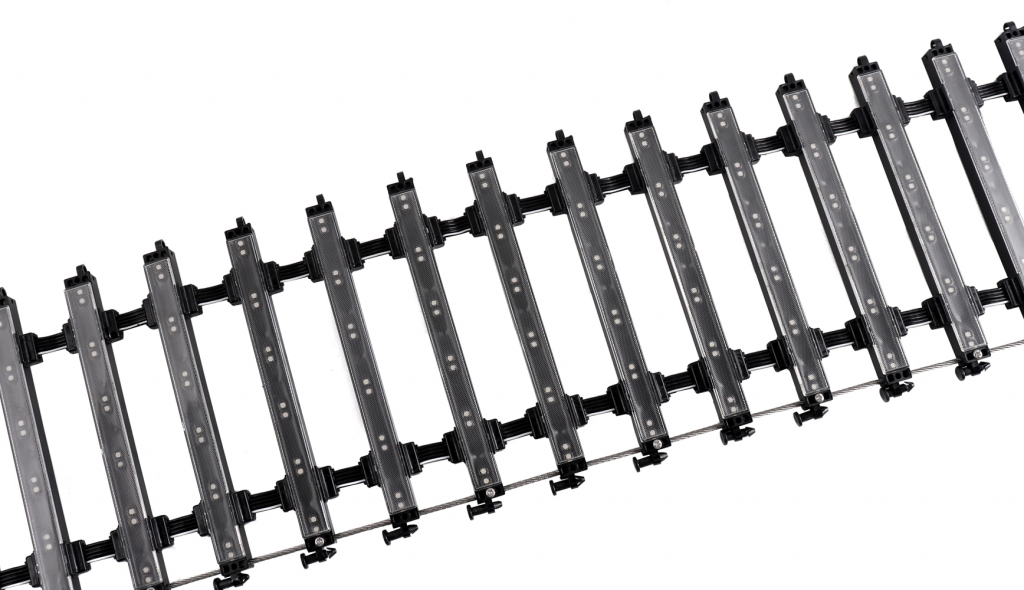
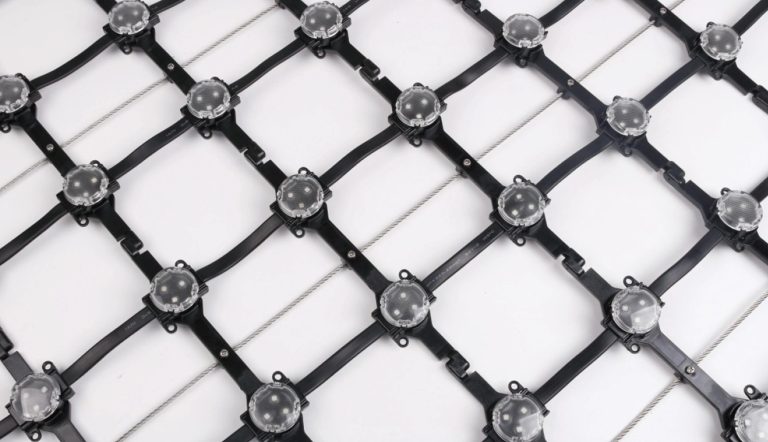
Unlike traditional LED cabinets that block 100% of wind, grid screens feature a hollow, louver-style design with a wind-permeability rate often reaching 40–80%.
This means:
- Less force impacts the mounting surface
- The facade retains its natural load characteristics
- Secondary steel structures can be lighter and simpler
For facade engineers, this directly reduces the safety burden on the building.
Lighter Weight Means Lower Stress on Anchors and Support Frames
A conventional LED cabinet can weigh 40–60 kg/m² depending on size and configuration. A giant grid screen is typically much lighter due to its open-frame aluminum profile structure.
Lower weight translates into:
- Smaller anchor bolts
- Less reinforcement needed
- Faster on-site hoisting
- Lower cost for cranes and manpower
For high-rise installations where every kilogram matters, this difference is significant.
Reduced Stack Effect Around the Building Surface
When large solid panels are mounted on a skyscraper, wind is forced to travel around the obstruction, creating high-pressure zones. This is known as the stack effect, and it increases turbulence.
Grid screens minimize this because the wind can pass through the body of the screen instead of being redirected outward.
This helps:
- Keep facade components stable
- Reduce vibration
- Extend the lifespan of mounts and brackets
For long-term outdoor operations, this is one of the most underrated advantages.
Lower Risk in Extreme Weather Conditions
In regions with:
- Typhoon seasons
- Monsoon climates
- Desert winds
- Heavy storms
traditional LED screens often need reinforcement or operational shutdowns to avoid damage.
A permeable grid screen is naturally safer because wind does not build up behind it. Building managers appreciate this because it reduces emergency maintenance and project downtime.
Why Grid Screens Are Ideal for High-Rise Media Facades and Landmark Lighting
Avoiding facade Damage During Installation
Many glass curtain wall buildings cannot support heavy attached structures without structural modification. Grid screens solve this by being lightweight and modular.
Compatibility with Complex Building Geometry
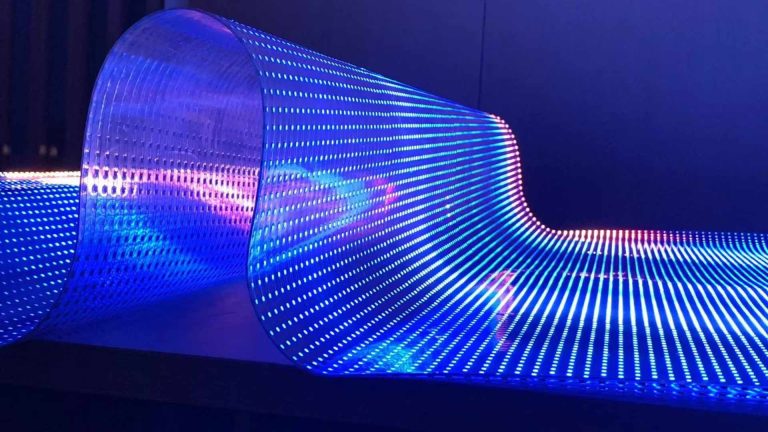
Curved towers, sloped surfaces, open atrium facades—these are common challenges for developers. Grid screens can be shaped or cut to follow irregular surfaces without compromising strength.
Large Viewing Distance Is an Advantage
For high-rise buildings, audiences typically watch from hundreds of meters away. Grid screens deliver strong visibility from long distances, making them ideal for:
- Landmark towers
- Waterfront skylines
- Highway-visible media facades
- Commercial district branding
Nighttime Lighting Without Blocking Daytime Transparency
During the day, grid screens allow natural light into the building. At night, they transform the facade into a media surface.
This dual-purpose capability is valuable for commercial towers seeking versatility.
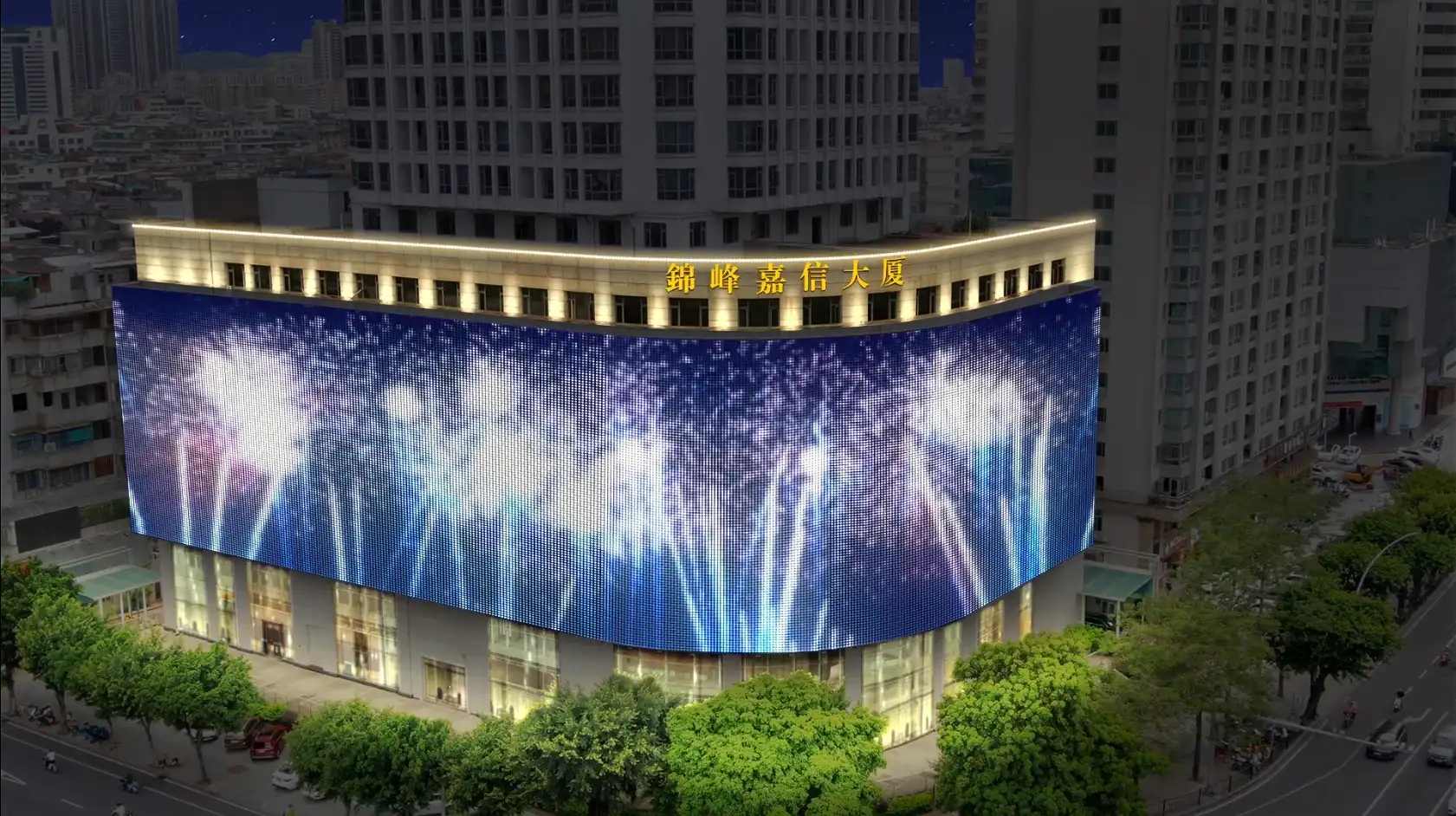
About Shenzhen XinHe Lighting Optoelectronics Co., Ltd.
Shenzhen XinHe Lighting Optoelectronics Co., Ltd. specializes in LED display solutions designed for building facades, outdoor media, and large-scale engineering projects. Their grid screen series is built around real engineering needs—lightweight modules, open-frame design, high transparency, and robust weather protection.
With experience supplying displays across Asia, Europe, and the Middle East, the company works closely with developers, contractors, and system integrators to tailor solutions for different building types and climate conditions. Their production lines cover module manufacturing, outdoor-proofing, and inspection, ensuring stable performance in long-term outdoor use.
For buyers seeking a durable, wind-resistant facade display, XinHe’s grid screen systems offer practical value backed by engineering experience.
Заключение
Wind load is one of the biggest barriers to installing large LED screens on tall buildings. Instead of fighting against the wind, giant grid screens work with it. Their permeable structure, lighter weight, and reduced turbulence make them far safer and more practical for high-rise facades.
For commercial towers, landmark lighting projects, and overseas installations in windy climates, grid screens provide a balanced solution—strong visual impact with significantly lower structural burden.
As cities continue to evolve and demand larger digital facades, grid screens will only become more important in urban lighting design.
FAQs About Giant Grid Screens for High-Rise Buildings
How do giant grid screens reduce wind load?
Their open-frame design allows wind to pass through instead of creating surface pressure, reducing the overall stress on the building facade.
Are grid screens safe for typhoon or monsoon regions?
Yes. The high transparency significantly lowers wind resistance, making them a reliable option even in coastal or high-wind areas.
Do grid screens affect indoor lighting?
Only minimally. Because they’re partially transparent, they allow natural daylight to pass through the building’s curtain wall.
What is the typical pixel pitch for high-rise facade screens?
Most high-rise media facades use larger pixel pitches (P20–P50) suitable for long-distance viewing.
Why choose Shenzhen XinHe Lighting Optoelectronics Co., Ltd for grid screen projects?
The company offers engineering-focused grid screen systems built for large outdoor projects—lightweight, highly permeable, and designed to withstand long-term weather exposure.



 Russian
  English
  Arabic
  Spanish
  French