

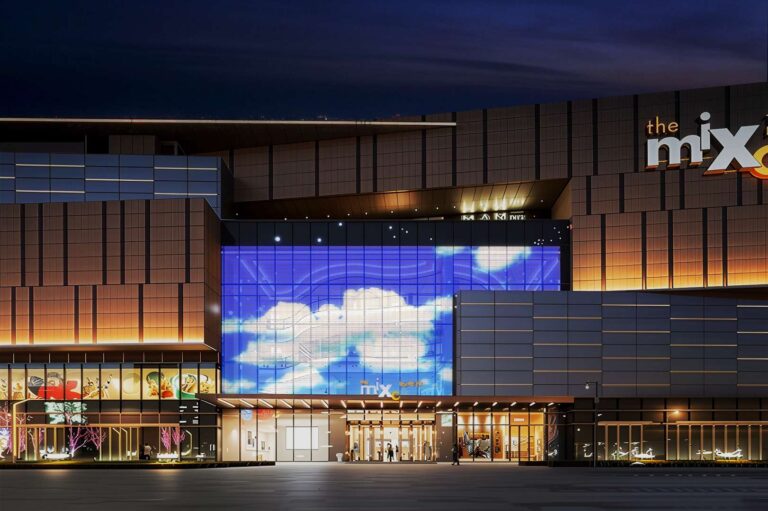
Facade lighting trends 2026 continue driving exterior surfaces toward active, programmable canvases where RGB LED pixel lights and mesh screens deliver layered video content, responsive gradients, and event-driven sequences. Addressable nodes handle precise color shifts and animation playback across expansive areas. Transparent grid arrays maintain daylight penetration and sightlines with transparency levels frequently exceeding 90%. The combination moves projects away from conventional static washes toward media facades that function as architectural statements, supporting branding cycles, cultural narratives, or interactive public displays without overwhelming the underlying structure.
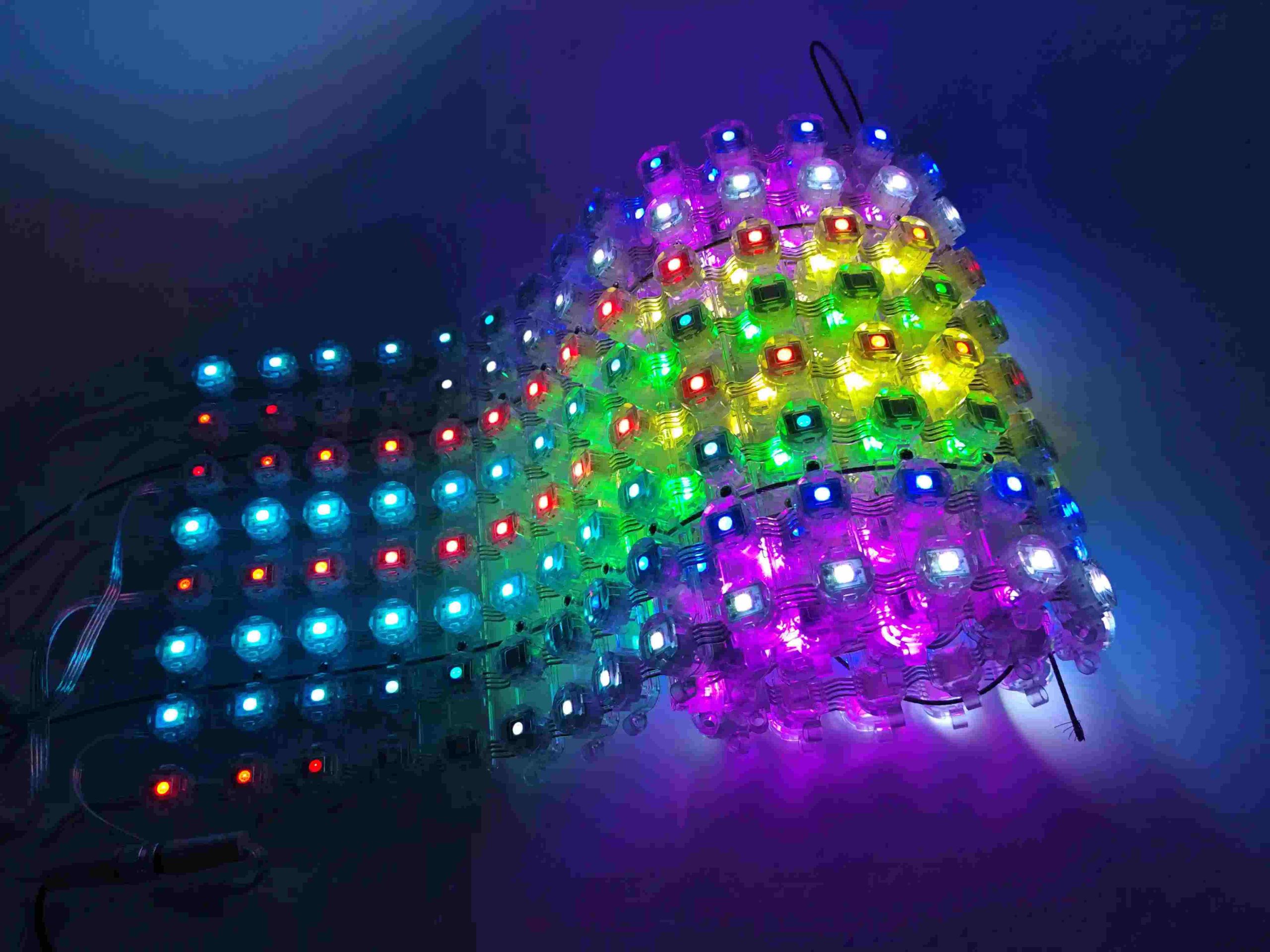
Urban and commercial developments increasingly treat building skins as digital extensions. Landmark identification, visitor draw, and revenue from sponsored content push the shift. RGB pixels supply the resolution for sharp imagery and fluid transitions. Mesh screens form the open substrate that keeps wind resistance low and views intact. Procurement groups now weigh these systems against traditional lighting for both visual ambition and measurable returns: lower long-term energy use, content adaptability that stretches campaign value, and integration that limits structural rework.
Why Facade Lighting is the New Statement Art in 2026
Facade lighting no longer stops at visibility or accent. In 2026 it serves as a core expressive layer in architecture. Static color floods and basic contours give way to surfaces capable of narrative sequences, seasonal variations, or real-time interaction. The change enhances building identity, increases dwell time for passersby, and in revenue-generating settings turns exteriors into active advertising platforms.
Supporting data shows steady expansion in media-oriented facade technologies. Segments linked to transparent display growth maintain strong compound annual rates, often in the 30% range, through the coming decade. Energy codes and certification incentives favor low-draw programmable solutions. For teams handling bids, the draw lies in combining striking appearance with operational logic: extended service intervals, flexible content that adapts to multiple uses, and attachment methods that avoid major structural changes.
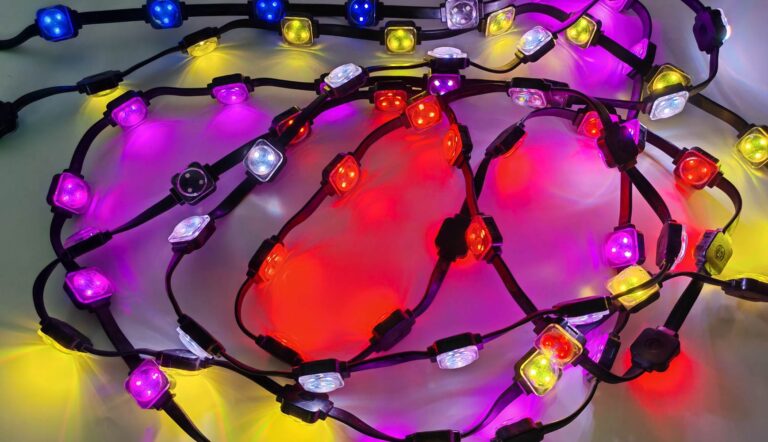
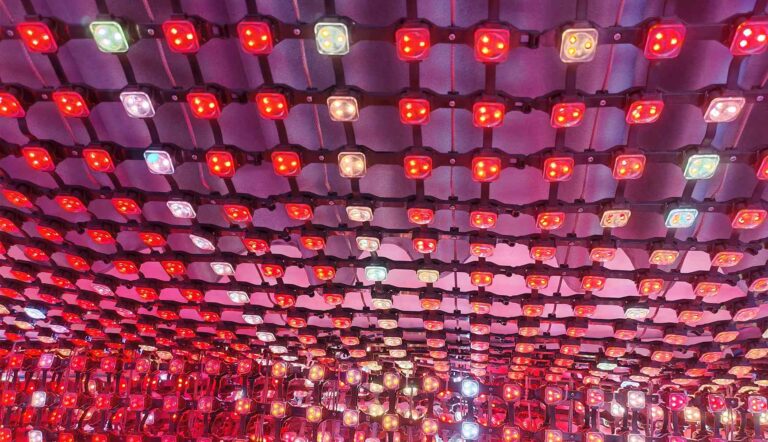
RGB LED pixel lights provide the granularity needed for detailed artistic output. Independent addressing per node supports flowing text, mapped imagery, or layered effects. Mesh screens add the necessary openness—high transparency ratings preserve natural light and reduce aerodynamic load on tall elevations. Together the systems enable dynamic building art that evolves hourly or in response to external cues, aligning with expectations for sustainability and extended field performance.
Key 2026 Facade Lighting Trends
Programmable DMX RGB Effects for Immersive Building Art
DMX512 and Art-Net remain the control backbone for 2026 facade work. RGB and RGBW pixel nodes respond to per-address commands, supporting high-refresh video, smooth fades, and multi-layer compositions. Control software handles pre-loaded libraries or live inputs from external feeds.
Deployments on large towers show practical range. A single elevation might run corporate branding by day, transition to abstract visuals at dusk, or pull in live event data for synchronized playback. Ambient sensors adjust intensity to balance visibility and consumption. Programming teams find setup faster when node ICs and controllers stay compatible throughout the chain.
Invisible Integration on Glass Curtain Walls
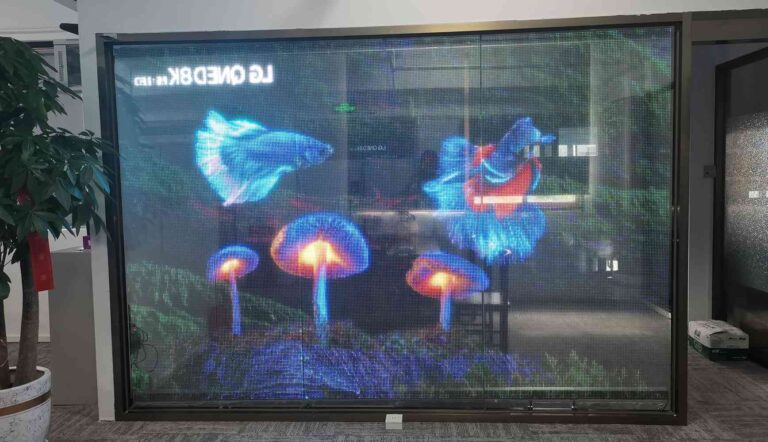
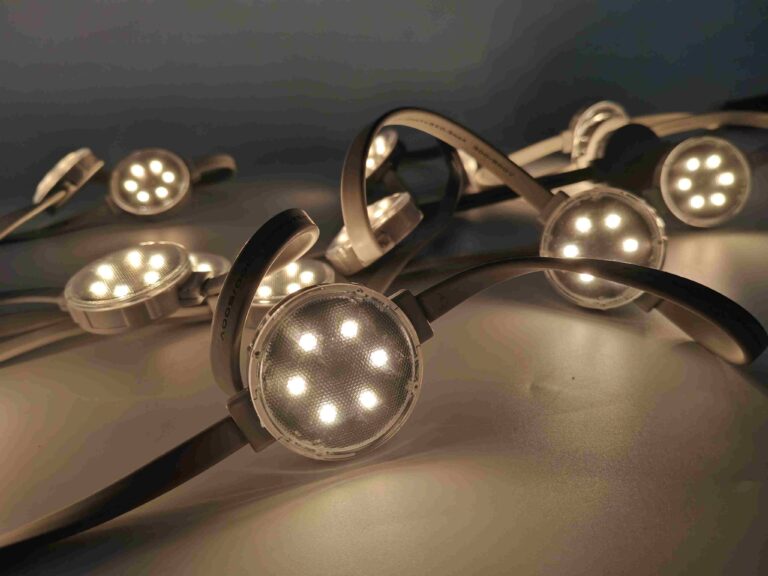
Small-format RGB pixel lights in the 20–40 mm range mount with anchor-nail hardware or adhesive pads directly on glazing. Ultra-transparent mesh embeds nodes in minimal grids or films, pushing light transmission to 90–98% in many layouts. Daytime the fixtures recede against reflective surfaces.
Beam spreads of 120–150° deliver uniform wash over inclined or curved planes. Wind-load values typically stay under 0.5 kg per square meter, simplifying approvals on high structures. Retrofit cases show clean addition to existing curtain walls with limited disruption. Long-term deployments maintain color fidelity and output stability, suiting premium office, retail, and hospitality elevations where daytime subtlety carries equal weight to nighttime impact.
Sustainable Low-Power LED Solutions
Current node designs drop to 0.3–0.6 W per unit while holding efficacy above 150 lumens per watt. Photocells and timed dimming cut average draw across broad arrays. Housing materials support recyclability, and modular builds ease component recovery at end of service.
Cost-of-ownership models highlight advantages over older fixtures. Facades spanning thousands of square meters recover investment through reduced utility bills and replacement frequency tied to 50,000-hour projections. Certification pathways reward the approach with credits for efficiency and material accountability. Solar-assisted configurations extend reach in locations with limited grid access.
Outdoor IP67 Durability for All-Weather Performance
IP67 classification covers temporary submersion to one meter for thirty minutes, full dust exclusion, and operation across -40°C to +60°C ranges. Corrosion-resistant polycarbonate or aluminum shells, strengthened glands, and complete silicone encapsulation guard against salt-laden air, UV breakdown, and repeated thermal cycling.
Coastal high-rise arrays operate through successive seasons with only routine checks showing minimal change in brightness or seal integrity. The rating provides buffer against storm-driven water or high-humidity condensation. Developers now default to IP67 for exposed placements, recognizing that premature failures in aggressive environments offset any initial cost advantage.
Bean Series Backing: From Olympic Emblem to Modern Landmarks
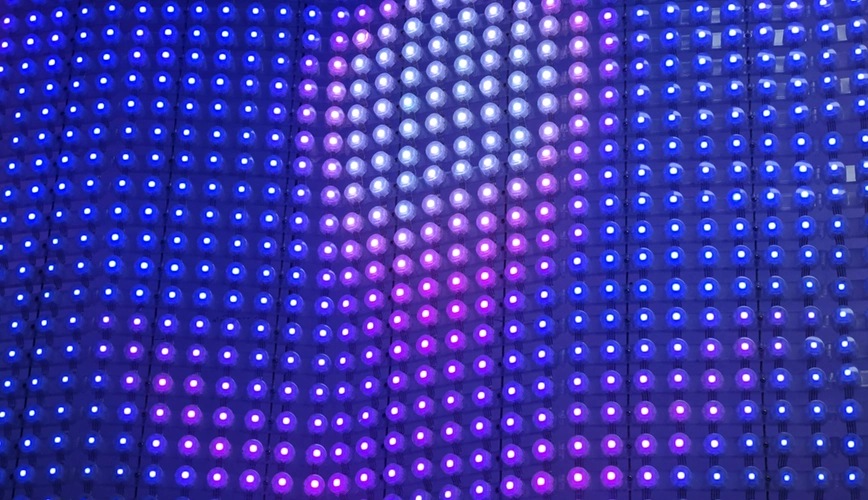
The Bean series originated with exposed LED sources used in the 2008 Beijing Olympics “China Seal” display, where color consistency and reliability held under high-profile conditions. That foundation shaped subsequent RGB pixel and mesh development for architectural applications.
Recent installations include expansive facade arrays, stadium perimeter bands, and cultural venue features. Patented elements streamline node alignment and interconnection on-site. Durability records support multi-year performance in exposed settings. Modular construction accommodates varied geometries without disproportionate custom fabrication. The series continues to serve as a benchmark for projects needing integrated programmable capability, transparency, and weather resilience.
Ultimate Sourcing & Project Guide: Scheme Design, Budgeting & On-Site Support
Scheme work begins with primary viewing distance and desired content detail. Pixel pitch decisions trade resolution against openness—narrower spacing fits intricate video at street level, wider spacing prioritizes light passage for distant perspectives. Layouts incorporate overlap margins and 5–10% spares for perimeter and contingency.
Budgeting covers node counts or area pricing, plus drivers, data infrastructure, and field labor. Lifecycle figures extend beyond purchase to include ten-year consumption and service projections. Side-by-side comparisons often favor these systems through lighter structural demands and content longevity that broadens commercial use.
Support spans initial concept sketches, detailed engineering, production scheduling, and on-site commissioning. Rigging assistance covers final alignment, address verification, and system testing. Procurement sequences include sample reviews to confirm transparency, color range, and site-specific resilience before committing to production volumes.
Shenzhen XinHe Lighting Optoelectronics Co., Ltd
Shenzhen XinHe Lighting Optoelectronics Co., Ltd, founded in 2004 and headquartered in Shenzhen, China, runs a production facility over 6000 square meters with more than 250 staff focused on LED point light sources, grid screens, and mesh technologies. The company carries national high-tech enterprise designation, holds ISO9001:2015 and ISO14001:2015 certifications, and maintains over 80 independent patents, largely centered on the Bean series.
Significant steps include the 2006 development of the world’s first patented exposed LED cold-light source for architectural applications, followed by involvement in the 2008 Beijing Olympics “China Seal” and associated elements. Bean lines reached substantial production scale by 2013, securing a leading role among international suppliers of exposed-source products. Recent work covers the 2022 upgrade of miniature anchor-nail point lights and the 2024 market entry of crystal truss screens after extended R&D. The organization offers complete support for large-scale landscape, advertising, and facade initiatives, from scheme development and engineering estimates through manufacturing and field commissioning.
Conclusion
Facade lighting trends 2026 establish RGB LED pixel lights and mesh screens as fundamental components for dynamic building art. Advances in programmable control, discreet glass mounting, low-power operation, and all-weather resilience meet the practical demands of current architectural and commercial work. Sourcing based on verified specifications, deployment history, and comprehensive service yields projects that deliver compelling visual presence, controlled operating costs, and lasting performance.
FAQs – Facade Lighting with RGB Pixels & Mesh Screens
How do you program dynamic effects with DMX RGB pixel lights on building facades?
DMX programming assigns sequential start addresses across nodes or zones via control software. Layout mapping in the interface imports sequences for fades, video content, or sensor-based triggers. Initial short-chain tests confirm data integrity before expanding the run, with attention to voltage stability over extended distances.
Transparent LED mesh vs grid screen—which should be chosen for glass curtain wall projects?
Transparent mesh excels where maximum daylight transmission and adaptability to curved glazing take priority, frequently clearing 90% see-through. Grid screens offer added rigidity and simpler scaling for flat or stepped elevations. Selection depends on transparency needs versus span length and load constraints.
What is the typical lifespan and power consumption of low-power RGB pixels in 2026 facade installations?
Low-power RGB pixels commonly rate 50,000 hours or higher at nominal output, with per-node draw between 0.3 and 0.6 watts. Photocells and scheduling further lower average consumption on broad arrays, particularly during periods of high ambient light.
How do IP67-rated pixel lights perform in coastal or extreme weather conditions?
IP67-rated pixel lights resist temporary immersion to one meter for thirty minutes, maintain dust-tight construction, and function across wide temperature bands. Coastal projects show steady color and output retention through salt exposure and UV cycles, with robust seals limiting condensation ingress.
How do you calculate the budget for a full facade lighting project using RGB pixel lights?
Budget calculation starts with facade surface area and target pixel density—multiply nodes per square meter by coverage zone, then layer in controllers, cabling, power distribution, and installation costs. Include projected ten-year energy use and contingency spares. Supplier quotations refine the numbers prior to final commitment.





 English
  Arabic
  Russian
  Spanish
  French