

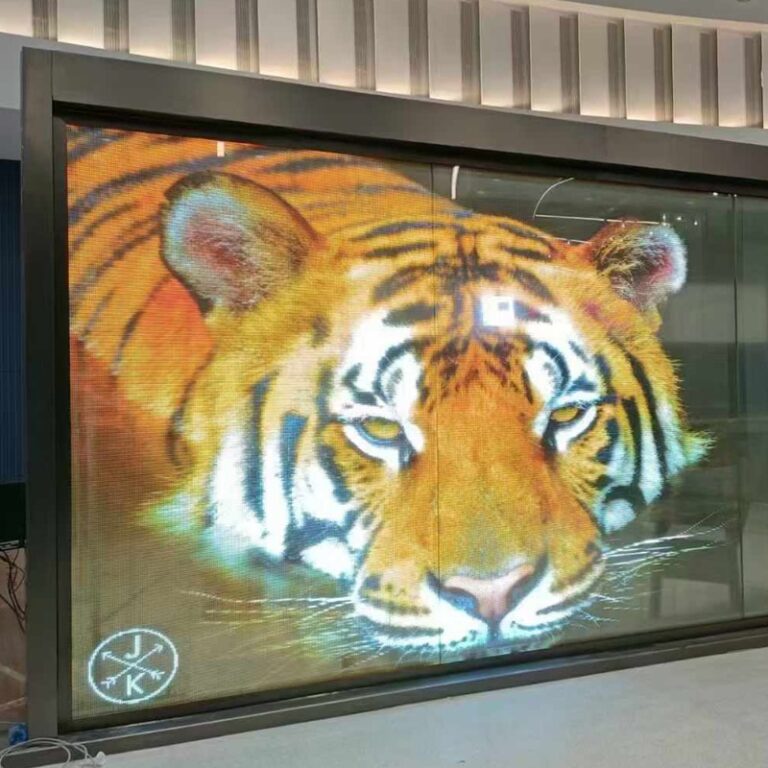
LED mesh screen trends 2026 keep pointing toward transparent grid configurations that embed digital capability directly into building skins while holding onto daylight access and clean architectural lines. Node layouts on cable nets, truss supports, or thin films consistently hit transparency from 70% up through 95% and beyond, letting interior views and natural illumination stay intact during the day and switching to full RGB playback for animations, branding rotations, and live content at night. The perforated nature keeps wind resistance minimal, daytime neutrality high, and overall dead load far below what solid LED walls impose.
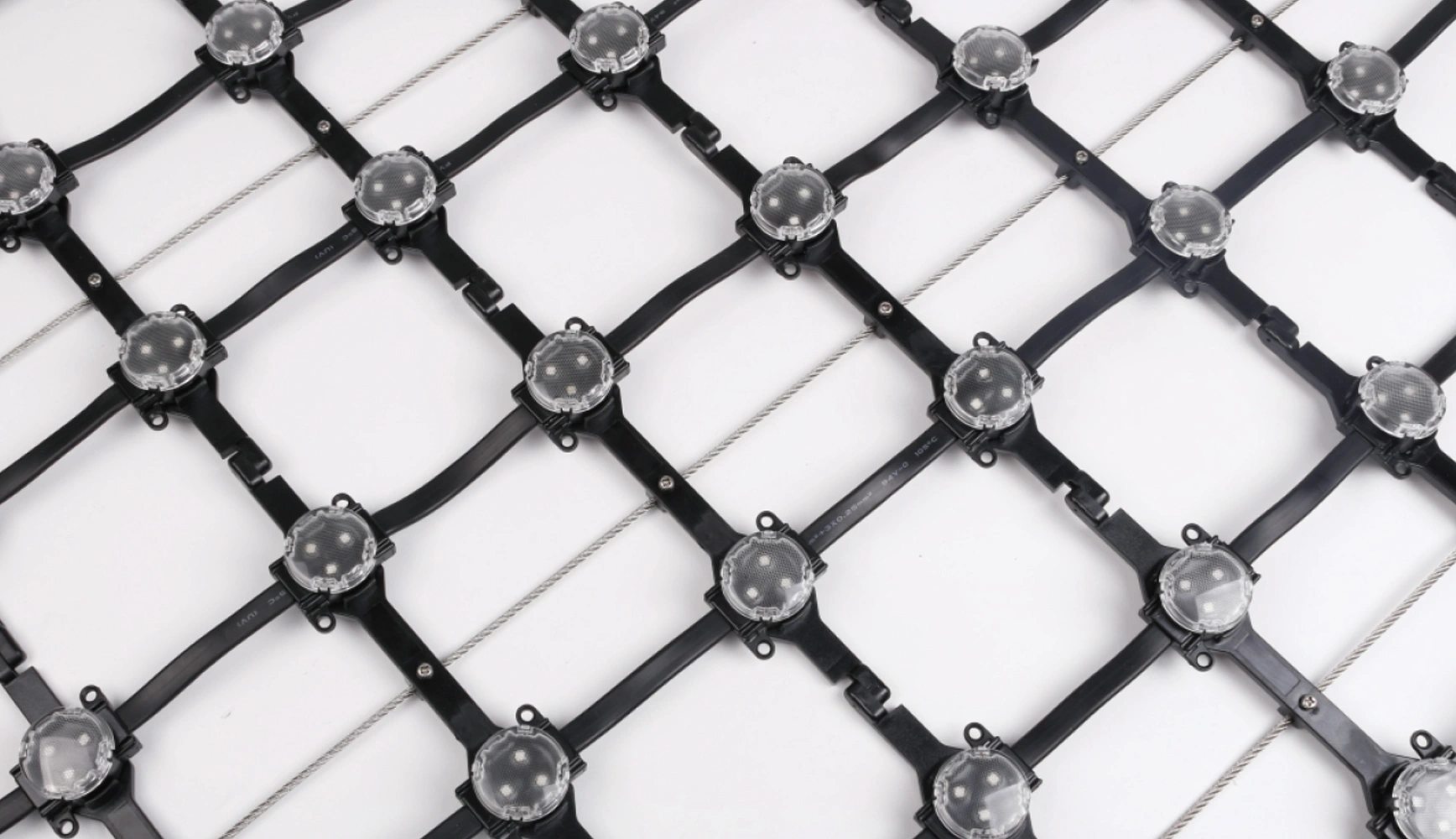
Industry tracking shows the transparent display space—where mesh and grid formats carry the heaviest weight—sitting close to $5–6 billion in 2026, with forward estimates holding CAGRs between 30% and 36% into the next decade. City-wide smart-lighting programs, tightening aesthetic and energy rules, plus advertiser pressure for responsive facades continue driving uptake. Teams sourcing for advertising signage, curtain-wall envelopes, hotel frontages, or stadium ribbons see clear practical gains: lighter substructure demands, quicker rigging sequences, lower long-term power consumption, and better audience metrics than fixed vinyl billboards or older static displays.
LED Grid Screen Replacing Traditional Billboards in 2026 – Market Outlook
Static billboards continue giving way to LED grid screens across prime urban and commercial corridors. Vinyl wraps or printed panels block sightlines, force physical replacement for every campaign shift, and restrict content agility. Grid screens address these constraints head-on with modular LED nodes arranged at pitches ranging from P31.25 mm to P200 mm, delivering the openness required to maintain building character and daylight flow alongside instantaneous remote content control.
The replacement accelerates as project economics favor dynamic arrays. A single grid deployment rotates advertiser slots throughout the day, reacts to foot traffic or ambient conditions, and plugs into digital scheduling for zoned messaging. Energy draw per square meter drops sharply compared with legacy full-coverage LEDs, satisfying stricter municipal efficiency thresholds. Into 2026, grid screens show up more frequently in procurement packages for retail towers, transit interchanges, and mixed-use developments where sightline preservation and low structural addition rank as fixed criteria. The market gravitates toward offerings that combine elevated transparency with dependable outdoor sealing, solidifying their role as the direct successor to opaque billboards in high-density settings.
Top 5 LED Mesh Screen Innovations Shaping 2026 Projects
Crystal Truss Screen Revolution
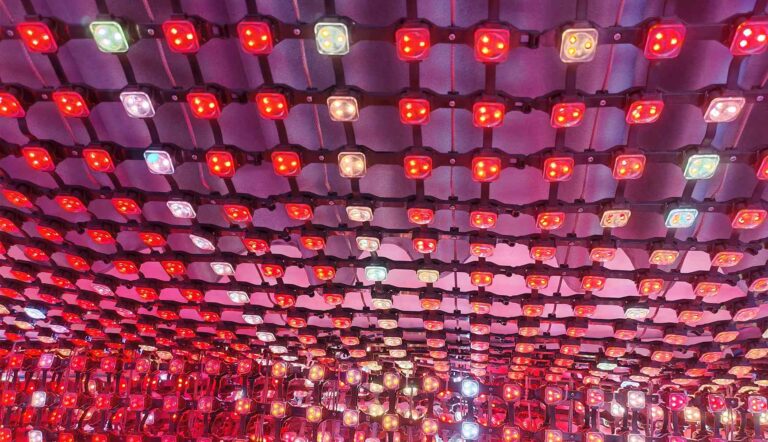
Crystal truss screens build around interconnected truss members that locate LED nodes with precision across non-standard shapes. The system supports sweeping curves, faceted planes, or volumetric extensions without relying on heavy custom welding or one-piece fabrication. Load paths distribute evenly through the truss network, allowing extended cantilevers or spans on facades and free-standing elements.
Field assembly runs modular: truss segments connect at grade or during lifts, trimming overall crane time and simplifying node access for service or upgrades. Exposed high-rise applications demonstrate reliable wind-load performance while preserving clean elevation profiles. Relative to conventional rigid frames, crystal truss cuts secondary steel tonnage and engineering lead time, positioning it strongly for signature cultural or landmark work that demands irregular form.
Ultra-High Transparency Flexible Film
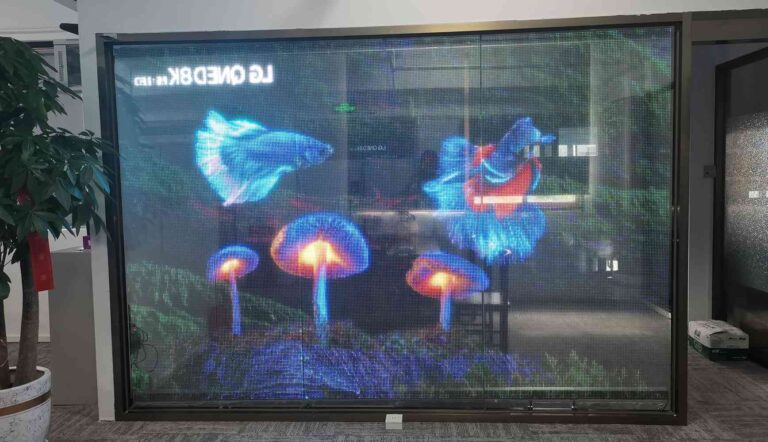
Ultra-high transparency flexible film places LEDs within ultra-thin, pliable carriers that frequently clear 90–98% light transmission in optimized arrangements. The material bonds to glass surfaces or conforms to structural curves, keeping the base architecture visible by day and enabling saturated color output after dusk.
Bend tolerance handles gentle radii or compound geometries prevalent in current designs. Added mass stays negligible, and attachment typically uses pressure-sensitive adhesives or low-profile clips instead of bulky mechanical anchors. Weatherproof variants include UV-blocking layers and encapsulated connections for continuous exposure. Storefront and hospitality deployments using these films achieve unobtrusive integration on glazing and entry features, reconciling interior daylight requirements with evening visual impact.
AI-Driven Dynamic Displays
AI overlays convert LED mesh screens into context-aware surfaces. Sensors gather real-time inputs on luminance levels, occupancy density, weather shifts, or external triggers, enabling algorithms to adjust playback parameters, luminance curves, or sequence logic dynamically. Power scales down automatically under bright conditions, and content adapts to daily cycles or programmed events.
Advertising-driven facades capture the largest engagement benefit—longer viewer dwell and higher interaction stem from tailored, responsive graphics. Stadium envelopes apply the same principle to synchronize displays with match progression or crowd energy. The intelligence layer also monitors node health proactively, surfacing potential issues before they affect output and streamlining planned maintenance windows.
Modular Arbitrary Combination Installation
Modular construction permits near-limitless arrangement of screen elements drawn from a compact component library. Flat fields, stepped profiles, or flowing curves assemble without project-specific tooling or unique parts for each variation.
Installation teams link panels or strips through uniform power and data connectors, frequently pre-assembling sections off-site for final hoisting. The process compresses critical path duration, accommodates phased delivery, and supports later reconfiguration or relocation. On buildings with asymmetric or organic forms, modular adaptability eliminates elaborate secondary framing, containing overall cost and easing compliance with varying site engineering constraints.
Corrosion-Resistant Outdoor Grids
Corrosion-resistant outdoor grids incorporate anodized or coated aluminum framing, reinforced composite housings, and high-grade sealing to resist salt aerosol, prolonged UV, and thermal extremes. Ingress protection at IP67 or above shields electronics from particulate and water ingress, a necessity in marine-influenced or industrial-adjacent locations.
Output stability—brightness retention and color fidelity—persists across extended service horizons with limited drift. Coastal high-rise arrays operate through successive wet seasons with routine inspections showing only standard upkeep. The material and sealing focus delivers predictable expense profiles, extended warranty coverage, and confidence in decade-plus performance horizons.
Sourcing & Application Guide: LED Mesh Screen for Advertising Signs, Building Facades, Hotels & Stadiums
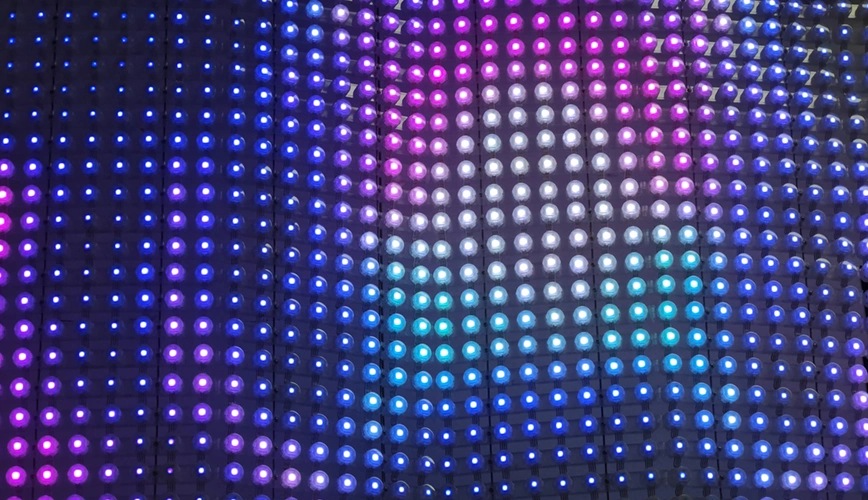
Effective sourcing hinges on aligning specs with end-use priorities. Pixel pitch governs resolution versus transparency—tighter pitches serve detailed signage at pedestrian scale, wider pitches maximize openness for distant-view facades. Sunlight-readable brightness above 5000 nits counters glare, and low areal density eases structural tie-in.
Advertising signage leverages fast content cycling and environmental triggering for improved brand exposure and conversion lift. Facades stress transparency and aerodynamic performance, fixing to mullions or sub-frames with restrained penetration. Hotels apply restrained ambient or feature lighting at entrances and lobbies, enhancing arrival experience without visual dominance. Stadiums utilize grid ribbons or expansive arrays for sponsor messaging, scoring, and spectator interaction, often paired with point-source accents for visual layering.
Cost projections factor square-meter pricing together with control infrastructure, cabling runs, and labor allocation. Lifecycle analysis consistently favors mesh over solid panels through reduced consumption, lighter structural reinforcement, and accessible service paths. Bulk procurement requires confirmation of minimum order thresholds, sample validation for transparency uniformity and gamut accuracy, and firm lead times on custom pitches or sealing upgrades. DMX512 and Art-Net remain the prevailing control standards for media server compatibility.
The Bean series differentiates via patented detailing and installation efficiency. Snap-fit modular joints accelerate alignment, and field-validated construction withstands demanding exterior cycles.
Real Case Studies: Large-Scale LED Mesh Screen Projects + Bean Series Advantages
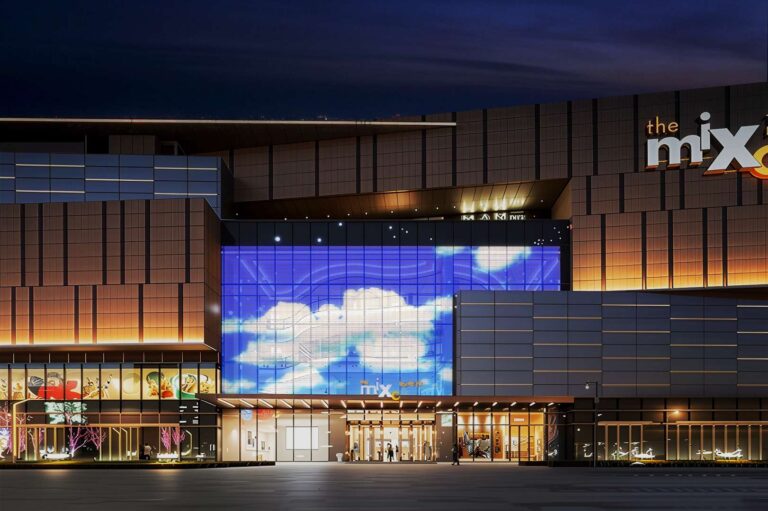
A 1170-square-meter elevation in Ethiopia applied high-transparency mesh across broad facade planes, combining daytime subtlety with nighttime programmable sequences. The grid preserved ventilation and sightlines, with content managed remotely to align with promotional calendars or civic events.
Similar commercial tower deployments encase columns or span interior voids, generating revenue streams while honoring architectural intent. Stadium perimeter grids exhibit consistent performance around seating bowls, cycling sponsor assets and real-time feeds under varying load and weather.
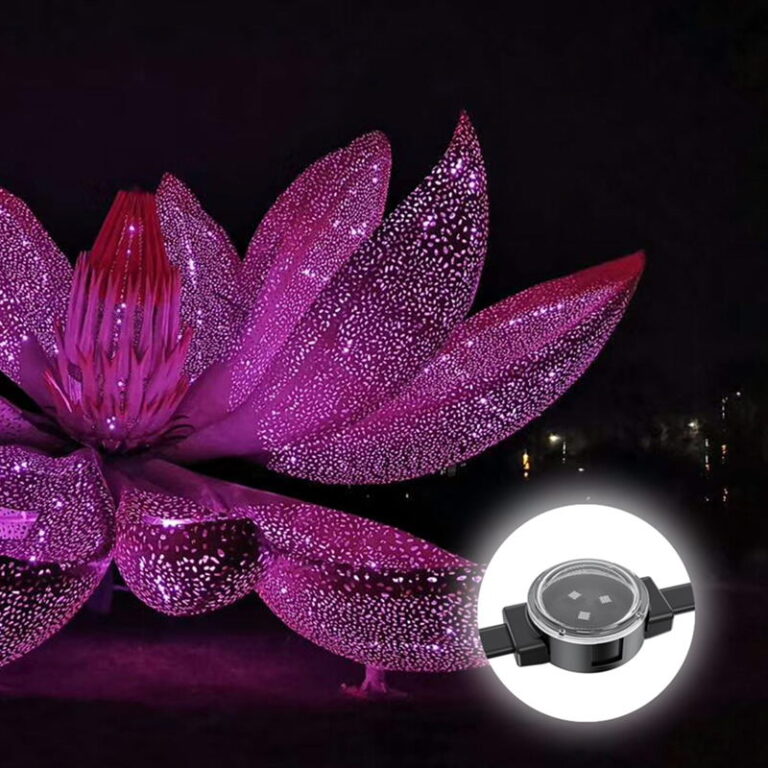
Bean series screens add value through patented registration features and rapid-connect hardware that condense rigging duration on complex geometries. Robust node durability and elevated transparency deliver stable output in exposed settings, establishing these products as a dependable selection for scale and endurance.
Shenzhen XinHe Lighting Optoelectronics Co., Ltd
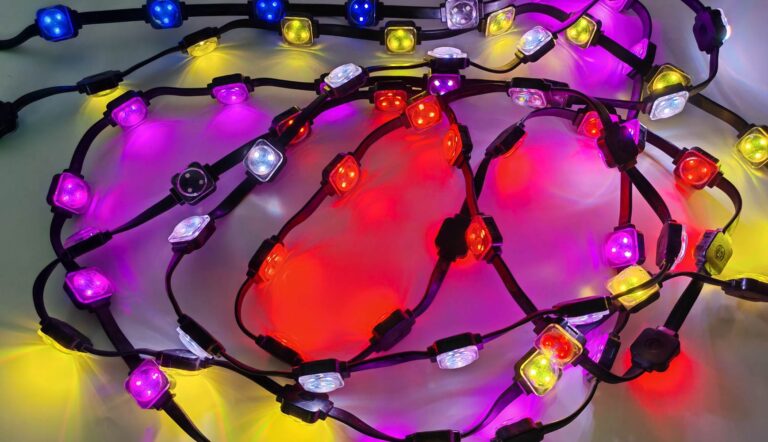
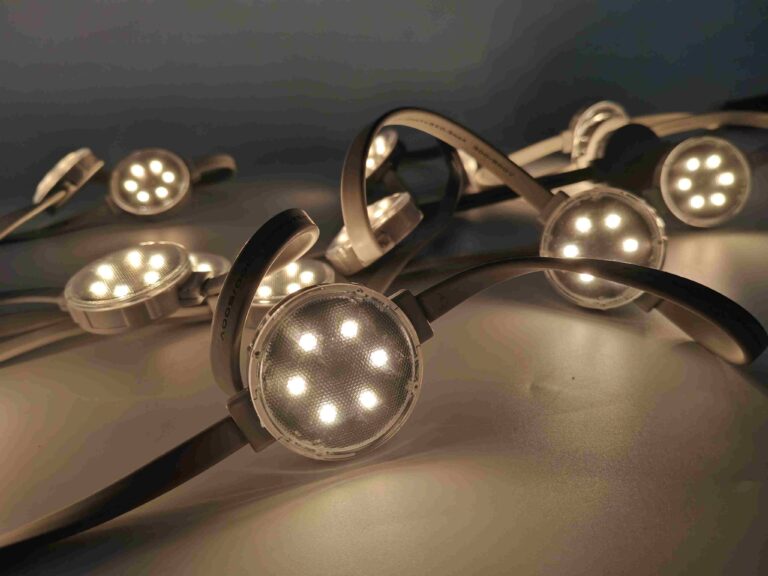
Shenzhen XinHe Lighting Optoelectronics Co., Ltd, founded in 2004 and based in Shenzhen, China, operates a production site exceeding 6000 square meters with a workforce of more than 250 focused on LED point light sources, grid screens, and mesh technologies. The company maintains national high-tech enterprise status, ISO9001:2015 and ISO14001:2015 certifications, and holds over 80 independent patents, predominantly linked to the Bean series.
Notable achievements include the 2006 launch of the world’s first patented exposed LED cold-light source for architectural applications, followed by selection for the 2008 Beijing Olympics “China Seal” and supporting elements. Bean product lines reached significant mass-production volume by 2013, securing a leading role among international suppliers of exposed-source technologies. Recent developments cover the 2022 enhancement of miniature anchor-nail point lights and the 2024 introduction of crystal truss screens after extended research. The organization delivers end-to-end support for large-scale landscape, advertising, and facade initiatives, spanning conceptual design, engineering costing, fabrication, and field commissioning.
Conclusión
LED mesh screen trends 2026 solidify the move toward transparent grid platforms that reconcile digital expression with architectural discipline. Progress across crystal truss rigidity, ultra-high transparency films, AI adaptability, modular scalability, and corrosion endurance directly confronts installation, longevity, and operational challenges. Sourcing rooted in verified performance data and deployment experience yields installations that achieve compelling visual results, restrained energy profiles, and enduring value in advertising, facade, hospitality, and sports contexts.
FAQs – LED Mesh Screen Questions for Architects and Developers
What transparency range do LED mesh screens typically offer for 2026 facade projects?
Outdoor LED mesh screens normally span 70% to 95% transparency, determined by pixel pitch and node arrangement. Wider pitches in the P100–P200 family yield the highest light transmission for glazing applications, while narrower pitches emphasize content resolution for signage priorities.
How do crystal truss screens compare to standard LED mesh for curved building installs?
Crystal truss screens utilize interconnected truss assemblies that offer greater stiffness and load management for curved or volumetric configurations. Standard mesh leans on flexible cabling or framing, whereas truss reduces sag under wind and cuts reliance on supplemental bracing for expansive or intricate spans.
What wholesale price range should developers expect for transparent LED grid screens per square meter?
Wholesale rates for transparent LED grid screens usually range from $130 to $250 per square meter, shaped by transparency percentage, pitch, ingress rating, and customization extent. Films with ultra-high transparency and advanced corrosion features trend higher, with larger commitments generally improving per-unit pricing.
How can transparency requirements be customized for glass curtain wall LED mesh projects?
Transparency tuning starts with pitch and node density choices—greater spacing boosts light passage while preserving display readability. Partner with the manufacturer to refine LED placement, carrier thickness, and lens characteristics. Mock-up panels installed on-site confirm the trade-off between visibility and playback quality ahead of volume manufacturing.
What MOQ is common when sourcing corrosion-resistant outdoor LED mesh screens for stadium or hotel applications?
Corrosion-resistant outdoor LED mesh ordinarily carries minimum orders of 50 to 200 square meters for standard catalog items. Custom transparency tiers, atypical pitches, or upgraded sealing can elevate the minimum. Sample runs first allow validation of site-specific environmental compatibility before proceeding to production quantities.





 Spanish
  English
  Arabic
  Russian
  French