

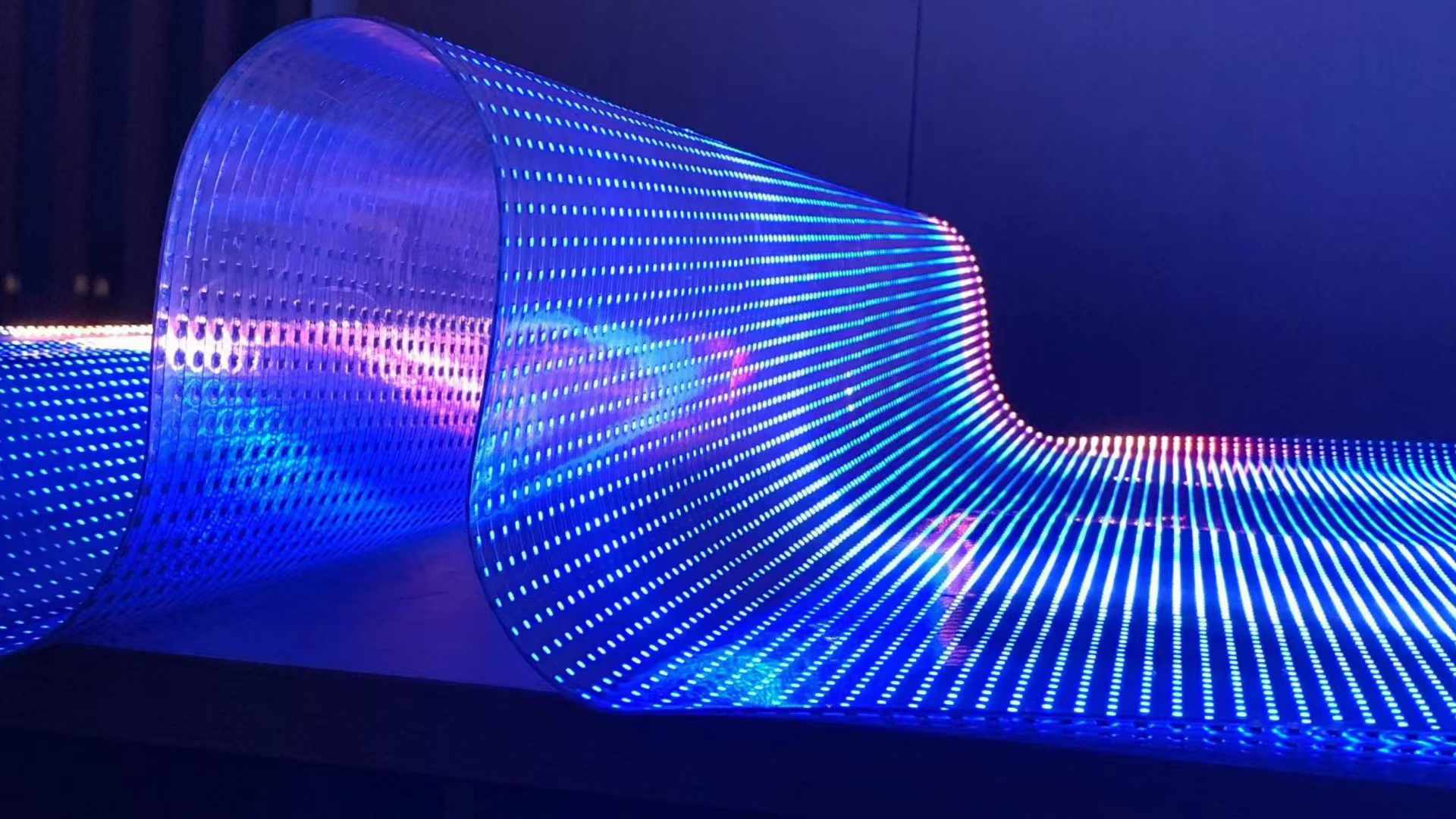
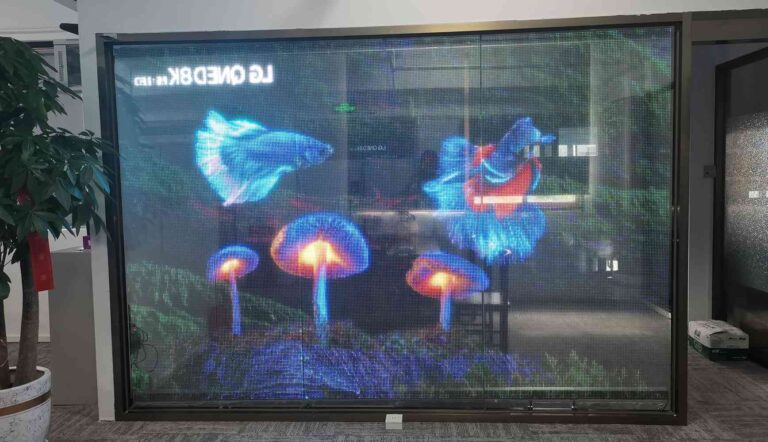
Transparent LED film screen trends 2026 keep centering on ultra-thin, rollable layers that place micro-LEDs within almost invisible matrices, converting flat or curved glass into programmable surfaces while holding transparency at 85% minimum and frequently clearing 95%. The films, usually 2–3 mm thick, bond to existing windows or partitions through adhesive or clip systems, projecting full-color video and graphics that remain readable under direct sun without cutting interior light or blocking sightlines. Retail operators mount them on storefront glazing for layered promotions that pull in passersby, and automotive showrooms apply them to display cases or vehicle glass for interactive feature highlights.
The transparent display category sustains strong momentum. Market figures position the segment near $5.8–6 billion in 2026, with forward trajectories pointing toward $36–52 billion by the early 2030s at compound annual rates commonly reported between 36% and 46%. Retail window applications capture a large share of volume, supported by the need for non-intrusive digital overlays that increase dwell time and conversion. Automotive head-up displays and interactive cabin glass accelerate fastest, driven by safety mandates, electric vehicle rollout, and the demand for seamless driver information. Procurement teams evaluating mall facades, 4S shop partitions, or dealership glazing find these films deliver tangible benefits: rapid deployment on current surfaces, negligible added weight, and content rotation that extends promotional flexibility without repeated physical alterations.
Transparent Displays Market Boom in Retail & Automotive HUD
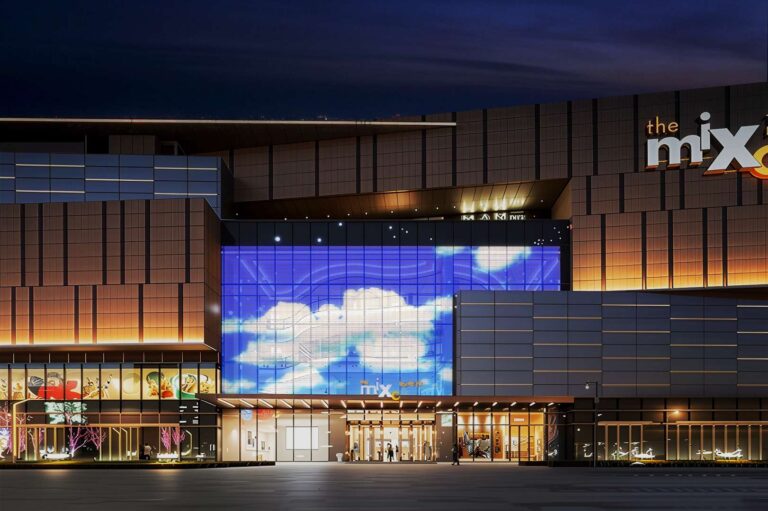
Transparent LED film screens drive the majority of growth in retail and automotive segments. Retail chains deploy them on large storefronts and internal showcases, overlaying promotions or product information directly on glass without compromising the open retail environment or natural illumination. Automotive head-up displays transition toward LED film integration for 2026–2027 production models, placing navigation, speed, and alert data in the driver’s primary view while preserving windshield clarity.
Several elements converge to fuel the expansion. Efficiency standards favor low-consumption options that sustain brightness in varied lighting. Retailers track measurable uplift in customer engagement from interactive window content. Automotive suppliers incorporate films to satisfy regulatory requirements and differentiate premium or electric models. Heading into 2026, these screens emerge as routine choices for high-traffic malls, luxury dealerships, and concept showrooms, where subtle digital enhancement adds commercial or experiential value without disrupting design intent.
Top 4 Transparent LED Film Screen Trends Shaping 2026
High Transparency >95% for Unobstructed Views
Films routinely push past 95% transparency in 2026 through refined micro-LED spacing and substrate engineering. The sparse arrangement lets daylight and interior scenes pass with almost no alteration, essential for retail glazing that must display merchandise clearly or automotive glass that cannot reduce driver visibility.
The clarity arises from precise optical tuning that limits light scatter. Retail installations covering full-height windows maintain customer draw without creating a barrier effect. Automotive uses on side or rear glass keep cabin openness intact while allowing auxiliary information overlays. The direction supports wider uptake in upscale settings where architectural or vehicle aesthetics take priority.
Flexible Curved Attachment for Complex Glass Surfaces
Flexible films adapt to curved or compound glass profiles found on contemporary storefront columns, wraparound mall glazing, or vehicle windshields. Rollable carriers with tight bend tolerance enable uniform application across non-planar shapes without buckling or visible seams.
Adhesive layers or minimal clip hardware accelerate mounting and allow straightforward removal for campaign refreshes or temporary automotive exhibits. Deployments on curved retail facades show consistent playback across contours, with no edge lift or distortion after prolonged exposure. The feature cuts custom engineering costs and broadens applicability to surfaces previously considered unsuitable for digital overlays.
P4 Full Color Soft Film for High-Resolution Content
P4 pitch soft films provide detailed full-color rendering suitable for close-proximity retail or precise automotive presentations. The 4 mm spacing strikes a balance between sharpness and light passage, supporting crisp text, motion graphics, and product close-ups.
Elevated refresh rates deliver fluid video, and wider color gamut improves vibrancy under retail spotlights or showroom illumination. Retail chains observe stronger promotional response with P4 films on glass dividers, where content definition drives interaction. Automotive showrooms employ comparable resolution for feature annotations or virtual overlays, maintaining legibility from driver or passenger positions.
Energy-Efficient Designs for Indoor/Outdoor Use
Per-node or area-equivalent draw in present films falls to 0.3–0.8 W, with efficacy surpassing 150 lumens per watt in typical setups. Sensor-driven brightness adjustment lowers consumption during bright periods or off-peak hours.
Indoor retail use benefits from reduced thermal load and operating expense on round-the-clock runs. Outdoor-rated versions add UV protection and sealed terminations for exposed storefront signage. Lifecycle reviews indicate recovery through lower utility costs and longer intervals between service, appealing to chains with extensive glazing or dealerships running extended hours.
Sourcing Tips: How to Select Transparent LED Film for Glass Windows, Showcases & Car HUD
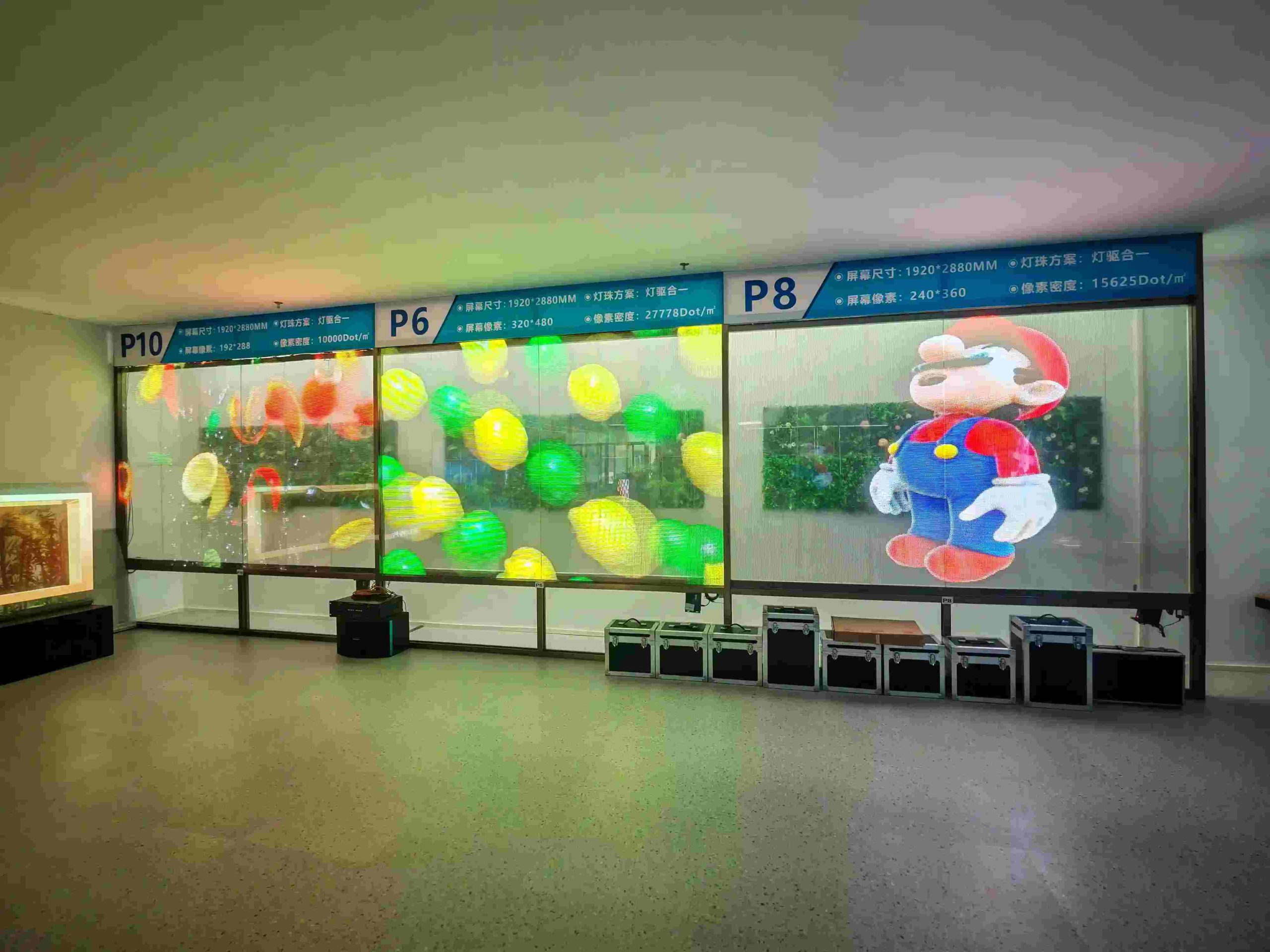
Specification matching begins with application priorities. Transparency targets drive decisions for glass windows—95% or above preserves retail openness and automotive visibility. Pixel pitch selection weighs detail against light passage: P4 fits high-resolution needs in showrooms or close-view retail, wider pitches emphasize maximum transparency on distant glazing.
Brightness exceeding 5000 nits counters direct sun in exterior retail or bright showroom settings. Film thickness near 2–3 mm and bend radius determine compatibility with curved profiles. Ingress protection plays a minor role indoors but gains importance for semi-exposed automotive or outdoor-adjacent windows.
Retail glass windows demand reliable adhesion and glare control to maintain promotion effectiveness without interior reflections. Showcases and mall partitions prioritize high refresh for smooth video and ease of seasonal swap-out. Car HUD placements focus on vibration tolerance, automotive compliance, and integration with curved windshields or side panels.
Cost projections include per-square-meter rates, control hardware, cabling, and labor. Total ownership expense factors energy draw over five to ten years and reduced maintenance relative to rigid panels. Bulk orders require verification of minimum thresholds, sample validation for bond strength and color accuracy, and confirmed timelines for tailored flexibility or brightness levels.
Advantages of Bean Series Transparent LED Film Solutions
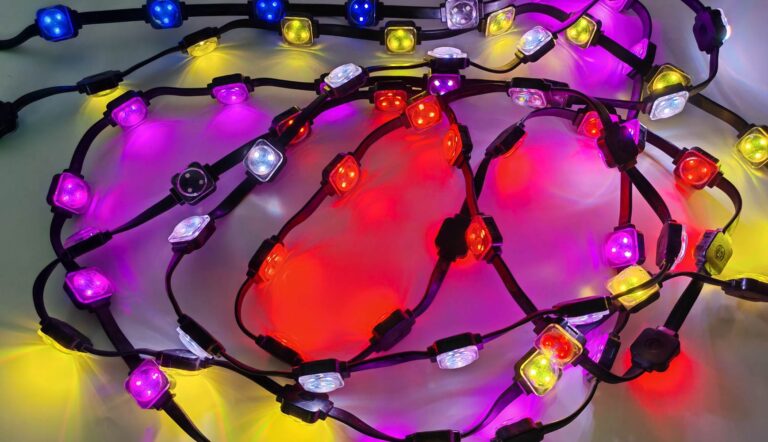
The Bean series integrates patented approaches to node arrangement and mounting that support superior transparency and streamlined glass attachment. CE and RoHS certifications verify adherence to global safety and environmental requirements, enabling straightforward specification in international retail and automotive projects.
Two decades of production experience yield uniform quality across runs, with options for pitch adjustments, curvature tolerance, and power profiles. Complete service coverage includes initial scheme planning, engineering support, manufacturing, and field assistance, lowering risks on multi-site or high-profile rollouts.
Shenzhen XinHe Lighting Optoelectronics Co., Ltd
Shenzhen XinHe Lighting Optoelectronics Co., Ltd, established in 2004 and based in Shenzhen, China, maintains a production site over 6000 square meters staffed by more than 250 personnel specializing in LED point light sources, grid screens, and mesh technologies. The organization holds national high-tech enterprise designation, ISO9001:2015 and ISO14001:2015 certifications, and possesses more than 80 independent patents, predominantly tied to the Bean series.
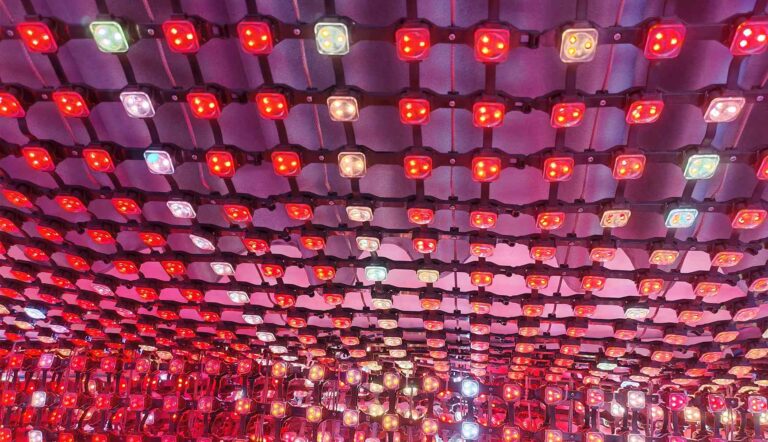
Notable achievements encompass the 2006 launch of the world’s first patented exposed LED cold-light source for architectural applications, followed by designation for the 2008 Beijing Olympics “China Seal” and supporting elements. Bean lines scaled to significant mass production by 2013, securing a prominent standing among global suppliers of exposed-source technologies. Recent progress includes the 2022 enhancement of miniature anchor-nail point lights and the 2024 commercial release of crystal truss screens following prolonged development. The company provides full-cycle support for large-scale landscape, advertising, and facade initiatives, from conceptual design and engineering estimates through fabrication and on-site commissioning.
Conclusión
Transparent LED film screen trends 2026 reinforce their position as practical solutions for retail and automotive glass applications, where elevated transparency, curved flexibility, high-resolution soft films, and low-power operation meet core needs for discreet digital layering. Sourcing grounded in confirmed specifications and deployment records produces installations that combine strong visual performance, contained operating expense, and reliable longevity across storefronts, showrooms, and vehicle environments.
FAQs – Transparent LED Film Screen Questions for Retail & Automotive Buyers
What transparency level should I aim for in retail glass window applications?
Retail glass windows generally call for transparency of 95% or higher to avoid diminishing interior visibility or natural light flow. Films dropping below 90% tend to create a noticeable barrier that reduces the inviting feel intended for storefronts.
How do flexible curved transparent LED films attach to irregular showcase glass?
Flexible films rely on pressure-sensitive adhesives or supplementary clips that follow contours closely. Thorough surface cleaning and priming prevent edge lift, and small test patches verify adhesion strength before full application on compound curves.
Is P4 pitch suitable for automotive HUD and showroom displays?
P4 pitch offers adequate resolution for clear text, icons, and graphics in automotive showrooms or HUD overlays at standard viewing ranges. Narrower pitches add cost with diminishing returns on legibility, while wider ones compromise detail in close-up scenarios.
What are typical wholesale MOQ and bulk discount structures for transparent LED film?
Minimum orders for transparent LED film usually start at 50 to 200 square meters for catalog models. Discounts normally tier at 500 square meters and above, with progressive reductions depending on total volume and any customization in pitch or flexibility.
What installation precautions are needed for outdoor transparent LED film screens?
Outdoor placements require UV-stable adhesives, edge sealing to block moisture, and controlled-temperature application to prevent air pockets. Proper cable management and strain relief at terminations guard against wind-induced stress or water ingress over time.





 Spanish
  English
  Arabic
  Russian
  French