

LED point lights stand out as versatile, compact sources that deliver targeted illumination across various installations, from urban facades to commercial displays. These units, frequently referred to as LED pixel lights or dot sources, enable precise control and durable performance in environments exposed to weather and heavy use. As projects in architecture and signage evolve in 2026, the push for efficient, programmable options grows, addressing needs for low maintenance and vivid effects that enhance structures without excessive energy draw. This breakdown covers essential categories, real-world uses, and selection strategies, equipping buyers with insights to match specifications and sidestep frequent installation challenges.
What Are LED Point Lights? A Quick Overview for Beginners
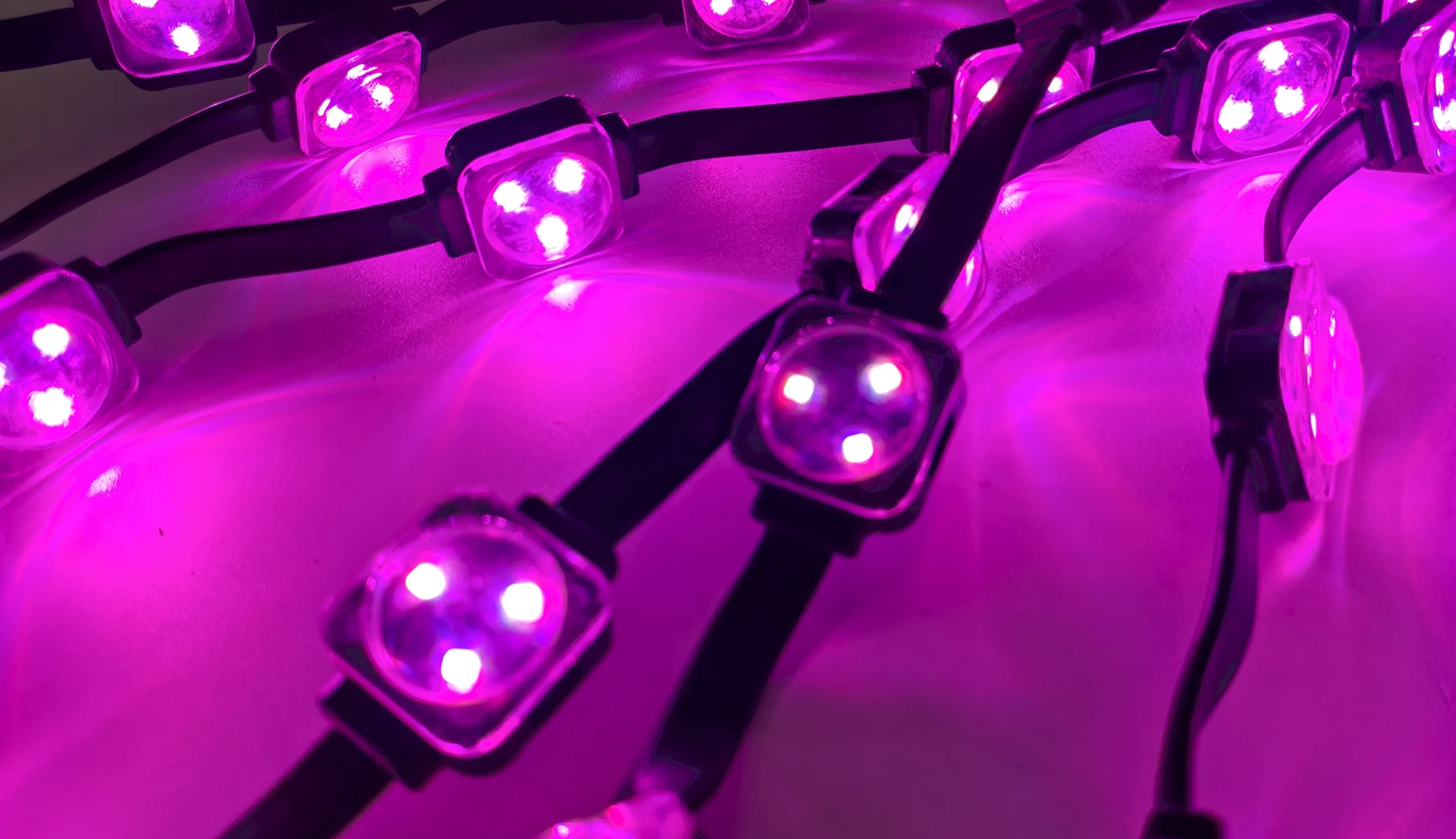
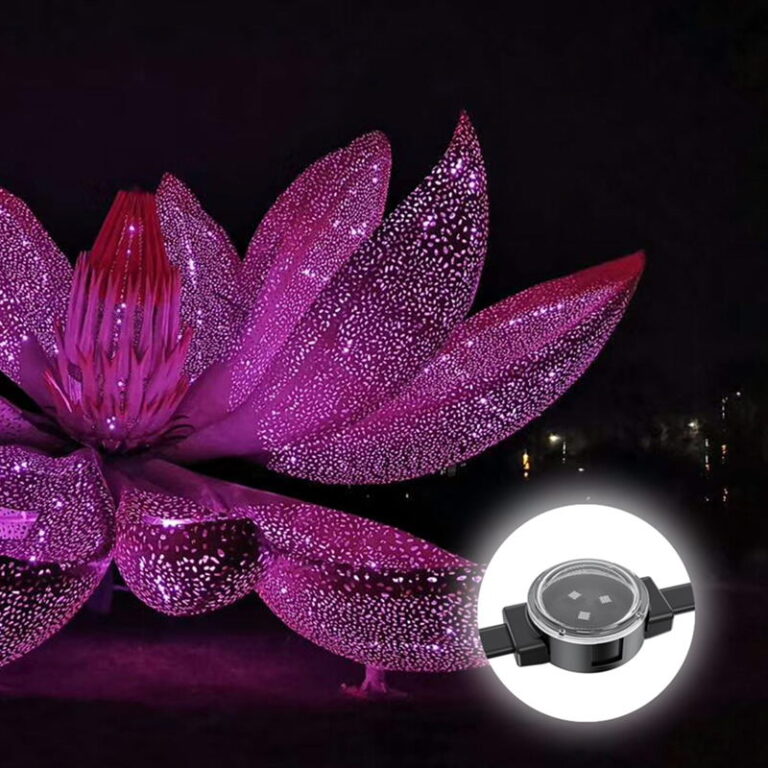
In the lighting sector, LED point lights emerge as individual emitters designed for pinpoint accuracy, built around surface-mount diodes or higher-output chips encased in rugged housings. They differ markedly from strips or broad-beam floods by focusing output from isolated points, which proves crucial for creating grids or outlines in large-scale setups. Chains of these lights connect via low-voltage lines, with some incorporating chips for independent operation.
The edge over older halogen or neon alternatives comes from minimal power needs—often pulling from DC5V to DC24V supplies—paired with operational lives that stretch beyond 50,000 hours under normal conditions. Ratings like IP67 ensure resistance to ingress from dust and water, while constructions using aluminum bases and polycarbonate diffusers hold up against ultraviolet exposure and mechanical stress. Such attributes tackle persistent issues in field deployments, where environmental factors like humidity or fading can derail timelines and budgets.
Professionals often note how these features streamline integration. For example, in a recent facade retrofit, selecting units with sealed connectors prevented callbacks due to corrosion, a common headache in coastal areas. The technology’s evolution has made them indispensable for projects demanding reliability without constant oversight.
Main Types of LED Point Lights in 2026 (With Comparison Table)
Diving into the classifications reveals options tailored to control methods, color ranges, physical designs, and output levels. Sorting through these helps align choices with project demands, whether for subtle accents or intricate animations.
By Control Mode
Fixed configurations maintain consistent emission, ideal for straightforward borders or uniform glows without the need for software tweaks. On the programmable side, protocols such as WS2811 or UCS1903 facilitate per-unit adjustments, enabling sequences that mimic motion or respond to inputs. DMX512 variants connect directly to stage-grade systems, essential for coordinated arrays in expansive architectural schemes where timing precision avoids visual glitches.
By Color Options
Single-tone variants span cool whites, warms, or primaries like red and green, fitting tasks where simplicity rules. RGB setups blend basics for broad palettes, but RGBW extends this with pure white diodes for nuanced shades and improved color rendering in mixed lighting scenarios. Further refinements in RGBWW incorporate adjustable warm channels, addressing demands for lifelike tones in settings that blend static and variable illumination.
By Shape & Size
Circular profiles, typically 30mm to 50mm across, disperse light over wide angles like 120 degrees to 180 degrees, suiting curved or irregular surfaces. Block-shaped enclosures mount cleanly in arrays or slots. Compact pebble forms under 25mm excel in tight clusters or detailed work, whereas oversized spherical builds command attention on infrastructure like overpasses.
By Power & Application
Entry-level outputs from 0.3W to 1W support flexible strings or pixel-dense panels. Mid-tier 1W to 3W units manage everyday contours in gardens or exteriors. For demanding reaches, 3W-plus models project effectively on high structures, though they require attention to thermal dissipation.
| Type Category | Voltage Options | IP Rating | Control Protocol | Typical Power | Key Applications | Advantages | Potential Drawbacks |
|---|---|---|---|---|---|---|---|
| Fixed Monochrome | DC12V/24V | IP65-IP67 | None | 0.5-2W | Basic outlines, signage | Straightforward setup, economical | Limited to static output |
| Addressable RGB | DC5V/12V/24V | IP67-IP68 | WS2811/UCS1903 | 0.3-3W | Facade patterns, media walls | Per-light customization, rich hues | Demands dedicated drivers |
| DMX RGB/RGBW | DC12V/24V | IP67 | DMX512 | 1-5W | Professional shows, large facades | Seamless timing, pro integration | Involves more wiring planning |
| Mini Pebble/String | DC5V/12V | IP67 | Addressable | 0.3-1W | Dense grids, holiday installs | Adaptable placement, small footprint | Prone to drop in extended chains |
| High-Power Spherical | DC24V | IP68 | Fixed/Addressable | 3-5W+ | Bridges, tall structures | Extended range, robust build | Calls for cooling considerations |
These distinctions draw from ongoing market shifts, where enhanced sealing and stable DC24V feeds prevail for sustained outdoor viability.
Top Applications of LED Point Lights – Real-World Project Examples
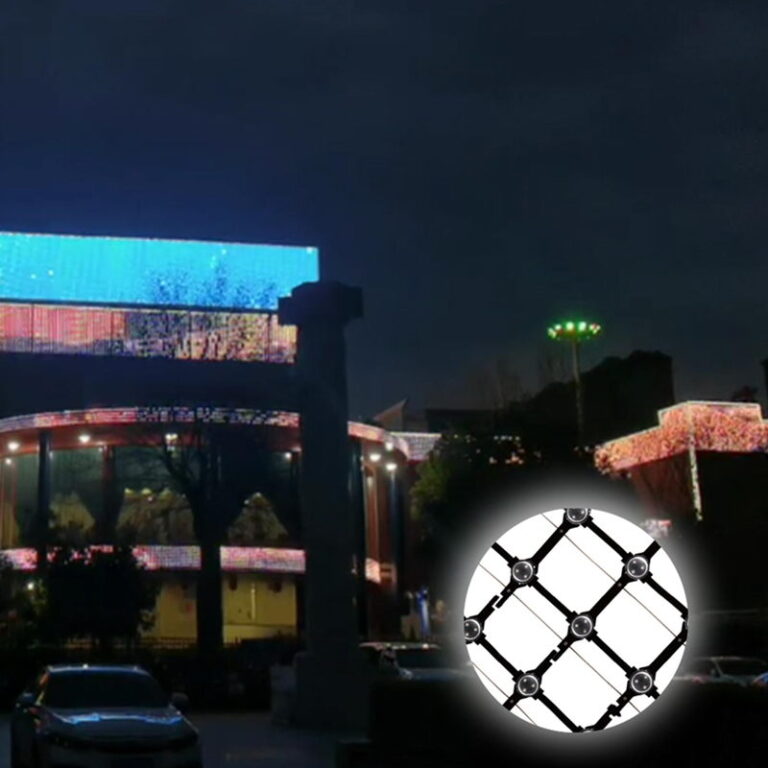
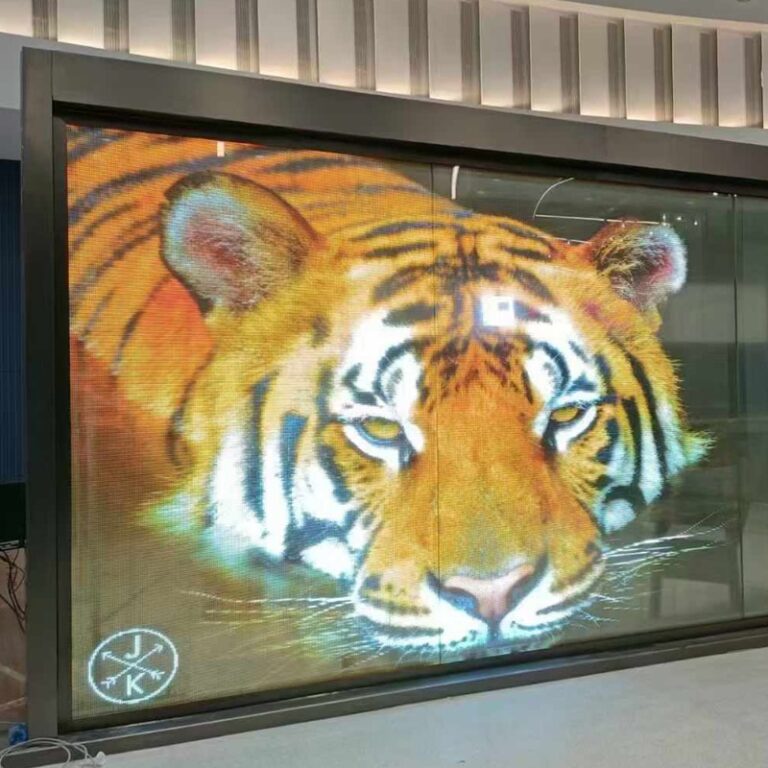
In architectural contexts, LED point lights define perimeters and elevate nighttime aesthetics. Addressable RGB types generate evolving hues on glass walls or skeletal frames, transforming bland buildings into focal points. Consider a mid-sized office tower upgrade where pixel arrays synced to dusk sensors created subtle gradients, boosting curb appeal while keeping power under 20kW for the entire elevation.
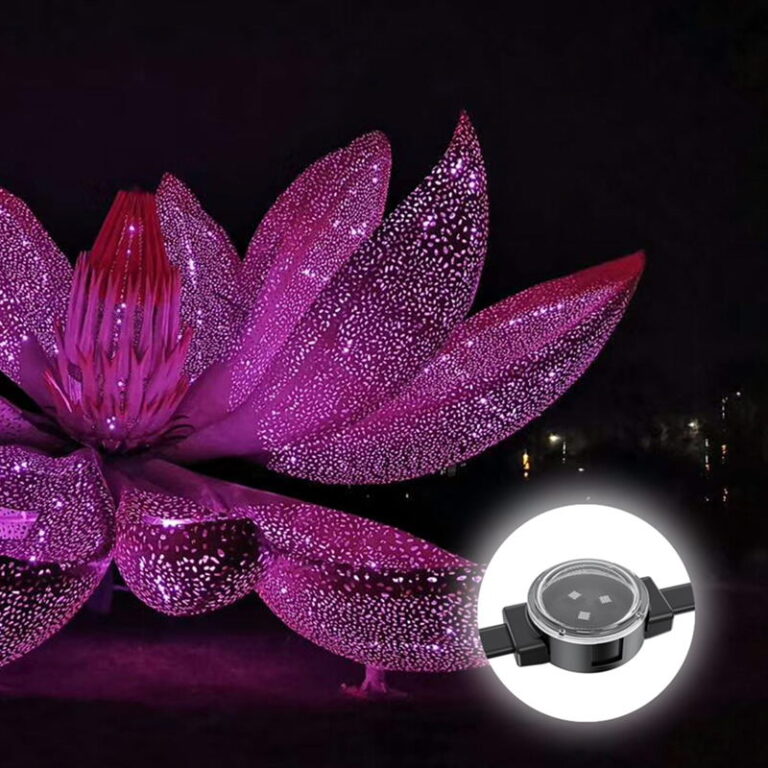
For landscape and municipal enhancements, these sources trace walkways, spans, or green spaces. Lower-wattage links conform to organic shapes, and amplified versions spotlight fountains or monuments with directed rays that curb spillover into adjacent zones. A city park revamp demonstrated this: installing IP68-rated dots along curved paths cut vandalism incidents by improving visibility, all while integrating with existing low-voltage grids.
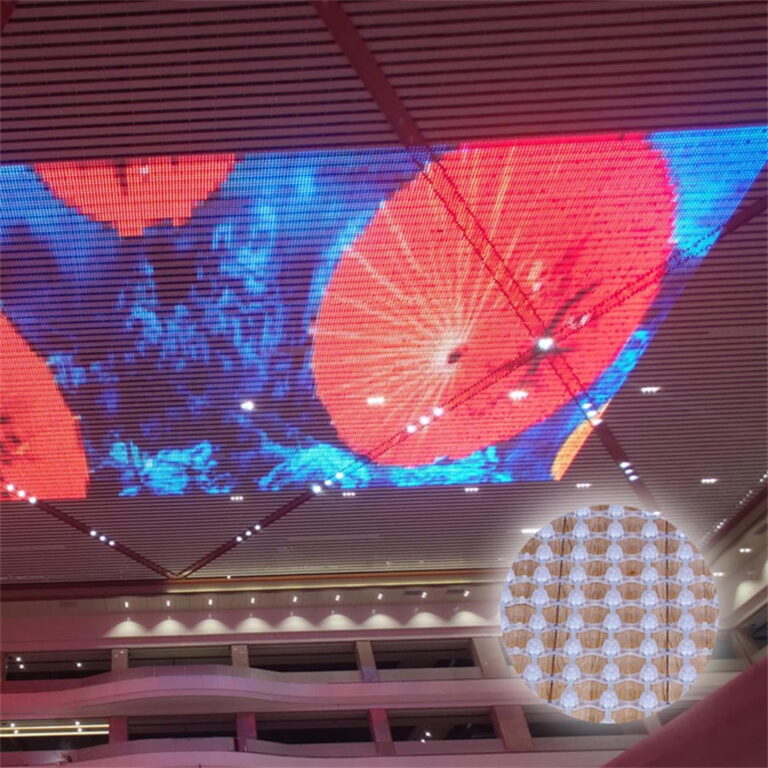
Signage in retail and promotion leans on vibrant pixels for backlit letters, punched screens, or dynamic boards. RGBW modules craft animations that capture eyes from afar, particularly in bustling areas where standout visuals drive engagement. One campaign for a chain store used chasing effects on perimeter dots, increasing passerby stops by 15% during peak hours, as tracked by footfall sensors.
Seasonal and fixed decor employs chains for eaves, foliage, or venues. Reconfigurable setups permit theme switches, prolonging relevance past events. In a resort’s annual light show, swapping protocols mid-season adapted displays without downtime, maintaining guest satisfaction through reliable operation.
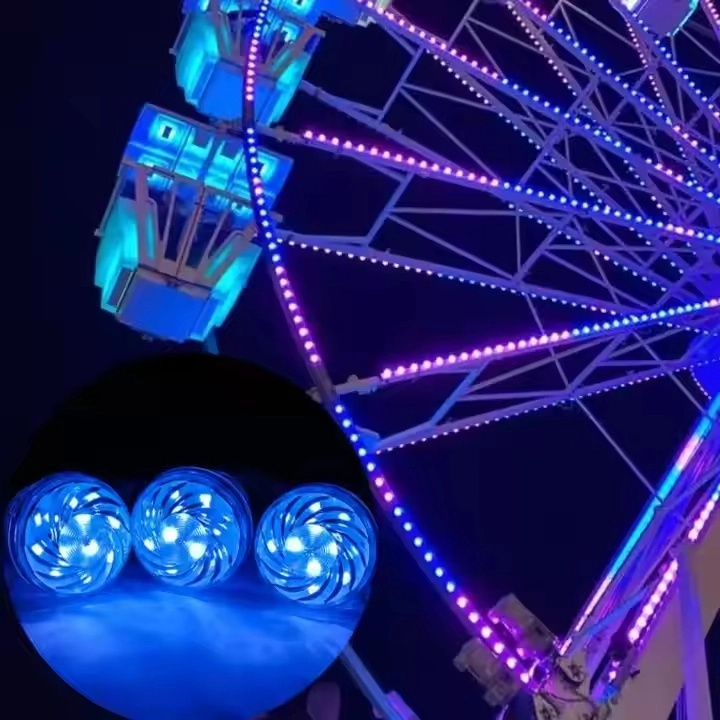
Entertainment venues harness them for atmospheric enhancements—pulsing trails on coasters or accents on features—where endurance against motion and elements stands out. A theme park’s facade refresh incorporated high-density grids for video mapping, drawing crowds with seamless playback that held up through daily cycles.
How to Choose the Right LED Point Lights – Step-by-Step Buying Guide
Begin by outlining site conditions: exposure to elements or controlled interiors? Constant light or scripted shows? Financial limits often steer toward DC24V architectures, which minimize losses over distance and simplify cabling.
Then, scrutinize parameters. Voltage selection influences chain feasibility—DC24V supports runs exceeding 50 meters with less amplification. Protection levels at IP67 or IP68 thwart breakdowns from precipitation or flooding; prioritize gel-filled optics and clip mounts for firm holds. Dispersion at 120 degrees ensures uniform wash, but tighter beams concentrate for emphasis.
Counter typical setbacks like signal attenuation by mapping cable gauges and booster placements. Uniformity in hue drifts without stringent sorting—opt for vendors enforcing narrow bins. System harmony with controllers averts compatibility snags that delay launches.
Cost evaluations weigh initial outlay against ongoing efficiencies. These lights slash consumption by 70% to 80% relative to legacy neon, with endurance that curtails swaps. Account for lifecycle expenses: sturdy metal casings and fade-proof lenses prolong intervals in tough weather.
Apply this framework:
- Validate enclosure rating for locale
- Align signaling with infrastructure
- Assess efficacy in lumens per watt
- Inspect prototypes for shade matching
- Scrutinize attachment methods and coverage periods
Such diligence uncovers mismatches early, preserving project integrity.
2026 Trends & Innovations in LED Point Lights
Advancements favor RGBW and RGBWW for superior white fidelity in hybrid zones. Wireless or network ties enable distant tweaks, syncing with urban IoT frameworks. Upped IP68 standards and UV blockers mitigate wear in bright climates. Denser arrangements refine surface projections, and eco-focused builds—reusable frames and reduced spectral peaks—comply with emerging codes.
Shenzhen XinHe Lighting Optoelectronics Co., Ltd – A Trusted Manufacturer
Since its founding in 2004 in Shenzhen’s Bao’an District, Shenzhen XinHe Lighting Optoelectronics Co., Ltd has honed expertise in LED point light production and associated controls. Certifications encompass ISO9001:2015 for quality, ISO14001:2015 for environmental practices, and IP management, complemented by CE-EMC, CE-LVD, and RoHS approvals. Over 80 patents underscore innovations, such as pioneering exposed cold sources.
The 6000-square-meter plant houses a workforce above 250, facilitating rigorous assembly via soldering and encapsulation. Highlights include outfitting the 2008 Olympic “China Seal” and Paralympic symbols. The “Bean” lineup spans Classic H for basics, Honor K for mid-range, and smart variants for advanced scripting. Emphasis on sealing undergoes immersion and thermal cycling tests, yielding annual volumes over 20 million pieces. This capacity underpins global supplies for facades, landscapes, and ads, ensuring consistency through scaled operations.
Conclusion
LED point lights prove vital in setups calling for exactness, resilience, and aesthetic punch. Spanning from simple tones to sophisticated matrices, proper variants yield steady results attuned to power and design aims. Thorough vetting of specs and providers wards off expensive fixes later. With 2026 bringing more refined integrations, these elements afford adaptability minus concessions on durability or output.
FAQs
What is the difference between LED point lights and LED pixel lights?
The labels describe overlapping tech: LED pixel lights stress controllable dots for sequenced visuals, whereas LED point lights encompass both steady and variable forms in broader terms.
What IP rating should LED point lights have for outdoor facade projects?
IP67 suffices for general shielding from particulates and brief submersion, fitting most elevations. IP68 adds robustness against prolonged wet conditions, cutting long-term vulnerabilities in variable weather.
How can I achieve dynamic chasing or flowing effects with LED point lights?
Employ addressable formats linked to WS2811, UCS1903, or DMX512 handlers. Coding directs color shifts and paces along strings, producing fluid motions on walls or signs.
What are the most popular LED point light types for architectural applications in 2026?
DC24V RGBW programmables with IP67/IP68 hold sway, blending bold palettes and crisp whites. Spherical 40mm to 50mm or flat minis adapt to grid layouts on contemporary edifices.
Can LED point lights be customized for specific project dimensions or colors?
Suppliers often accommodate adjustments in profiles, wiring spans, and tint calibration. Initial discussions verify practicality tied to fabrication limits and validation protocols.



 English
  Arabic
  Russian
  Spanish
  French