

A sun-facing storefront can draw heavy foot traffic. However, intense daylight and glass reflections often wash out a transparent digital display. The right brightness level keeps promotions visible. At the same time, it prevents excessive glare, heat, and power usage. Instead of just picking the highest nit rating, retailers need to check sunlight exposure. They should also consider glass type, viewing distance, pixel pitch, and operating hours. Doing this helps before selecting an LED transparent film screen.
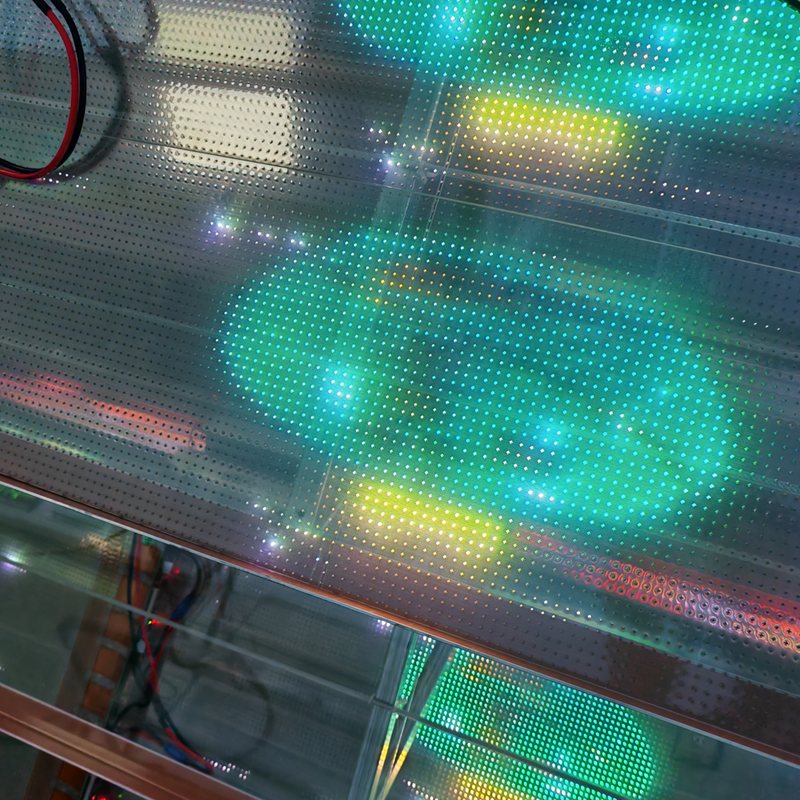
Why Does Brightness Matter for a Sun-Facing Storefront?
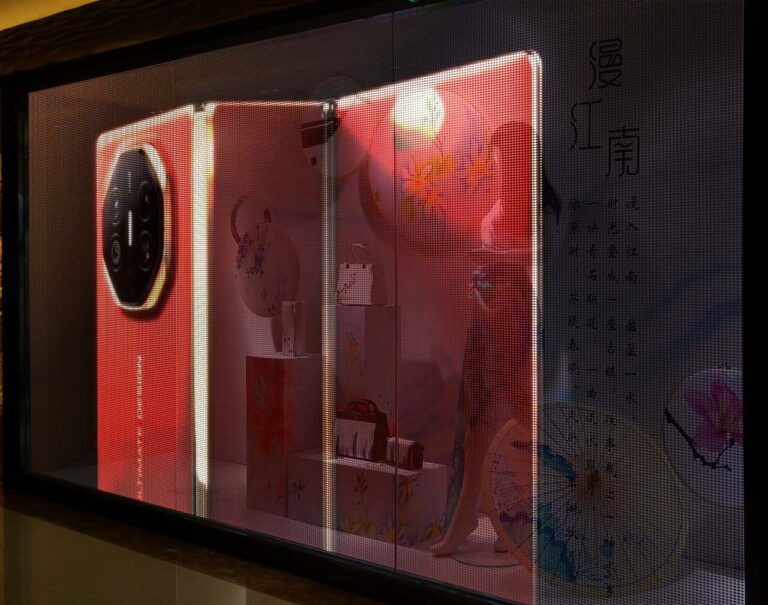
Brightness decides if advertising content stands out against the light hitting the storefront glass. Meanwhile, the display needs to keep the open look that makes transparent LED film so appealing.
What Does a Nit Rating Mean?
People measure screen brightness in nits. This is also called candelas per square meter. A bigger number means the display creates more visible light.
A screen might look vibrant inside a shop. Yet, it can seem dull when seen through a sunny window. Because of this, street-facing setups require much more brightness than standard indoor digital signage.
Why Is More Brightness Not Always Better?
Operating a screen at full output all day increases electricity use. It also makes the display harsh to look at after dark. Too much brightness might even hide the items placed behind the glass.
A smarter method is to pick enough peak brightness for tough daylight situations. Then, you can use dimming controls during evenings, cloudy times, and quiet hours.
How Many Nits Should You Choose?
No single brightness figure works for every storefront. The ranges below offer helpful starting points. Still, you should confirm the final specification with an on-site test.
When Are 1,000 to 2,000 Nits Suitable?
A brightness range of 1,000 to 2,000 nits can work well for shaded windows. It also suits covered shopping streets, indoor shopping malls, or storefronts getting minimal direct sunlight.
You can boost visibility at these levels. Just use large text, bold graphics, rich colors, and brief advertising messages. Faint images and complex layouts tend to lose sharpness against a bright backdrop.
When Should You Consider 2,500 to 3,500 Nits?
For a street-facing window getting hours of harsh daylight, around 2,500 to 3,500 nits is usually a safer starting point.
Modern high-brightness window-facing commercial displays can hit about 3,500 to 4,000 nits. This helps them stay visible in direct sunlight and other hard lighting situations. This shows why normal indoor display brightness often falls short for a sun-facing storefront.
When Might Up to 6,000 Nits Be Useful?
A south- or west-facing storefront facing strong afternoon sunshine might need higher peak output. This is especially true when shoppers view the screen from across a broad street.
XinHe notes that its LED Transparent Film Screen can reach up to 6,000 cd/m². Its specification table shows typical brightness levels. These range from 1,000 cd/m² for P20 to 3,000 cd/m² for P4. Therefore, buyers must check if a quoted number means typical brightness, peak brightness, or a specific custom setup.
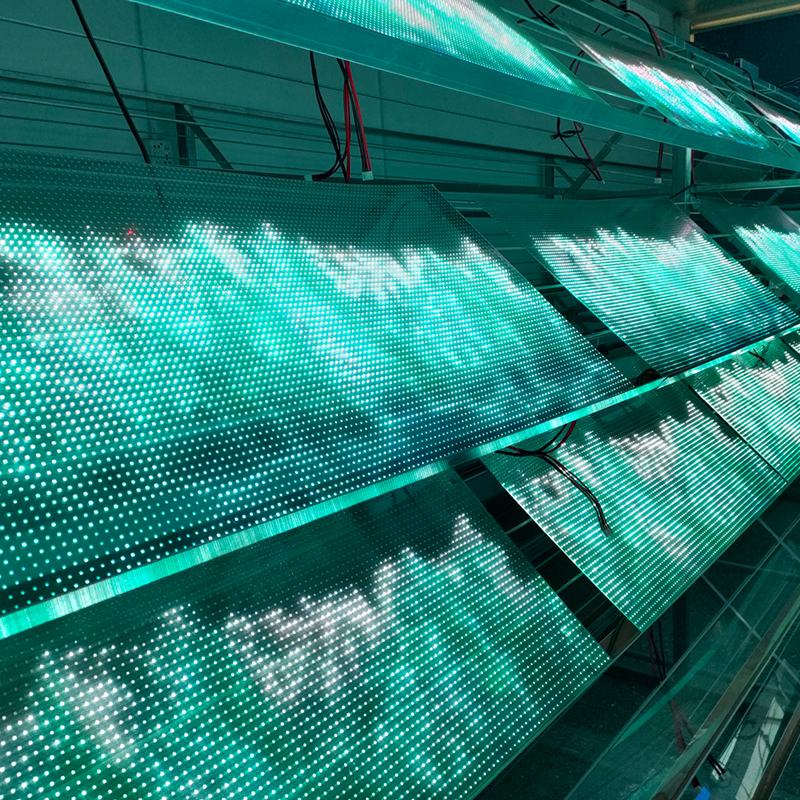
Which Site Factors Affect the Required Brightness?
A solid recommendation needs to rely on real site conditions, not just the storefront direction. You should check the location during its brightest working period.
How Do Direction, Glass, and Reflections Change Visibility?
East-facing glass gets stronger morning light. Meanwhile, west-facing glass often deals with harsh afternoon glare. Also, seasonal shifts can change how long and at what angle direct sunlight hits.
Tinted, coated, laminated, or double-glazed glass can alter light transmission and reflections. Nearby sidewalks, cars, water, or light-colored buildings can bounce extra light toward the screen.
Testing a sample on the actual storefront glass gives better results than guessing performance in a showroom.
How Does Viewing Distance Affect the Choice?
Greater viewing distances need bigger graphics. They might also allow a wider pixel pitch. XinHe provides P4, P5, P6, P8, P10, P16, and P20 transparent film screen options.
The company shows recommended viewing distances. These go from at least 4 meters for P4 to at least 20 meters for P20. So, you should review brightness, pixel pitch, content size, and viewing distance together. Do not pick them separately.
How Can Brightness Be Managed During Daily Operation?
Proper brightness control keeps a transparent LED film screen clear during the day. It also keeps it pleasant to view at night. Moreover, it can cut down on extra running costs.
Should You Use Automatic or Scheduled Dimming?
An ambient light sensor can boost output during bright daylight. It can then lower it after sunset. Scheduled brightness profiles offer another handy choice for shops with set opening hours.
XinHe lists 256 brightness-control levels for its transparent film screen range. This lets operators tweak the display rather than keeping it at one static setting.
Can Better Content Improve Daylight Visibility?
Yes. Thick fonts, short messages, simple motion, and high-contrast colors stand out better. They are easier to read than faint photos or busy layouts.
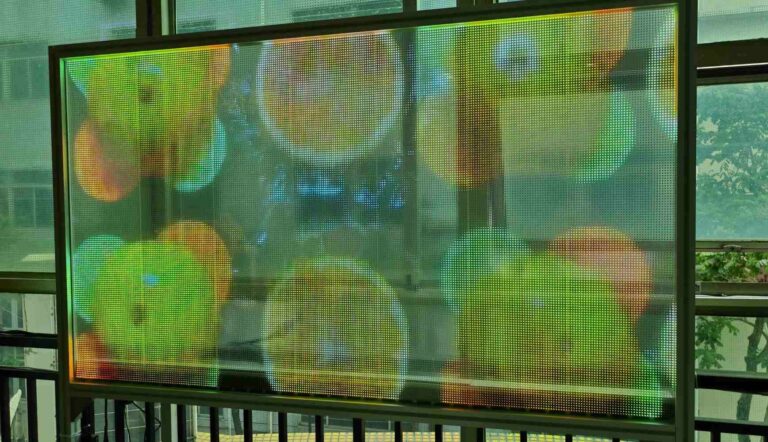
Black areas usually look transparent on this display type. Thus, you should make content specially for LED transparent film screens. Do not just copy it straight from television, social media, or standard LED billboard campaigns.
Why Choose Shenzhen XinHe as Your Supplier?
Screen specifications are just one piece of a winning storefront project. A trusted supplier should also help with pixel pitch selection, module layout, and control systems. They should assist with installation and customization too.
What Makes XinHe a Reliable LED Transparent Film Screen Partner?
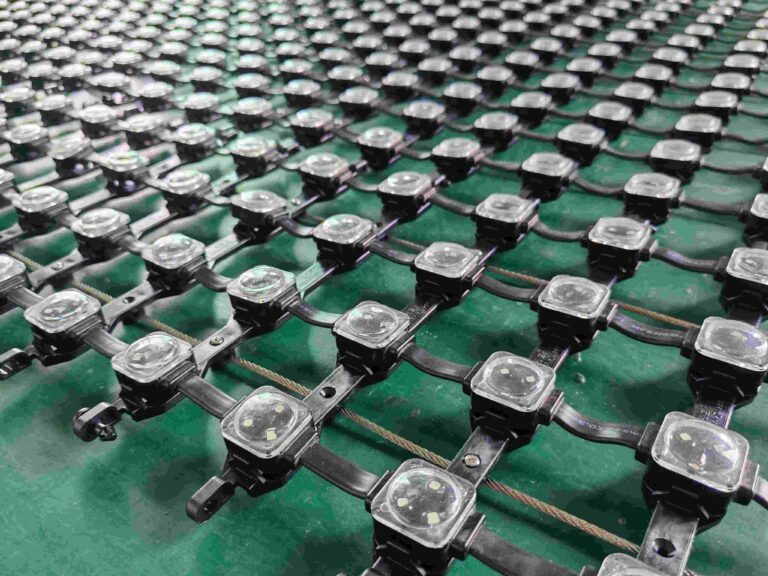
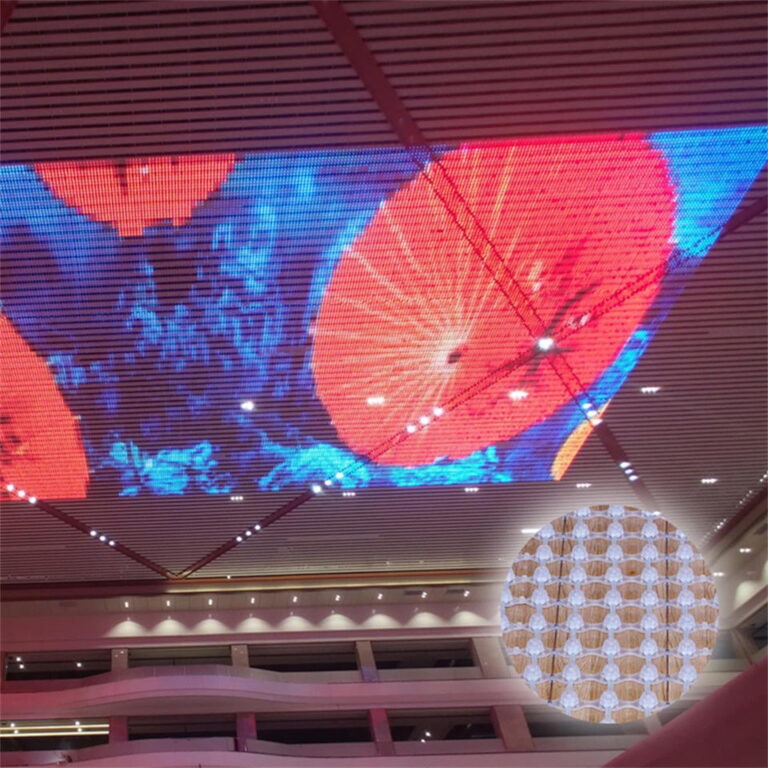
Founded in 2004, Shenzhen XinHe Lighting Optoelectronics Co., Ltd offers product supply, scheme design, engineering budgeting, and on-site guidance. Its transparent film screen range brings multiple pixel pitches and transparency up to 95%. It also features flexible sizing and glass-mounted or suspended installation.
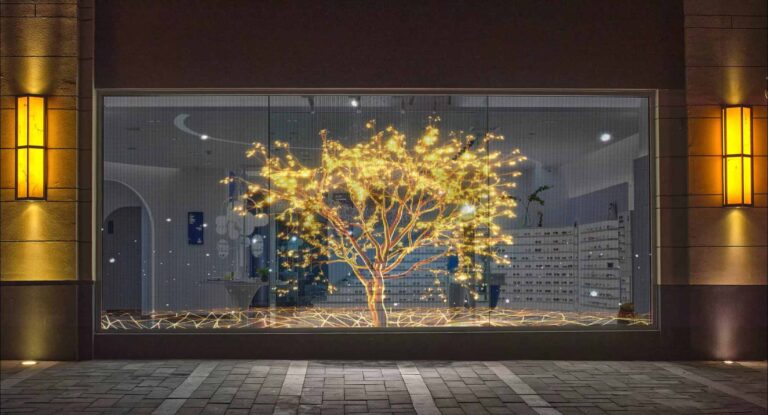
These choices make XinHe a smart supplier for retail windows, showrooms, and commercial interiors. It also fits advertising installations and custom transparent display projects.
What Is the Final Recommendation?
You should handle brightness as part of a whole storefront display plan. Do not treat it as a standalone specification.
Which Brightness Rating Should You Request?
For a normal bright storefront window, start talking at about 2,500 to 3,500 nits. Think about higher peak capability for harsh direct sunlight, long viewing distances, or very reflective areas.
Before you approve the order, test a sample on the real glass. Compare how it looks in the day and at night. Also, confirm if the given rating is typical or peak brightness. The best screen is not just the brightest one. It is the one that delivers clear content, proper transparency, smart energy use, and easy viewing all day long.
FAQs
Is 1,000 Nits Bright Enough for a Storefront?
It might be enough for an indoor mall, covered walkway, or shaded window. Still, it is generally not the safest pick for a storefront getting intense direct sunlight.
Does Higher Brightness Reduce Screen Transparency?
Not automatically. Brightness, pixel density, LED size, and circuit layout all shape the balance between image clarity and transparency. Buyers need to compare both details for the exact model they are checking.
Should the Screen Run at Full Brightness All Day?
No. You should only use maximum brightness when ambient light demands it. Lowering output during cloudy times, evenings, and nighttime boosts viewing comfort. It also drops wasted power usage.


 English
  Arabic
  Russian
  Spanish
  French