

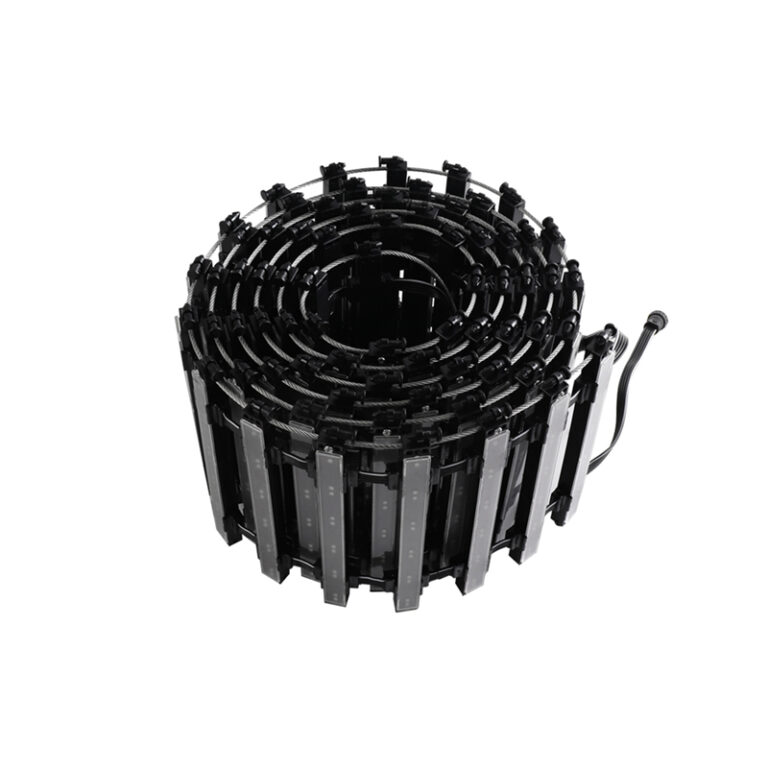
Rolled LED grid screens help contractors move large display areas without shipping bulky rigid cabinets, but compact packing does not remove the risk of transport damage. A carton may arrive intact while a connector inside has been stressed, or a screen may be unrolled carelessly and placed under tension before its condition is documented. For an overseas buyer, those mistakes can delay installation and make responsibility for damage difficult to establish. A receiving inspection should therefore begin before the packaging is discarded and end only after the delivered sections have been compared with the approved order and a controlled functional test.
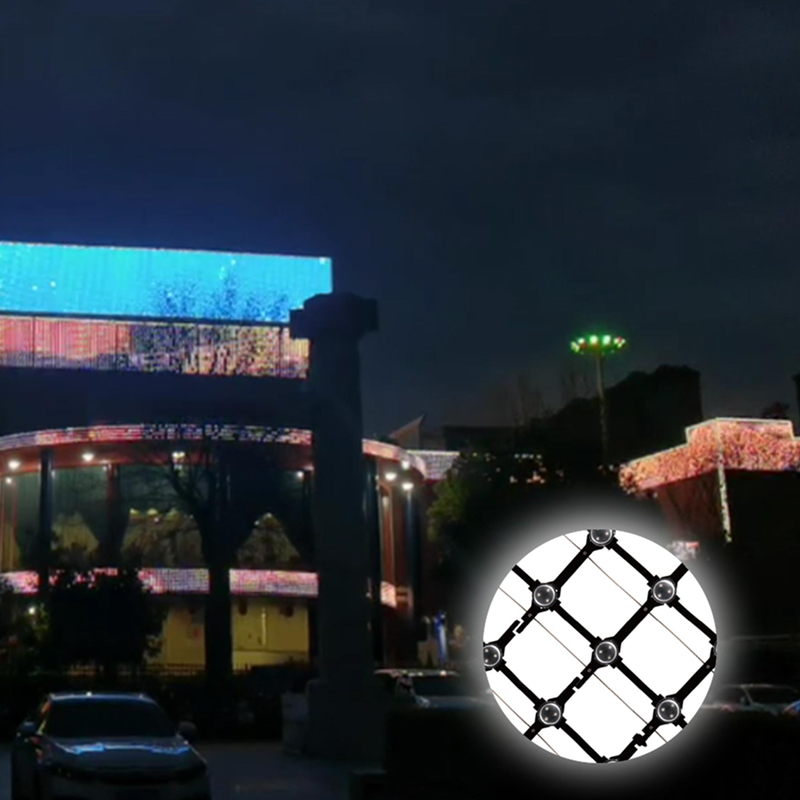
What Should Importers Check Before Unpacking a Rolled Screen?
The first inspection stage preserves evidence about how the consignment arrived. It should be completed before installers carry the modules to the facade or combine goods from different cartons.
Which Shipping Records Should Be Matched?
Compare carton and pallet labels with the packing list, purchase order, module schedule, and agreed delivery quantity. Record container or vehicle identification where available, photograph the unopened packaging, and note crushing, punctures, wet areas, broken seals, or signs of mishandling. If there is visible damage, follow the carrier’s reporting procedure and preserve the relevant packaging rather than disposing of it immediately.
Why Is Package Traceability Important?
Rolled assemblies may look similar even when their pixel density, intended zone, or cable orientation differs. Label each package as it is opened and record which screen section came from it. If damage appears later, this record helps identify whether it affects one transport unit, an entire batch, or a particular installation zone. Mixing unmarked sections on the floor can make an otherwise straightforward claim or replacement request difficult.
How Should Rolled LED Grid Screens Be Unpacked Safely?
A receiving inspection should not create the damage it is meant to detect. The correct handling method depends on the screen structure and the supplier’s packing instructions.
What Is the Safe Unrolling Procedure?
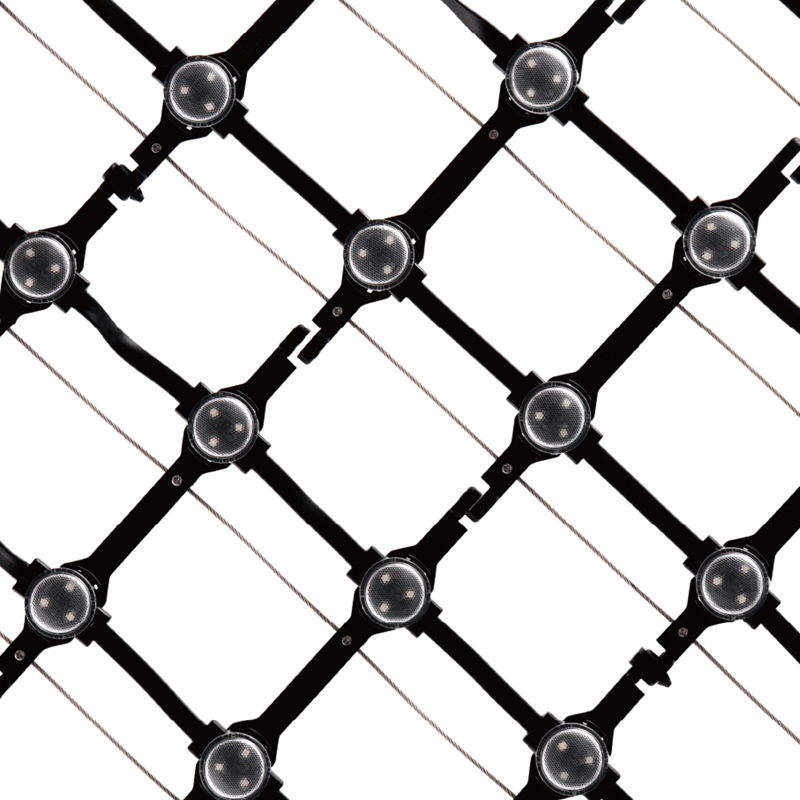
Set up a clean, level surface with enough working space and trained staff to support the entire section. Remove restraints gradually and follow the manufacturer’s stated roll direction and minimum handling limits. Do not pull on individual light nodes, signal cables, or connectors to accelerate unrolling. A giant LED grid screen is assembled from repeated lighting and fixing elements; local force at one point can damage an otherwise undisturbed section.
Which Physical Areas Deserve Close Inspection?
Look for cracked light housings, displaced or missing bases, kinked supporting wires, bent connection pins, damaged cable jackets, and loose waterproof plugs. Inspect both the front and rear faces under good lighting. Photograph suspect spots beside the module identifier and scale reference. Do not energize a section with exposed conductors or wet connectors; quarantine it for technical review first.
How Can Buyers Check the Delivered Screen Against the Purchase Order?
Not every mismatch is shipping damage. A module may be intact but still be the wrong density, configuration, or zone for the project. Check identity before installation begins.
Which Specifications Should Be Verified at Receiving?
Confirm model designation, module dimensions, pixel arrangement, color version, control protocol, operating voltage, connector type, and delivered quantity against the approved documents. The XH-star H2503 LED Grid Screen listing includes version-dependent RGB or RGBW and control configurations; buyers should inspect the configuration stated on their order rather than assume that all visually similar sections are interchangeable.
How Should Roll Form and Flatness Be Evaluated?
Lay the section out under the supplier’s recommended conditions and allow it to settle without forcing a sharp reverse bend. Check that spacing remains consistent and that fixing elements sit as intended. A temporary shape caused by packing should be assessed against the supplier’s instructions, not treated automatically as a defect. Conversely, a kinked wire or permanently displaced node should be documented before any field adjustment obscures the original condition.
When Should the First Electrical and Visual Test Be Performed?
Functional checks help distinguish transit damage from appearance-only concerns, but the test itself must be controlled and safe. Use the confirmed power and control configuration.
What Should a Receiving Test Show?
After the physical inspection passes, power a representative or agreed set of sections with the correct rated supply and controller. Display static red, green, blue, and white as applicable, followed by a simple addressing pattern. Watch for nonresponsive nodes, unstable output, damaged connectors, or an unexpected module sequence. Record the tested section numbers, settings, photographs, and results. Do not infer long-term reliability from a short receiving test; it only establishes the condition observed on arrival.
How Should Suspected Damage Be Reported?
Create a short discrepancy report with package identifiers, photographs before and after unpacking, precise component locations, test results, and affected quantities. Separate freight damage, specification mismatch, and installation damage as provisional categories until the evidence is reviewed. Notify the carrier and supplier within the applicable contractual time limits. Keep the affected items, packaging, and records available for their inspection.
How Can Receiving Results Protect the Installation Schedule?
A tidy handover process prevents damaged goods from entering the working installation stock. It also allows unaffected modules to move forward without losing traceability.
What Should Happen Before a Module Is Released to Installers?
Mark each section as accepted, on hold, or rejected and link its status to the project drawing. Store accepted sections in the conditions specified by the supplier; protect connectors and avoid placing heavy items on rolled screens. Do not make unauthorized repairs before the supplier has reviewed a damage claim. Where the delivery is phased, reconcile accepted quantities with the next installation area so a missing module is discovered before lifting equipment is mobilized.
Why Work With Xinhe Optoelectronics on Grid Screen Deliveries?
Shenzhen XinHe Lighting Optoelectronics Co., Ltd. has supplied point-light and modular grid-screen products for architectural projects since 2004. Its product materials describe finished grid-screen units that can be rolled for shipment and assembled on site, together with pin-splicing and steel-wire fixing structures. Buyers can use the exact product configuration, packing list, and agreed handling instructions to create a receiving checklist that fits their project rather than relying on a generic LED cabinet inspection.
Conclusion
A proper receiving inspection begins with packaging evidence, preserves the identity of every rolled section, and checks mechanical condition before a controlled electrical test. Compare the delivery with the approved module schedule, quarantine suspect goods, and document discrepancies before installation. These steps help importers address transport problems early and protect the facade handover schedule.
FAQs
Can I install a rolled LED grid screen directly after unpacking?
Inspect package condition, module identity, supports, cables, and connectors first. Perform the agreed functional check before releasing the section to installation.
What if the carton looks undamaged but some nodes do not light?
Record the package identifier, section position, power and controller settings, and test result. Quarantine the section and ask the supplier to review it rather than assuming the cause.
Should I discard the packaging after delivery?
Keep packaging for any damaged or disputed shipment until the carrier and supplier confirm that the evidence is no longer needed, subject to the contract’s claim procedure.









 English
  Arabic
  Russian
  Spanish
  French