

Outdoor lighting procurement often starts with a deceptively simple question: LED point light vs LED flood light—which is better for outdoor use? In commercial and municipal projects, the right answer is rarely a single fixture type. It is a performance match between beam behavior, mounting geometry, control method, environmental exposure, and the maintenance reality that follows after handover.
A flood light can make an area look “bright enough” in a mock-up, then create glare complaints for months. A point light can deliver crisp architectural definition, then fail expectations if spacing and wiring are treated casually. This guide breaks down where each fixture class wins, where it breaks down, and how to specify an outdoor system that stays consistent across seasons, batches, and service cycles. For broader context on long-life exterior performance, see outdoor LED lighting design decisions that hold up on site.
What Projects Really Mean by “Point Light” and “Flood Light”
Point light is about control and repeatability
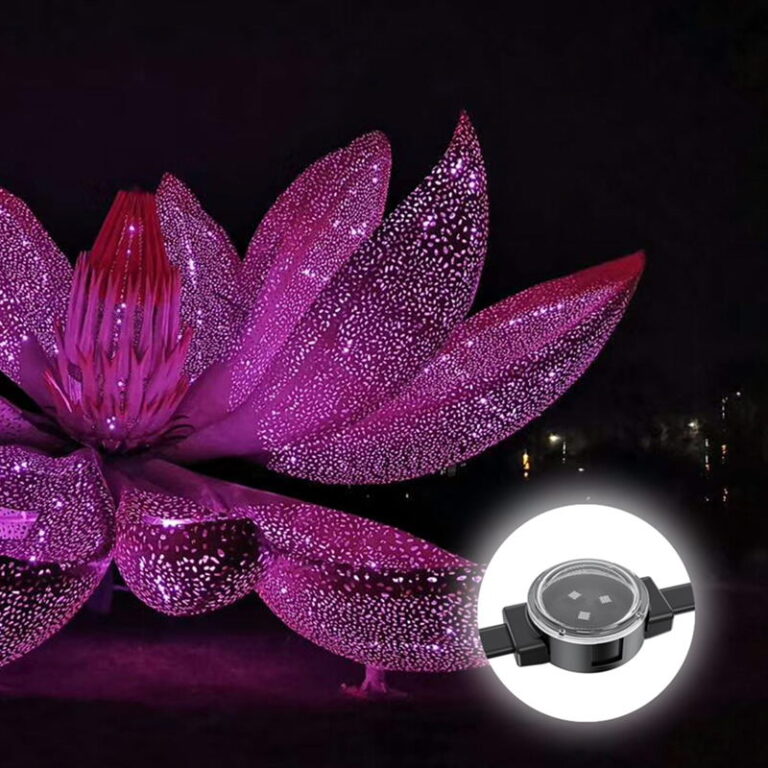
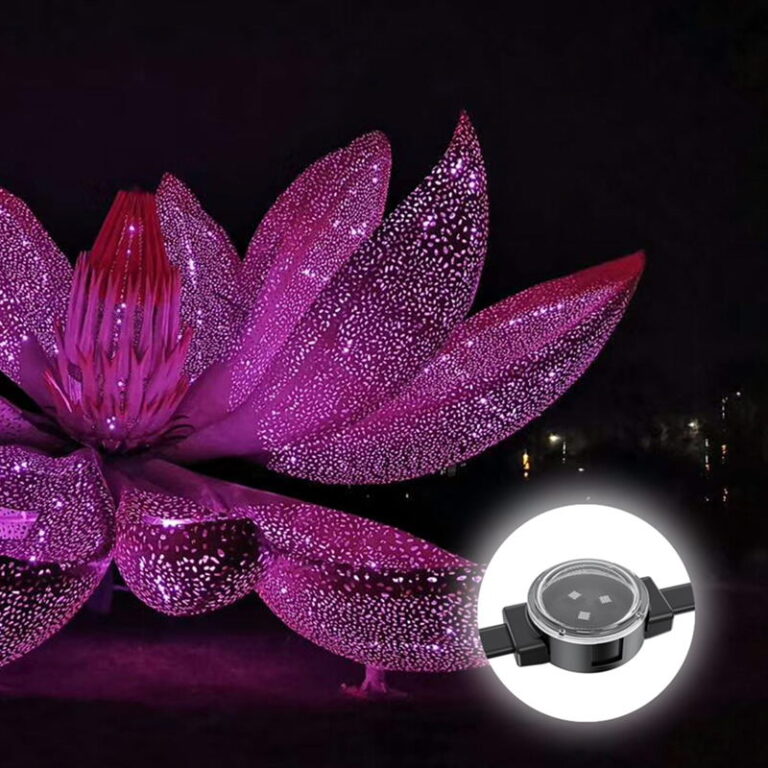
In outdoor architectural work, an LED point light is usually selected when the design needs discrete nodes of light rather than a continuous wash. Think façade outlines, pixel-style media effects, sign contours, wayfinding accents, and rhythmic highlights on structural grids. These fixtures are often deployed in large quantities, which makes batch consistency, wiring discipline, and spacing tolerance more important than headline brightness.
Flood light is about coverage and risk reduction
An LED flood light is typically chosen when the priority is broad illumination—yards, perimeter security, parking edges, loading zones, building setbacks, and landscape zones where uniform visibility matters more than pinpoint visual texture. Flood lights can simplify fixture counts and reduce design complexity, but the trade-off is that light spill, glare, and uneven hot spots become the common failure modes if beam and mounting height are not matched.
How LED Point Lights Behave Outdoors
Beam shape, spacing, and viewing distance drive the outcome
Point lights succeed when beam control and spacing are treated as one decision. A narrow beam can read sharp and premium on a façade, but if spacing is stretched to reduce quantity, scalloping and striping show up quickly from street viewing distance. A wider beam can smooth transitions, but it may flatten texture if the architecture relies on depth and shadow.
In practical terms, point lighting is less forgiving than teams expect. A one-inch shift in mounting depth can change the perceived alignment across an entire run, especially on metal ribs, curtain wall edges, or perforated cladding where reflections amplify small mistakes.
Point lighting is often a controls decision, not only an optics decision
Many B2B outdoor projects use point lights because the client wants controllability: static white at baseline, scheduled dimming after hours, or dynamic scenes for events. When this is the real driver, the specification must cover more than wattage. It should account for protocol compatibility, addressing workflow, cable topology, voltage drop planning, and service access for replacement without tearing out long runs.

Environmental sealing is only half the story
Outdoor point lights are frequently potted or sealed. That helps with water ingress, but the long-term failure pattern often comes from cable entry stress, connector sealing inconsistency, and thermal cycling that pulls micro-gaps into joints. If a point light system is built for facade, the installation method has to assume repeated heat-cool expansion and wind-driven water paths.
For buyers evaluating different series and housing options, reference LED point light source options for architectural exteriors to compare configurations used across building exteriors.
How LED Flood Lights Behave Outdoors
Flood lights deliver fast coverage, but glare control decides acceptance
Flood lights can solve coverage problems quickly, especially when a site needs safe walking and vehicle movement more than architectural storytelling. The issue is that flood beams are easy to overshoot. Over-lighting can increase glare and reduce perceived safety because people lose contrast at the edges of the lit area. In many real sites, the “brighter is safer” assumption fails once drivers face direct glare at an entrance turn or pedestrians walk into harsh contrast.
Mounting height is the quiet determinant of uniformity
Flood distribution changes dramatically with mounting height. A beam that looks balanced on a 6-meter pole can feel patchy on a 3-meter wall mount. The fixture might still meet basic lumen targets, yet leave dark pockets behind bollards, landscaping, or parked vehicles. If a project uses flood lights for perimeter or yard lighting, photometric planning should include obstructions and real mounting constraints rather than idealized drawings.
Flood lights reduce fixture count, but they raise single-point-of-failure risk
When flood lights are used as the main illumination layer, each unit carries more responsibility. A single failure can create a dark zone large enough to trigger security concerns or operational disruption. That pushes buyers toward higher reliability expectations, stable driver behavior under heat, and clear replacement logistics.
Outdoor Performance Factors That Decide the Better Choice
Weather exposure is not a generic condition
Outdoor use can mean sheltered soffits, coastal salt spray, dusty logistics parks, or high-rise facade with wind-driven rain. These environments stress different failure points. A sheltered canopy might trap heat and shorten life. A coastal façade might corrode connectors. A dusty industrial site can clog vents and coat lenses, changing beam shape over time.
For decision teams, the more accurate question is not “Is it waterproof?” but “Where does water sit, where does heat go, and how will the cable behave after thousands of expansion cycles?”
Thermal management determines long-term brightness stability
Whether the fixture is a point light or flood light, sustained junction temperature is what shapes lumen maintenance and color stability. Outdoor fixtures may pass short testing, then drift after long summer nights. This is why B2B specs increasingly emphasize steady performance across long operating hours rather than peak brightness.
Color consistency matters more outdoors than many teams expect
Outdoor installations are often viewed from distance. That makes inconsistency obvious. A few units that drift in CCT, or a batch that reads slightly different in RGB balance, can create visible patchiness across a façade line or a branded sign element. If point lights are used as repeating nodes, color binning discipline becomes a commercial requirement, not a design preference.
Voltage drop and power injection planning are often the real bottleneck
Point light systems tend to run long cable distances. If voltage drop is not planned, brightness variation shows up at the tail end of runs, and premature driver stress can follow. Flood lights reduce the number of nodes, but they often require higher input power per unit, which shifts the challenge to circuit capacity, surge protection, and safe routing.
Which Is Better for Common Outdoor Scenarios
Building facade and architectural outlines
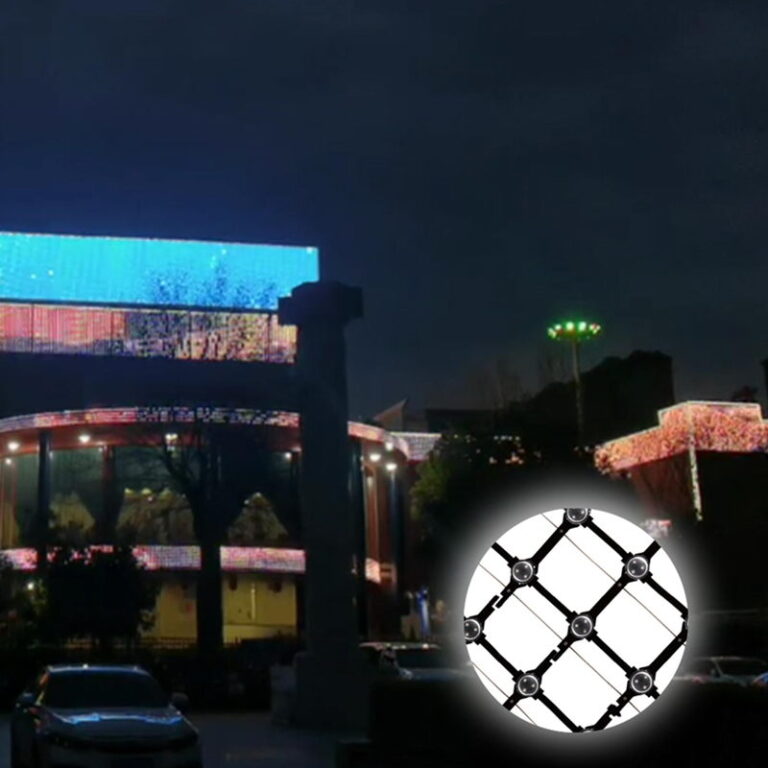
Point lights usually win when the façade needs definition: edges, grids, ribs, or discrete accents that read crisp at night. Flood lights can still play a role as a base layer, but if the job is to outline a structure without turning it into a glowing slab, point-based layouts typically deliver better restraint.
Media facade and pixel-like effects
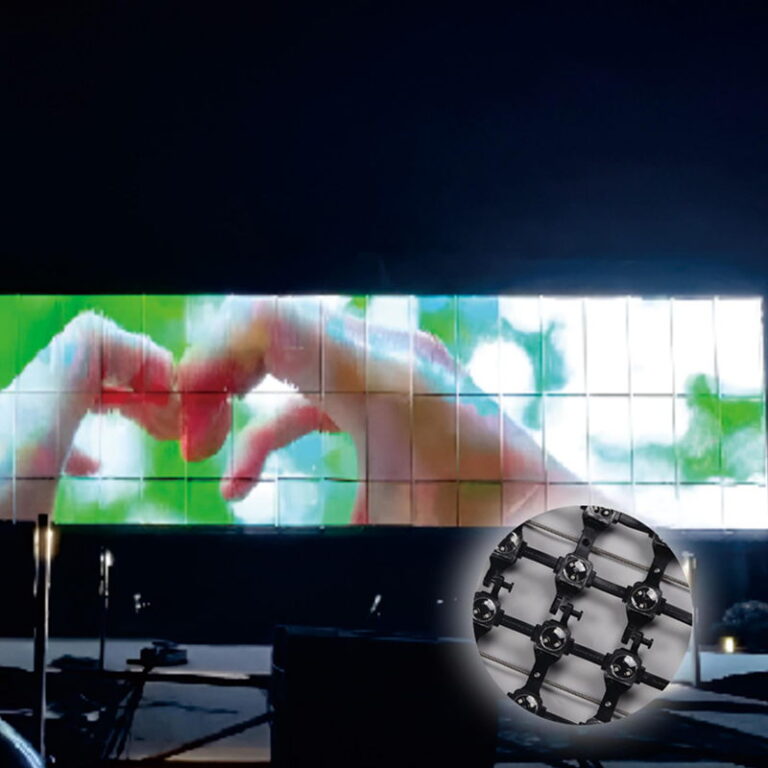
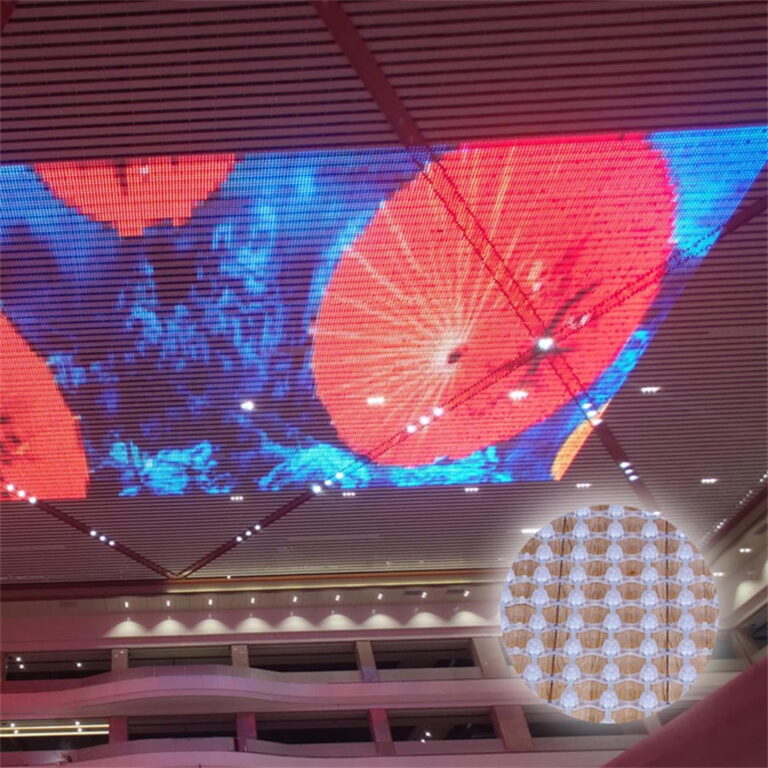
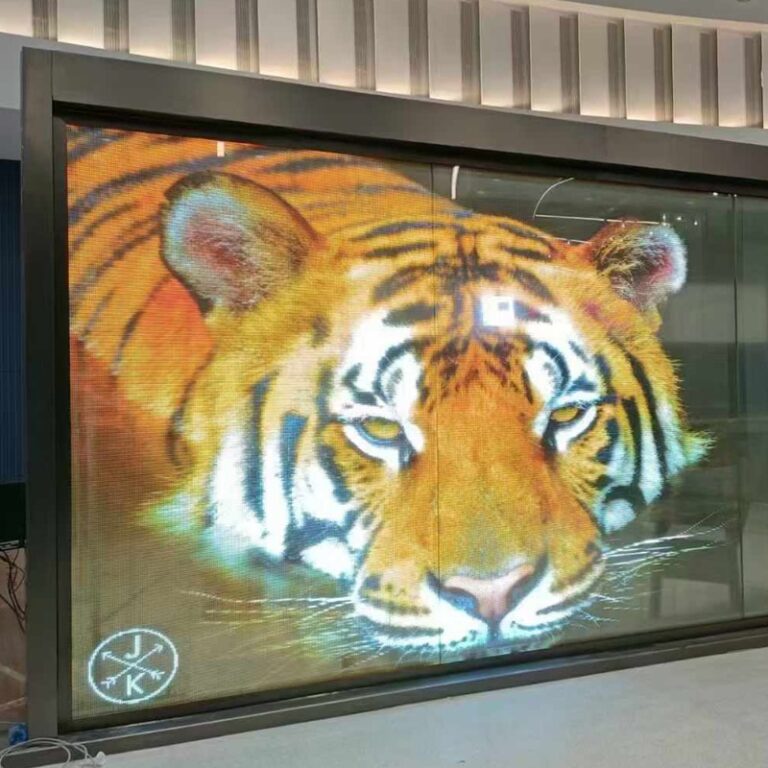
If the project includes programmable patterns, dynamic scenes, or branded motion language, point lights are often the primary tool because they can behave like pixels. Flood lights generally cannot deliver the same resolution without excessive fixture count and complex shielding.
Outdoor signage and branding surfaces
Point lights fit when the sign needs contours, dot matrices, channel outlines, or precise highlights that keep brand shapes clean. Flood lights fit when the goal is to wash a billboard face or illuminate a large branded plane from standoff distance, assuming glare and spill are controlled.
Site perimeters, yards, and access roads
Flood lights typically win for functional coverage, especially where uniform visibility and simpler maintenance are priorities. Point lights can still be used as markers for edges, steps, or special zones, but they are rarely the main layer for large-area functional lighting.
Landscape and hospitality exteriors
The best result is often hybrid. Point lights handle accents, path markers, and architectural details. Flood lights handle broader safety zones, parking edges, and perimeter continuity. Mixing both avoids the common trap of trying to force one tool to perform two incompatible jobs.
Installation Realities That Decide Whether the Plan Works
The best photometric plan fails under sloppy mounting tolerance
Point lights require repeatable positioning. If crews freehand spacing or vary mounting depth, the visual rhythm becomes inconsistent. Flood lights require consistent aiming and shielding. If brackets loosen or the aiming line is not controlled, glare appears and uniformity breaks down.
Cable routing is not a secondary detail
Outdoor cabling sees water paths, UV exposure, abrasion points, and vibration. Many “mystery failures” trace back to cable strain at entry points or connectors that were not seated cleanly during rushed installation. For point-light runs, the discipline around routing and strain relief is often the difference between a stable system and a maintenance sink.
Commissioning should match the control method
If point lights are used with programmable control, commissioning is not just powering on. Address mapping, scene testing, dimming curves, and failure-mode behavior should be validated on site. Buyers who treat commissioning as a paperwork step often discover issues only after the site is live, when changes cost more.
When the project requires configuration flexibility across different buildings or regions, ODM/OEM customization workflow for outdoor lighting projects becomes relevant because the constraint is often integration, not only product selection.
Procurement Guidance: How to Specify Without Over-Specifying
Start with geometry and viewing distance
Before wattage is discussed, define what the viewer must perceive. Is the target a street-level façade read from 50 meters? A sign read from 200 meters? A pedestrian plaza read from 10 meters? Point lights and flood lights behave differently at each distance, and “better” depends on what must be legible.
Lock the beam intent and the spill boundary
Beam angle alone is incomplete. The specification should describe where light must land and where it must stop. This is particularly important in mixed-use exteriors, where excessive spill can trigger tenant complaints and regulatory scrutiny.
Match reliability expectations to maintenance access
If the installation is on a high façade with expensive access, reliability targets must be higher than for a ground-accessible landscape zone. Many projects underestimate how quickly service logistics dominate total cost of ownership.
Treat consistency as a deliverable
For repeating nodes or long runs, consistency is part of performance. That includes brightness alignment across runs, color stability, and predictable driver behavior. It also includes repeatable production outcomes when the project expands in phases.
Plan for future expansion
Outdoor projects rarely stay static. Buildings add phases, retail tenants demand changes, and cities refresh night scenes. Systems that allow structured expansion—power planning, addressing logic, and spare capacity—reduce redesign pain.
For teams building a shortlist of fixture families, outdoor LED point lights for media facades and signage is a practical starting point to review outdoor-oriented categories used across architectural and advertising contexts.
The Most Reliable Answer: Use Both, With Clear Job Boundaries
In many outdoor commercial projects, the highest-performing approach is layered. Flood lights handle the base layer where safety and uniform visibility are required. Point lights handle the detail layer where architecture, branding, and controlled accents matter. The risk is not mixing. The risk is mixing without boundaries, which leads to uncontrolled brightness, inconsistent visuals, and complicated maintenance responsibility.
A well-defined hybrid strategy also simplifies stakeholder alignment. Security teams get consistent coverage. Designers get crisp definition. Owners get predictable maintenance.
About Shenzhen XinHe Lighting Optoelectronics Co., Ltd
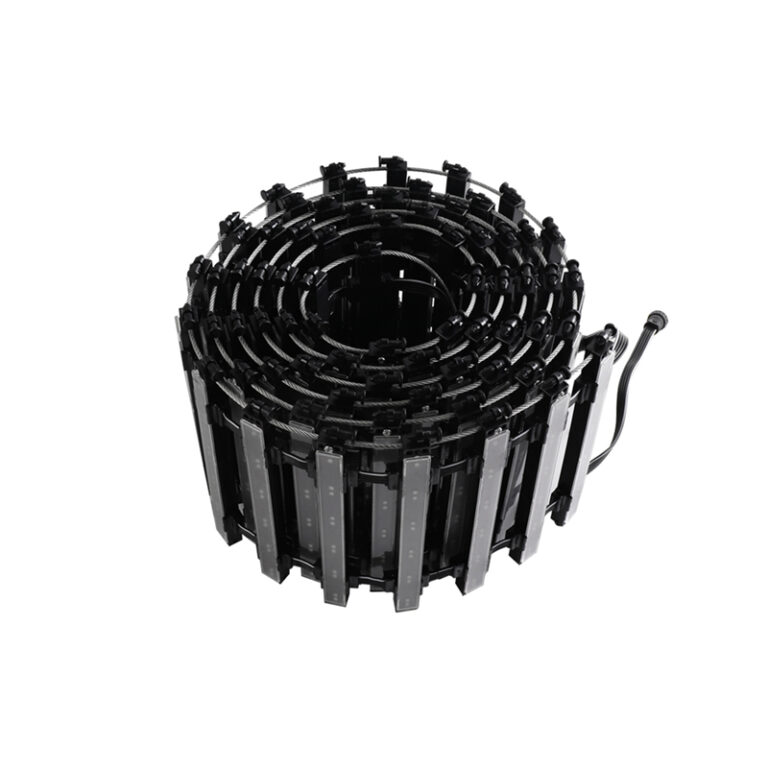
Shenzhen XinHe Lighting Optoelectronics Co., Ltd has been active in outdoor lighting applications since 2004, focusing on point light sources and grid-based display solutions used in architectural landscape and advertising lighting projects. In addition to product supply, project support typically involves design coordination, engineering budgeting input, and on-site guidance so that installation geometry, wiring reality, and long-term performance are treated as part of the delivery rather than an afterthought. For background and capability context, see Shenzhen XinHe Lighting Optoelectronics Co., Ltd company profile.
خاتمة
“Better” is not a fixture category; it is a performance match. LED point lights win when projects need controlled, repeatable nodes of light that hold architectural rhythm and support programmable effects. LED flood lights win when projects need broad, functional coverage with fewer fixtures and simpler service logic. Outdoor success comes from defining the visual job, respecting geometry, planning wiring and maintenance, and specifying consistency as a deliverable. When those pieces are handled upfront, both point and flood systems can perform reliably outdoors, and hybrid layouts often deliver the best total outcome.
FAQs
Is an LED point light better than an LED flood light for outdoor façade projects?
For façade outlines, pixel effects, and detailed architectural rhythm, an LED point light is often better because it provides tighter control and repeatable spacing outcomes. For broad wall washing or functional illumination around the building, an LED flood light can be the better tool, especially when glare and spill boundaries are well managed.
What outdoor specs matter most besides brightness?
In outdoor use, weather exposure, thermal management, cable entry sealing, and long-term consistency often matter more than peak brightness. Projects should also plan for voltage drop in long runs, especially in continuous outdoor installations that use distributed point lighting.
Can LED point lights handle continuous de-rating in summer heat?
Yes, if thermal paths, mounting orientation, and driver behavior are matched to the site. Heat is a primary driver of lumen maintenance and color stability. Outdoor systems that ignore heat often show gradual brightness loss or uneven appearance across runs.
When does an LED flood light become the wrong choice outdoors?
An LED flood light becomes a poor fit when the project needs precise edges, controlled highlights, or pixel-like scenes, or when glare risk is high due to low mounting height and direct line-of-sight from pedestrians and drivers. In those cases, point lighting or a layered approach typically performs better.
How should a buyer compare point lighting and flood lighting for a mixed-use outdoor site?
Start by splitting the site into zones based on purpose: safety movement corridors, brand/feature areas, and architectural surfaces. Use flood lighting for functional coverage zones, use point lighting for detail and controlled accents, then validate installation geometry, wiring limits, and maintenance access so the system holds up after handover.



 Arabic
  English
  Russian
  Spanish
  French