

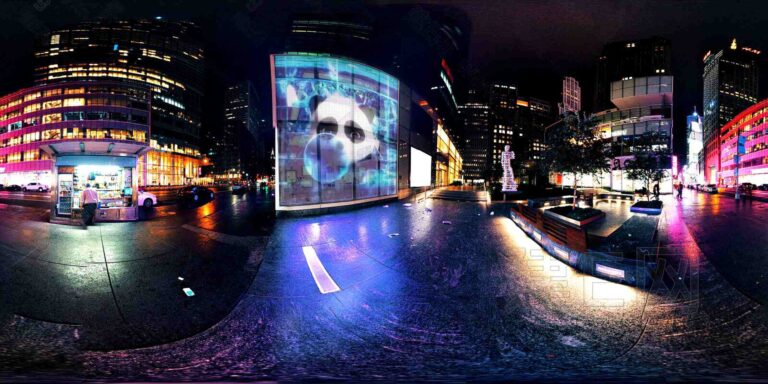
As commercial architecture continues to evolve towards the development of intelligent, interactive and attractive public spaces, the use of dynamic LED facade lighting in building design has increased. A number of examples of commercial buildings around the world feature programmable façade lighting systems, utilizing such systems to generate attractive and dynamic displays from the exterior of shopping centers, hotels, office towers and cultural institutions to create engaging visual experiences, to communicate with the public and to create new identity opportunities for buildings and their retail brands.
Dynamic facade lighting is rapidly developing, due to improvements in point lights with LEDs, DMX control systems and integration with intelligent buildings. At the same time high performance LED lighting solutions are increasingly being adopted for commercial buildings around the world, as the construction industry turns to solutions that are both sustainable and energy efficient.
In designing dynamic LED facade systems, more than just covering a building’s facade with lights is required. A multitude of factors have to be carefully coordinated: the building’s architecture and its lighting, the structural engineering as well as the control software, and last but not least the planning of maintenance in the long term. In this article we shall be explaining the basic principles of modern dynamic LED facade systems for commercial buildings, their technologies and practical aspects.
What Are the Core Principles Behind Dynamic LED Facade Lighting Design?
With dynamic LED facade lighting, commercial buildings can become “living walls” and thus develop into a large-scale, interactive canvas of light and movement. In order to achieve successful lighting of a facade, a building can be treated as a whole only by taking three important aspects into consideration: architectural integration, dynamic behavior and sustainability.
Architectural Integration and Visual Harmony
Respect the architectural intent of the building’s natural geometry and materials through use of lighting to enhance the building’s facade as opposed to being overpowered by it. Use of appropriate lighting fixtures to create a cohesive look in respect to the overall building facade and use light to follow the structural lines and texture of the building creating a visual rhythm and ensuring adequate visibility and safety. Balance of light levels to avoid creating visual confusion and visual clutter and to allow the artificial light to coexist harmoniously with the architectural form.
Dynamic Lighting Behavior and Control Logic
Dynamic LED systems can be controlled by a sequence of programmable lighting situations. The transitions between the individual lighting situations are defined by the control logic and together with the sequences they create scenes, moods, emotions and brand identities over time. By integrating sensors or a time based trigger the facade reacts to the actual situation, the environment, and can also interact with the user. The facade’s behavior is aligned with the current context such as the ambient light or a specific event.
Energy Efficiency and Sustainability Considerations
From its very nature as one of the most energy efficient lighting technologies on the market, using high luminous efficacy with low levels of power required to produce light, through to the intelligent dimming of its energy to correspond with periods of low demand, as well as the selection of materials with high levels of recyclability and long term durability, sustainable fixture design also involves the incorporation of thermal management systems. By effectively cooling the components of the lighting fixture, such systems can extend the life of the individual parts and thereby reduce the need for early replacement due to overheating. Eco-friendly manufacturing processes are also an important aspect of the green architecture philosophy.
How Can Lighting Designers Select Suitable LED Components for Facade Systems?
The choice of components for installations of large proportions has a significant bearing on the system’s performance, reproduction of color and lifespan.
Criteria for Choosing LED Modules
Good LEDs have a high color rendering index (CRI) for excellent visual perception of materials. The color temperature of the LEDs chosen for a building can often be associated with the nature of the building, for example hospitality venues are often lit with warm colors and corporate offices with cool white colors. LEDs used outdoors for external building façades and soffits are often fitted with modules that have relevant IP ratings to allow them to be exposed to rain, dust, and the intense effects of UV light without deterioration.
Power Supply and Driver Specifications
Our Drivers have been designed to provide a consistent current to each and every individual Module to prevent any unwanted flicker or uneven color/brightness distribution. They are also compatible with all the major digital dimming protocols, such as DALI or DMX512, and are therefore capable of reproducing the tiniest of intensity gradations. And with redundant power supplies, for large installations, the system will continue to function perfectly even in the event of a total failure of one of the power supply circuits, thus avoiding potentially expensive losses due to system down time.
Control Systems and Communication Protocols
Centralized control platforms can be synchronized to drive uniform dynamic effects across multiple facade zones. Platforms can also be configured with wireless communication for cabling sensitive areas of complex buildings. The systems can also be integrated with building management systems (BMS) enabling real-time monitoring of energy consumption. The BMS can also be programmed to automatically schedule usage in-line with the buildings occupancy patterns.
How Should Designers Approach the Structural Layout of LED Facade Installations?
A well thought out structural concept can deliver both a building’s technical requirements and visual concept across a range of commercial building types and scales.
Spatial Planning and Fixture Placement Strategy
It is essential that the luminaires are designed to correspond to the grid of the architecture, such as a building facade, or to a curtain wall module. This will aid in creating symmetry in static scenes. The points of view from street level as opposed to way back must be studied to ensure that the scenes are perceived well enough in motion. Finally, the direction of the beam can be controlled by using lenses or louvers to prevent glare while adequately illuminating a given area.
Mounting Techniques for Durability and Safety
Mounting hardware must resist corrosion under outdoor conditions while providing structural stability against wind loads. Cable routing should remain discreet yet accessible for maintenance purposes. Thermal management solutions such as heat sinks or ventilated housings are critical to prevent overheating that could shorten fixture lifespan.
Maintenance Access and Long-Term Serviceability
A design should be able to support modular sections that can be easily swapped out as needed, without the need to shut down the entire system. It is also important to have a way to monitor the system’s performance in real time, by using remote diagnostic tools to monitor items like voltage balance or by keeping track of things that could fail like individual pixels. Additionally, the system should support scheduled maintenance/inspections in order to keep the color of all the LEDs at near uniform levels, even as the years go by.
How Can Designers Optimize Control Software for Dynamic LED Displays?
Control software sets up how each pixel will behave within all of the different graphics or content within a motion graphic sequence and how that will all play out on a building facade.
Programming Techniques for Visual Effects Creation
Designers create layered animations on timeline-based software and use gradual brightness as well as color transition. Before deployment, design simulations can be pre-visualized to ensure design intention can be realized on-site.
Synchronization Across Multiple Facade Zones
Large-scale projects such as facade installations are often divided into several zones which are controlled by distributed controllers. These controllers can communicate with each other via Art-Net or DMX protocols. With timecode synchronization, even large installations with several zones can be played back with frame accuracy, even with varying network delays. Also sensor feedback-loops can be used to adapt the brightness of a facade-installation to the ambient light or to the proximity of the audience.
Interactive Lighting Features in Smart Buildings
Interactive elements raise audience engagement further by linking up motion sensors, cameras or mobile apps with visual effects in real time, that are deployed during public events or as part of a marketing campaign. By integrating the IoT, effects are then automatically adapted on the basis of the data collected, such as changes in the weather or in pedestrian flows.
How Does Shenzhen XinHe Lighting Optoelectronics Co., Ltd Support High-End LED Facade Projects?
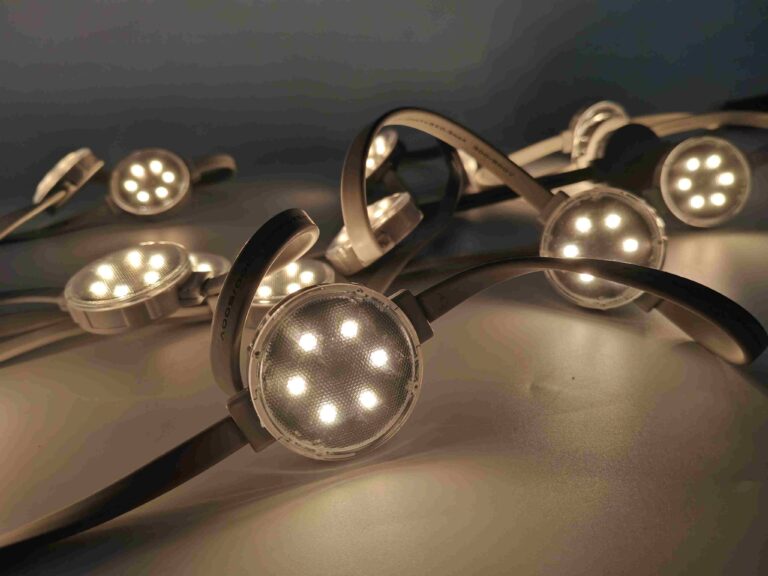
Shenzhen XinHe Lighting Optoelectronics Co., Ltd (hereinafter referred to as Xinhe Optoelectronic) for years focused on research, development, and application of point light sources and grid screens of its own independent intellectual property rights as well as other types of lighting lamps and their supporting services for projects of commercial buildings all around the world. Xinhe Optoelectronic offers design service for projects, cost estimate service for engineering, products, and on site technical support.
Company Expertise and Product Reliability
The company is located in Shenzhen, China, with perfect production system and process, and has won the honors of national high-tech enterprises. It adheres strictly to GB/T19001-2016/ISO9001:2015 international quality standards ensuring every product meets rigorous performance benchmarks. Automated SMT assembly lines guarantee precision manufacturing while extensive testing facilities verify electrical safety under diverse environmental conditions.
Contribution to Innovative Lighting Design
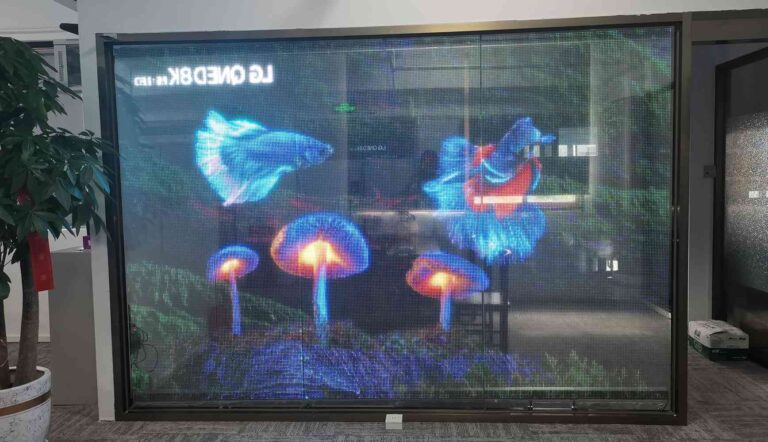
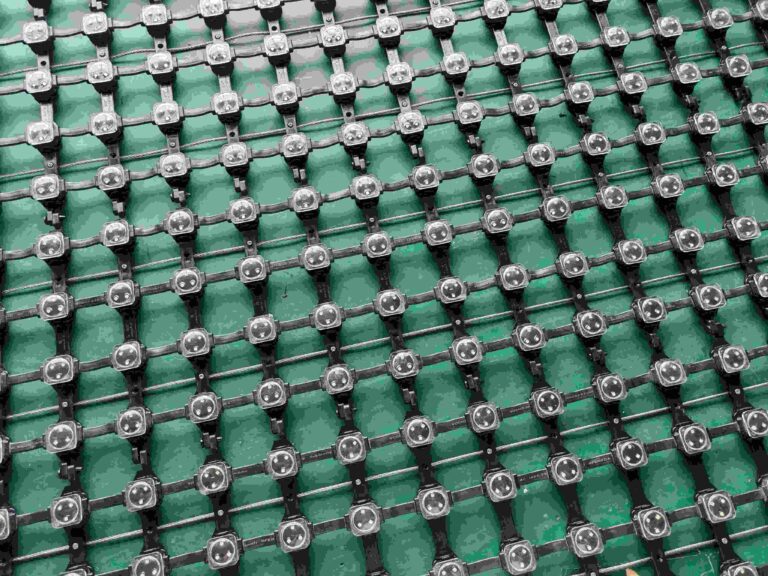
Their innovation in terms of LED exposed light source was also applied to large-scale projects, such as “China Seal” and “Heaven and Earth Man” for the 2008 Beijing Olympic Games. These are examples of Xinhe’s capability to translate creative ideas into feasible solutions. The flexible crystal truss screens they have designed for dynamic facade applications feature 95% transparency, a maximum thickness of 2 mm, wireless remote control via Wi-Fi clusters, interactive sensing function, and energy efficiency. These features, which have been integrated into their designs, are essential for the modern dynamic facade systems used in commercial buildings.
What Are Common Challenges When Implementing Dynamic Facade Lighting Systems?
Even sophisticated projects can encounter operational difficulties caused by environmental factors and by coordination requirements of multidisciplinary teams.
Environmental Factors Affecting Performance
Luminous fluxes can vary with temperature therefore outdoor luminaires must be designed to be thermally stable. In addition humidity and airborne pollutants can gradually degrade optical quality if they are able to penetrate protective seals. Wind load calculations must also be taken into account when choosing a bracket to secure a light, particularly in high-rise areas where high gusts of wind may occur.
Technical Coordination Among Project Stakeholders
Successful implementation requires synchronized collaboration among architects defining aesthetics, electrical engineers designing circuits, and lighting designers programming visual content. Misalignment in communication protocols between devices can disrupt synchronization; early-stage BIM modeling helps identify conflicts prior to construction phases.
Budget Management and Cost Optimization
When trying to balance artistic requirements with budgetary constraints, it is necessary to perform a lifecycle cost analysis in order to weigh the costs of use against the initial investment and the maintenance costs. A further aspect is the purchase of large quantities of standardized components in order to keep the replacement expenses as low as possible while maintaining the optical properties of the system, which also remain constant in subsequent upgrades.
What Are the Key Takeaways from Designing a Dynamic LED Facade System?
Strategic Integration of Technology and Architecture
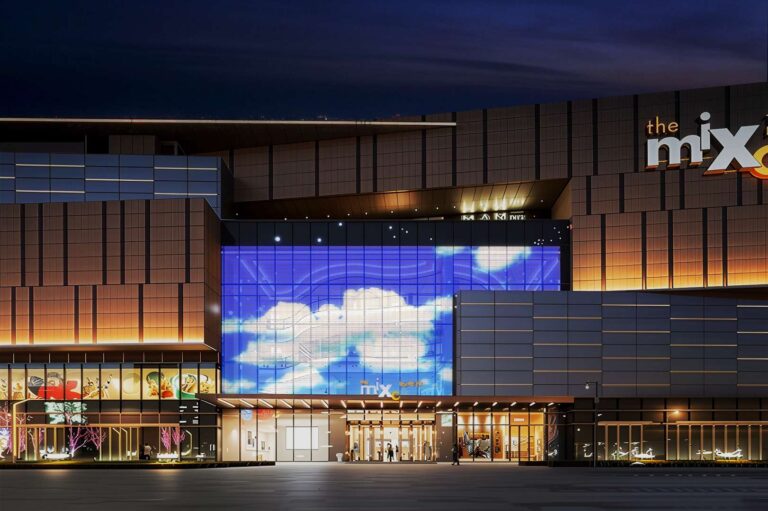
Dynamic lighting can achieve excellence when technological complexity is augmented by architectural storytelling. Each beam of light accentuates the building’s form while it also conveys the sense of motion through controlled light modulation over the facade envelope of commercial buildings with advanced LED display screens.
Continuous Innovation Through Reliable Partnerships
We continue to develop innovations with reliable hardware manufacturers, quality first being the primary criterion for our partners. Shenzhen XinHe Lighting Optoelectronics Co., Ltd. for example supplies reliable hardware for our integrated LED lighting systems worldwide.
FAQs
1 What distinguishes a dynamic LED facade system from static lighting installations?
Rather than fixed installations, the dynamic systems created for the exhibition are controlled. They can move, change color and above all respond to input. They are the opposite of static systems that remain fixed and do not change over a long period of time.
2 What software platforms are commonly used for controlling dynamic LED facades?
In addition to lighting control, projects are typically run using a control platform such as Madrix, Pharos Designer or even a custom DMX/Art-Net solution to meet the requirements of the project.
3 How long do outdoor LED facade systems typically last?
High-quality LEDs are designed to last up to 50,000 to 100,000 hours depending on the number of switching cycles and the level of maintenance applied to the products throughout their service life.
4 Can dynamic facade lighting be integrated into existing building management systems?
Yes. Modern communication standards such as DALI or KNX allow for simple connection of the façade controller to the central automation system of air conditioning, security, etc. of smart commercial buildings.
5 What maintenance practices help preserve performance consistency over time?
Standard cleaning of the lenses, firmware updates for the controllers and periodic re-calibration of the system ensures uniform illumination and increased operational reliability over several years. Within complex urban environments with large numbers of LED displays, the system is designed to perform reliably.





 Spanish
  English
  Arabic
  Russian
  French