

A shopping mall may have five glass bays that look identical until the installer measures them. One pane is narrower, a door swings across another, and an electrical feed must reach the last bay without crossing a visible joint. These details matter when ordering a custom transparent LED film screen. Unlike decorative window film, an LED display contains conductors, pixels, and connection points that cannot be cut indiscriminately. Buyers who send only the overall glass width risk ordering modules that fit on paper but cannot be trimmed or connected on site. A useful specification starts with measured glass dimensions, the approved cut direction, and a layout that keeps every powered section serviceable.
What Measurements Should Buyers Confirm Before Requesting Custom Sizes?
A quotation is only as dependable as the dimensions behind it. Record the finished glass opening, not merely the dimensions on an early architectural drawing, and distinguish the available mounting area from the active display area.
How Should Each Glass Bay Be Recorded?
Create a pane-by-pane elevation showing visible width and height, mullions, sealant joints, handles, door movement, and the proposed cable exit. Note which side faces the viewers and where the screen may be accessed for replacement. If the design spans multiple panes, assign each pane an identification number so the supplier can correlate module drawings with the actual site. A single total width conceals variations that can leave a partial module stranded beside a frame.
Why Should Clearances Be Included in the RFQ?
The film should not obstruct hardware, sensors, service panels, or operable windows. Mark these as no-film zones and show a realistic path to the power and control equipment. For retail windows, ask the visual-merchandising team where the main content must remain visible; a small unused glass margin may be preferable to an expensive custom electrical layout. Submit both the dimensioned elevation and photographs of the completed glass.
Which Parts of a Transparent LED Film Module Can Actually Be Cut?
Manufacturers may advertise customizable shapes, but a design team must distinguish factory customization from unrestricted field trimming. The cut direction and permitted end positions are product-specific.
What Does Xinhe’s Published Module Specification Permit?
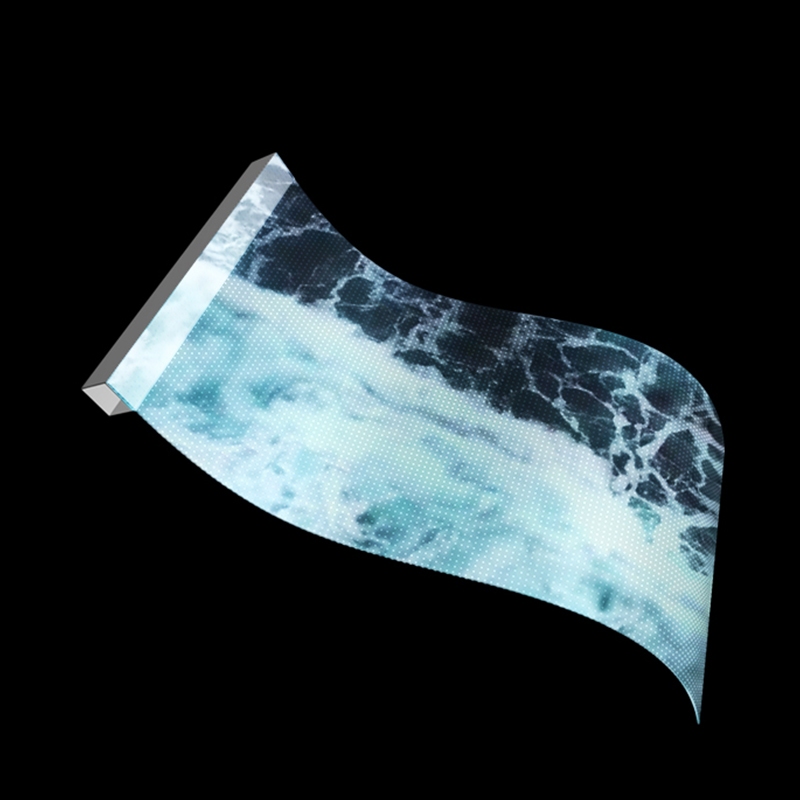
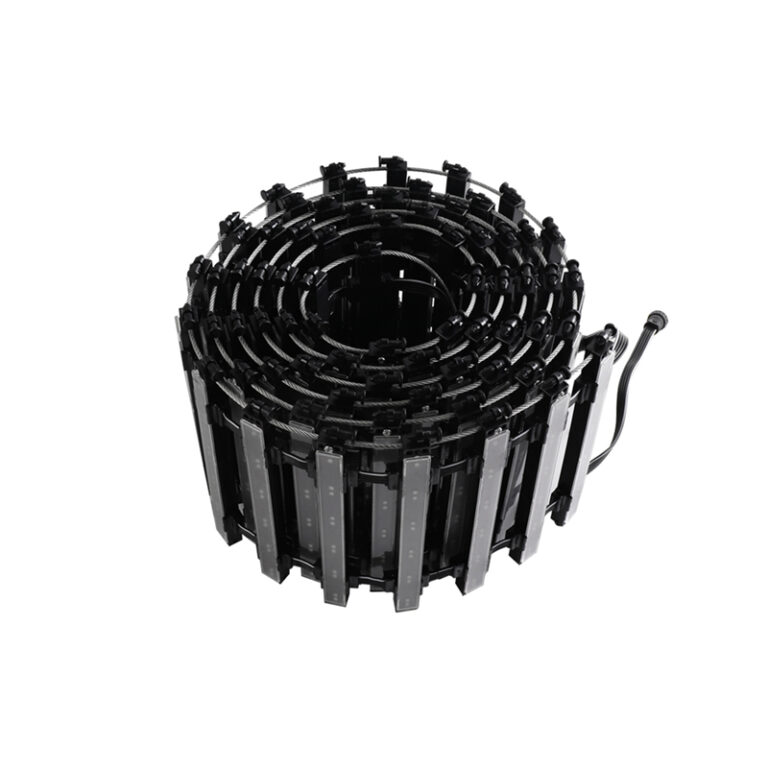
Xinhe’s published Écran LED flexible transparent family includes P4 through P20 configurations with common nominal module widths of 240 mm and model-dependent lengths. Its specification notes that the fixed-width direction must not be trimmed, while the length direction may be shortened within the product’s approved arrangement. That does not authorize cutting through LEDs, signal traces, receiving-card connections, or arbitrary curves. Request a marked drawing showing the exact allowable cut line for the model being ordered.
Can Custom Shapes Be Solved Without Cutting Through the Circuit?
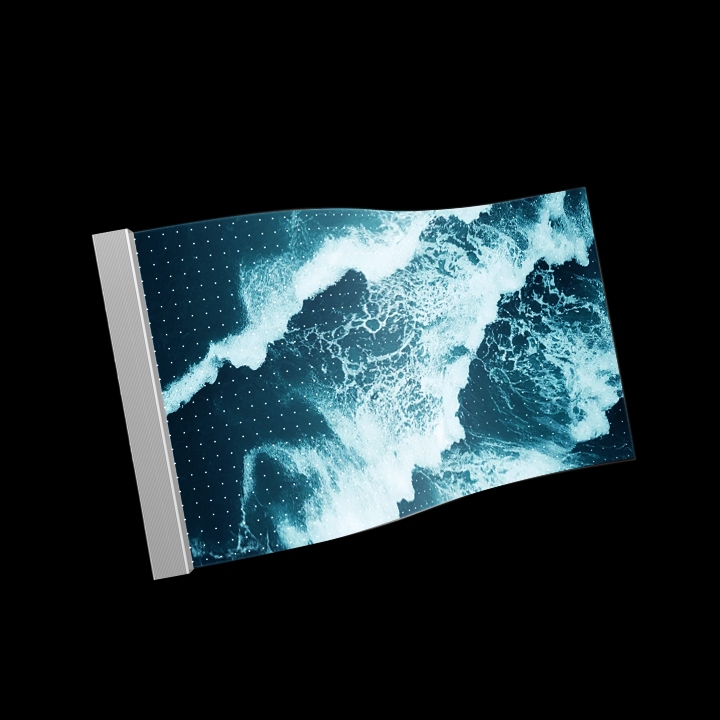
Often they can. Reorienting whole modules, leaving a narrow inactive border, or dividing an irregular window into separate display zones may achieve the desired appearance. For a notch around a handle or a diagonal edge, ask for an approved factory layout rather than improvising with a blade during installation. The P4 transparent film screen is one product example for a detailed drawing review; its listed dimensions and electrical configuration should be checked against the actual order rather than extrapolated to every pitch.
How Should Buyers Specify the Final Display Layout and Connections?
A cutting drawing should be accompanied by a module schedule. Together, they show not just where the film ends, but how the final screen will work once all sections have been mounted.
What Belongs in the Module Schedule?
For each pane, identify the proposed pixel pitch, whole-module quantity, nominal length, approved shortened length if applicable, active area, orientation, and connection side. Show where power supplies and receiving or control equipment will sit. Request a supplier-approved layout for any special edge, cable path, or unusual glass curvature. Keeping these items on one drawing reduces mismatches between the purchasing team, fabricator, and installer.
How Can Seams Be Coordinated With the Architecture?
A visible mullion creates a natural boundary between screen zones. Place film seams in a consistent rhythm, and have the content team preview video across interrupted sections. The existing guidance on glass mullions and module seams offers a useful companion reference, but the current purchase specification should remain focused on dimensions and approved trimming. Do not assume that moving content will hide an awkward joint, especially when customers approach the glass at an angle.
What Should Be Approved Before Production and Installation?
The final sign-off should turn a design concept into a traceable order. Buyers should ask the supplier to identify which changes are still possible after manufacturing begins.
What Should the Approval Package Include?
Approve the dimensioned pane map, module list, approved cut-line drawings, connector orientation, content boundaries, installation method, and a clearly marked sample where the geometry is unusual. Confirm whether shortening is completed at the factory or permitted on site, and obtain handling instructions for the approved method. If a revised site survey changes the glass opening, update both the screen drawing and purchase order before production.
How Should Installers Check the Delivered Modules?
Before removing protective materials or attaching film, compare labels and module lengths with the approved schedule. Inspect connection edges, test a representative powered section using the specified procedure, and perform a dry layout against each pane. Any unplanned cut should be stopped and referred to the supplier. A little unused glass is usually easier to manage than a damaged electrical trace after adhesion.
Why Work With Xinhe Optoelectronics on Custom Film Projects?
Shenzhen XinHe Lighting Optoelectronics Co., Ltd. has developed LED point-light and display products since 2004 and provides product supply, project planning, and on-site guidance for architectural lighting applications. Its transparent-film product information includes module dimensions, pitch options, installation methods, and a specific restriction on trimming direction. Buyers can use those published details as the starting point for a factory-confirmed custom drawing instead of relying on a generic promise of unrestricted cutting.
Conclusion
A custom transparent LED film order should describe the finished glass, approved module orientation, cut direction, active display zone, and electrical connections as one coordinated system. Measure each pane, identify no-film areas, and obtain the supplier’s written approval for every shortened or irregular module. That approach protects the product, limits site rework, and gives installers an unambiguous drawing to follow.
FAQs
Can transparent LED film be cut to any shape on site?
No. The approved cut direction and positions depend on the specific module. Xinhe’s published table restricts trimming in the fixed-width direction, so irregular shapes require a manufacturer-approved layout.
What measurements should I send for a custom screen quotation?
Provide finished dimensions for each pane, mullion and hardware positions, intended viewing area, cable exits, and a dimensioned elevation showing all proposed screen zones.
Should custom modules be trimmed before or after delivery?
Follow the product-specific instructions confirmed in writing by the supplier. Where factory cutting is required or preferred, approve the final dimensions before production; do not improvise on site.




 French
  English
  Arabic
  Russian
  Spanish